This report was written by Tiger Research. Moonbirds launched as an NFT project in 2021. Its development direction shifted after its acquisition by Orange Cap Games in 2025. This raises a core question: Where is Moonbirds headed now?
Article author and source: MarsBit
Key points
- Following the acquisition of Moonbirds, Orange Cap Games announced plans to issue tokens and expand its ecosystem.
- To position the Moonbirds IP as something centered around fan culture rather than speculation, the team is launching various engagement formats, including card games, the Blind Box 2.0 program, and mobile games.
- While the Moonbirds IP has promising prospects for expansion, a clearer and more specific practical framework is still needed for the token.
1. Moonbirds are expanding into larger ecosystems.
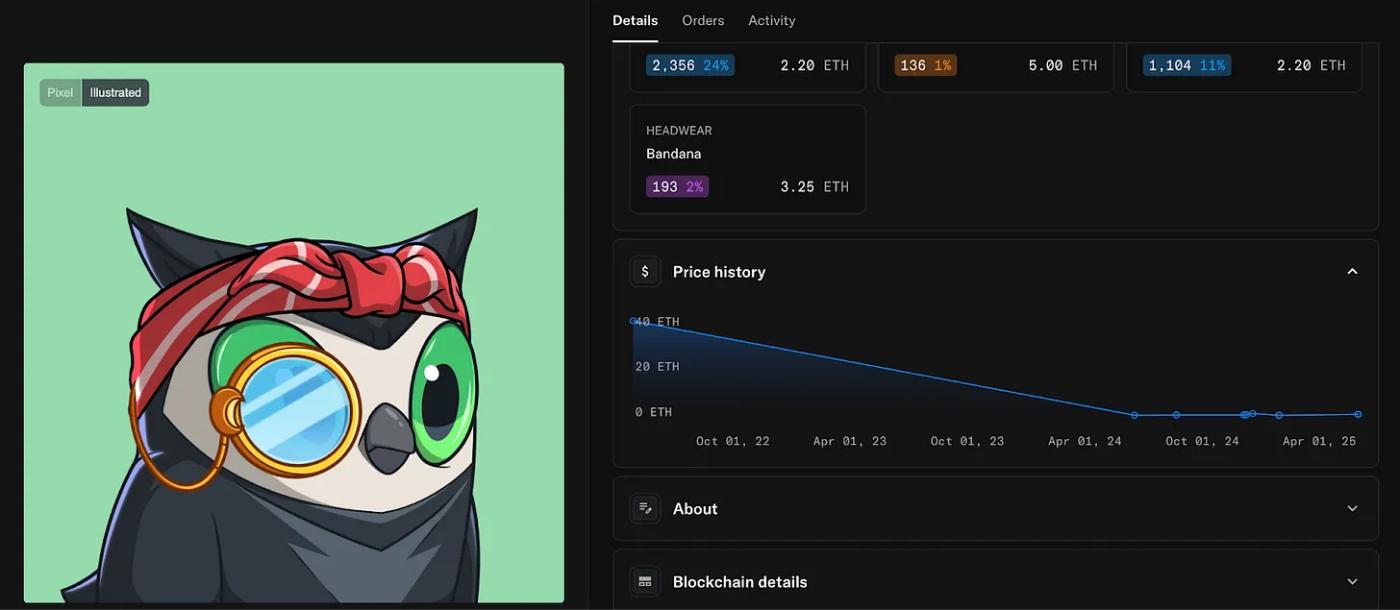
Source: Opensea
Moonbirds was a highly anticipated NFT project in 2021, with its trading price reaching as high as 40 ETH. As the NFT market entered a downturn, its popularity gradually faded. However, Moonbirds recently returned to the spotlight by announcing its token issuance plan. However, simply viewing Moonbirds as an NFT project reflects a perspective stuck in 2021.
In May 2025, Moonbirds entered a new phase after being acquired by Orange Cap Games. The acquiring company's goal was not to operate Moonbirds as a standalone NFT series, but rather to develop it into a broader IP-driven business. This shift requires us to move beyond valuing a single NFT and instead assess Moonbirds within a larger strategic framework.
2. Moonbirds and its ambition to become the next "Pop Mart"
Source: Solana YouTube
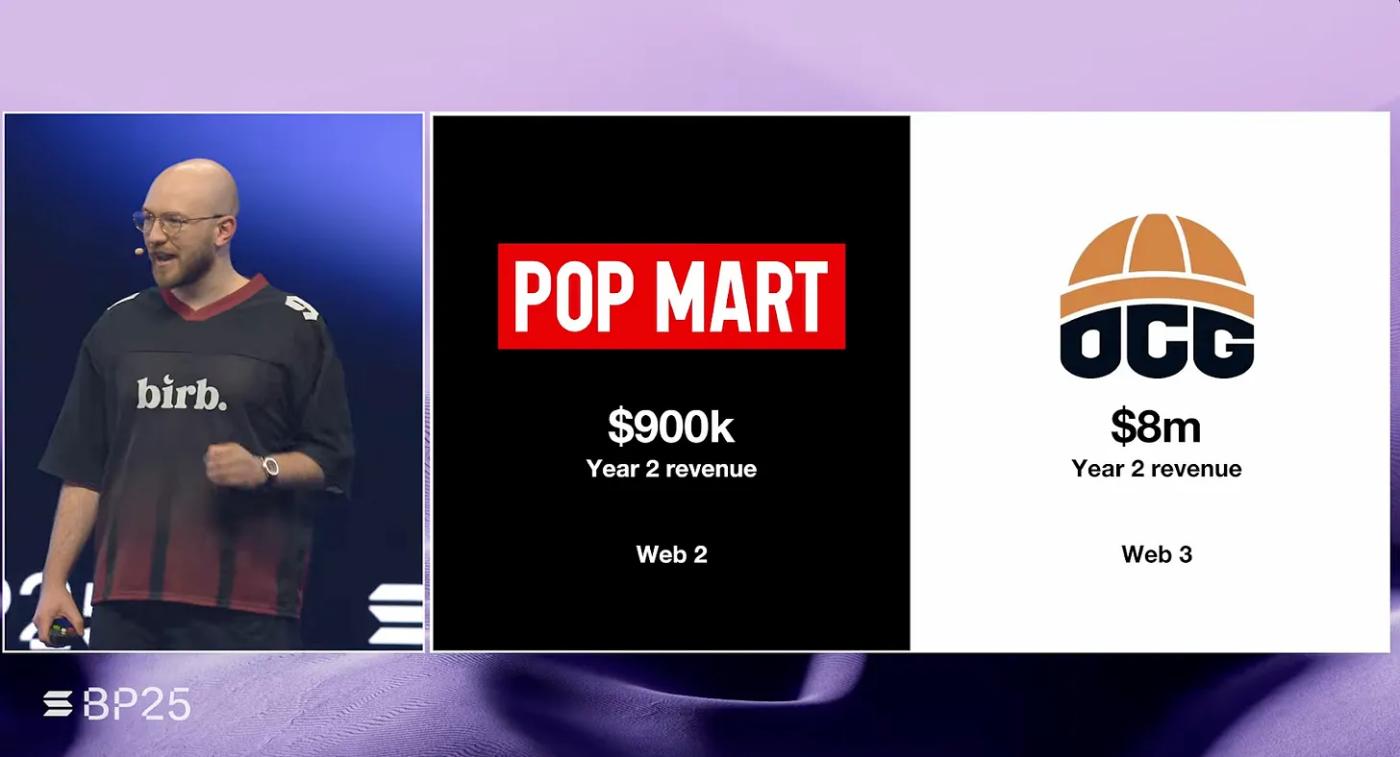
Orange Cap Games envisions becoming "the next Pop Mart" through Moonbirds.
CEO Spencer Gordon Sand stated that his ambition is to build Orange Cap Games into a Web3 version of Pop Mart, creating a multi-billion dollar company.
This ambition is closely related to Sand's professional background. He was an early investor in NFT projects such as BAYC Ape Yacht Club, RTFKT, and Cool Cats, which allowed him to witness firsthand how NFT projects evolved into IP and how they failed.
In particular, as one of the largest holders of Pudgy Penguins, he witnessed the brand expand into mainstream media, including television, with non-crypto audiences actively engaging with the characters. This experience likely shaped his belief in creating "the next Pop Mart."
In line with this context, Orange Cap Games' vision for Moonbirds is quite different from typical NFT sales models. Instead of focusing on NFT distribution within Web3, the company uses Moonbirds as a starting point to acquire and expand multiple high-potential IPs, ultimately positioning itself as a diversified, IP-centric consumer business company with a structure similar to Pop Mart.
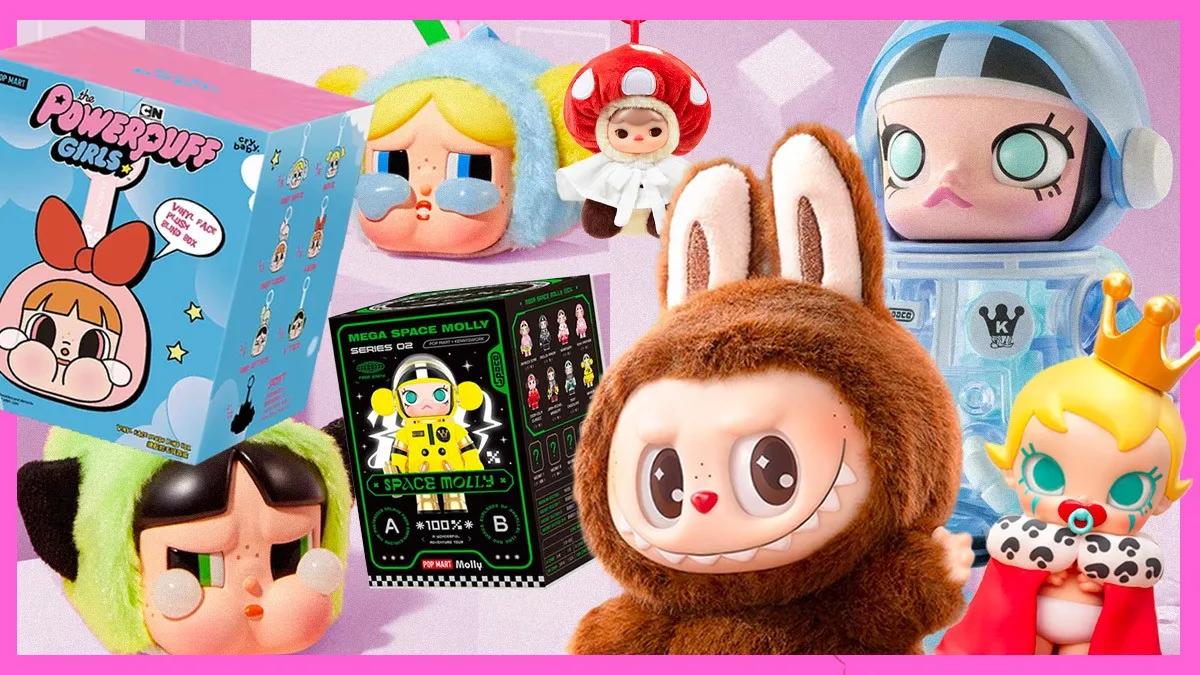
What is Pop Mart's most popular blind box series?
 Source: Pop Mart
A prime example of Pop Mart's success is the character Labubu. Labubu wasn't originally created by Pop Mart. In 2019, the company signed an exclusive agreement with a Hong Kong artist, successfully bringing the character to the mass market.
Pop Mart is not simply a third-party IP reseller. Its core advantage lies in vertical integration.
Similar to a talent agency, this company manages the entire lifecycle of IP development, from artist discovery and IP licensing to product design, manufacturing, and direct-to-consumer distribution through its own channels. This integrated structure allows Pop Mart to repeatedly expand into new roles using a consistent expansion model.
Orange Cap Games appears to be pursuing a similar approach. The company's goal is not just to create products, but to build a distribution tier capable of delivering multiple IPs.
This system encompasses physical distribution (such as figurines and trading cards), cultural distribution through offline tournaments and events, and digital distribution through games and NFTs. Its goal is to create a repeatable framework capable of supporting and scaling any IP introduced into the ecosystem.
3. To become a Pop Mart, products must be of high quality and distribution must be effective.
Source: Orange Cap Games
For Orange Cap Games, producing physical toys inspired by the Moonbirds NFT is important. However, trading cards play a more central role in building a scalable ecosystem.
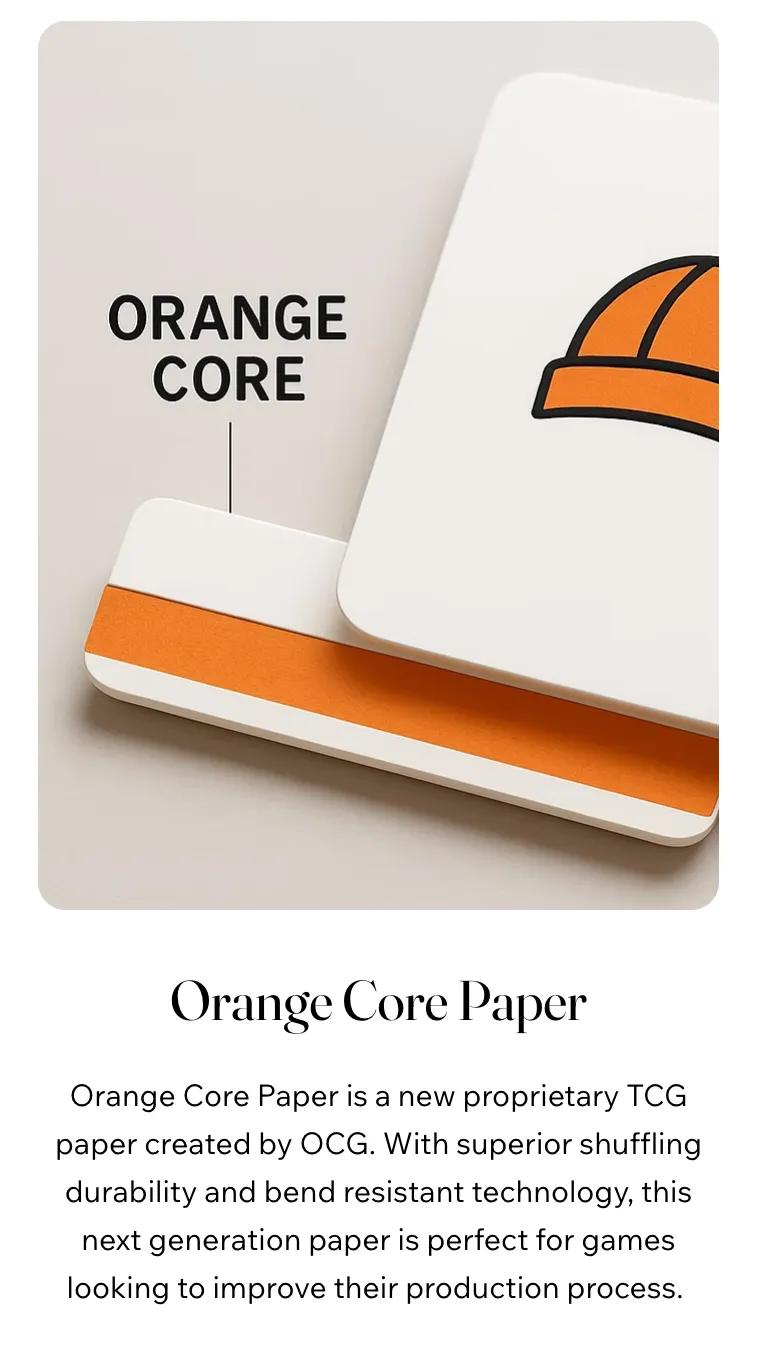
To differentiate its trading card games, the company bypassed the industry-standard blue core cardstock and instead developed its own orange core material. This proprietary cardstock reduces common problems such as edge abrasion and card bending. Orange Cap Games controls the material selection and manufacturing process, extending product ownership to the details of production.
These efforts were validated when the card received a PSA 10 rating (PSA's highest rating). Subsequently, the company partnered directly with PSA to launch a co-branded promotional card.
Source: Moonbirds
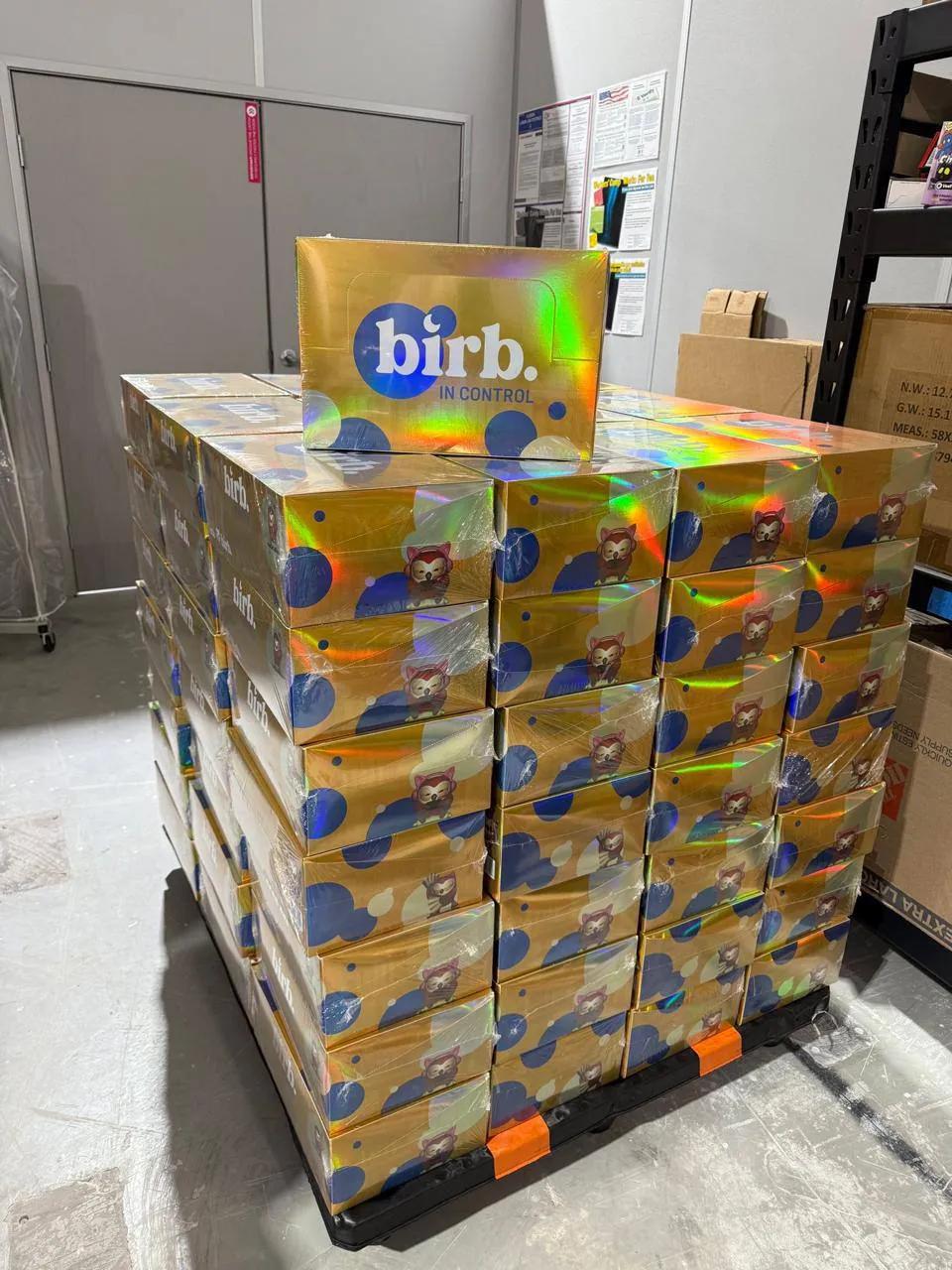
Product quality alone is not enough. Distribution infrastructure determines whether physical products can reach the right audience. Positioning oneself in high-traffic locations frequented by target consumers is crucial.
To this end, Orange Cap Games has established partnerships with major global distributors:
- GTS Distribution: North America's largest collectibles distributor
- Star City Games: Core Distributor of Magic: The Gathering
- Asmodee: The world's third-largest distributor of board games and toys
Therefore, Moonbirds products are no longer limited to crypto-native channels such as exchanges. They are now available in local hobby shops and toy stores, fulfilling the basic requirements for global expansion.
At this stage, Orange Cap Games has secured product quality and distribution channels. The next challenge is retention: will customers who purchase these products remain engaged within the broader Moonbirds ecosystem?
4. Persuade consumers to choose Moonbirds
Producing high-quality products and securing distribution are necessary, but not enough. The real challenge lies in persuasion. Among the countless products on retail shelves, what makes consumers choose Moonbirds?
Labubu's success at Pop Mart wasn't solely driven by visual appeal. Orange Cap Games applied a similar logic, using structured strategies to influence consumer behavior, rather than relying solely on design.
4.1 Trading Card Games as a Cultural Entry Point
Cards are not just collectibles, but also an integral part of the game. For cards to become meaningful collectibles, there must first be a playable game. Without active gameplay, even beautifully designed and well-made cards are merely decorations.
Source: Vibes
The core issue is how to attract players to join a new card game.
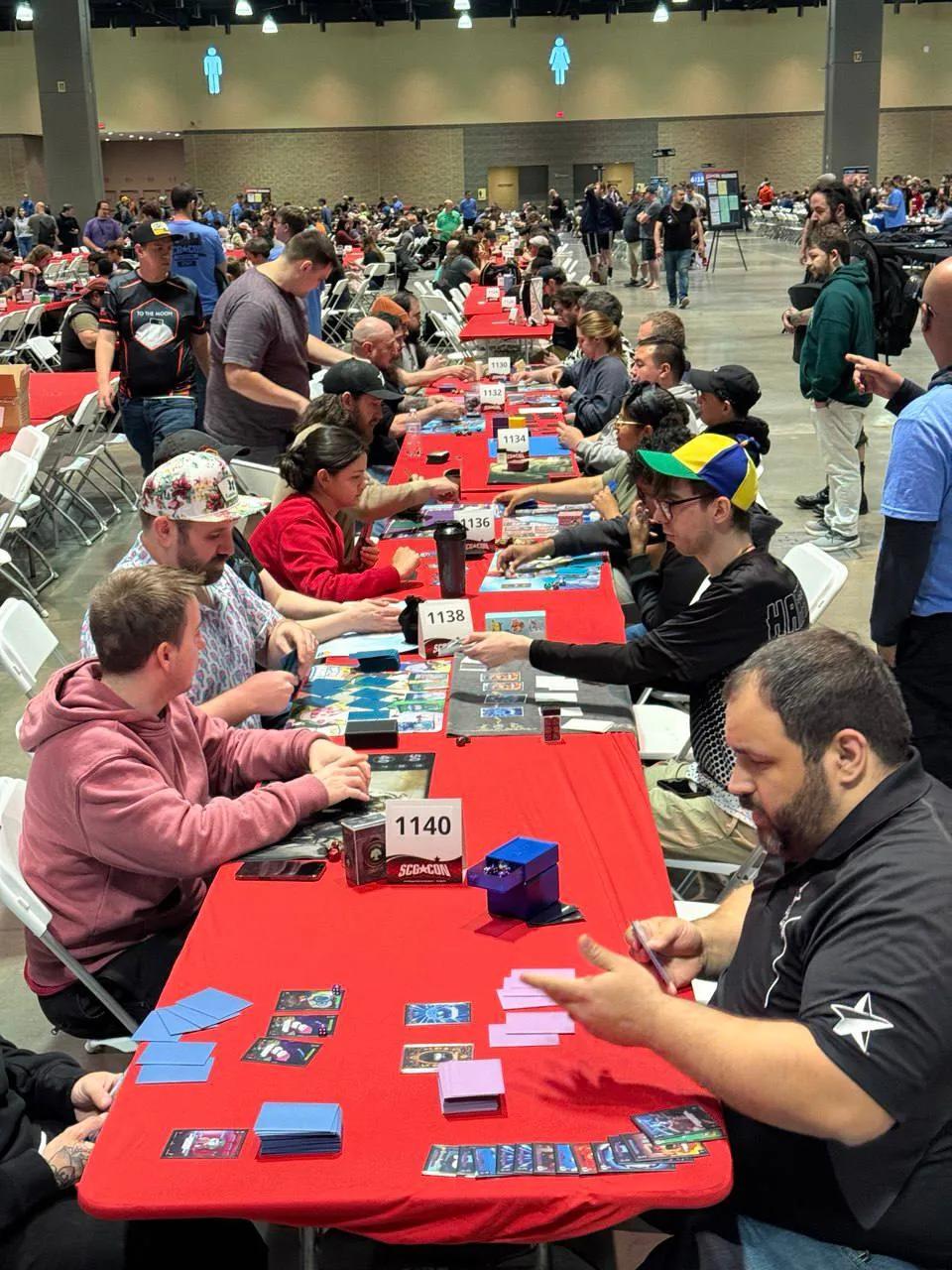
Orange Cap Games targets participants in large-scale trading card tournaments. These events typically last five days, with about half of the participants eliminated on the first day. The company then schedules its own tournament on the second day, positioning it as an alternative for the eliminated players.
From the participants' perspective, the additional competitive opportunities were very appealing. The preparation familiarized them with the game, core players began to gather, and the product began to operate as a real game rather than a niche experiment.
When the Moonbirds Tournament was held alongside a large, established event, players began to associate it with the same competitive standards. This shift in perception was crucial. The strategy focused not on immediate conversion, but on repositioning the Moonbirds TCG as a legitimate part of the broader card game ecosystem.
Essentially, this approach is not just about participation, but also about changing how products are perceived.
Source: scgcon
In practice, Orange Cap Games applied this strategy at SCG Con in 2025 through its Vibes TCG, hosting side events alongside the main tournament. Over time, this approach has steadily increased the scale and visibility of Vibes TCG events.
4.2 Blind Box 2.0: From a Single Experience to a Triple Experience
Source: Moonbirds
Pop Mart's traditional blind boxes, such as the Labubu series, typically contain a single figurine. Once the box is opened and the item is revealed, the experience ends. This model is designed around a one-time consumption model.
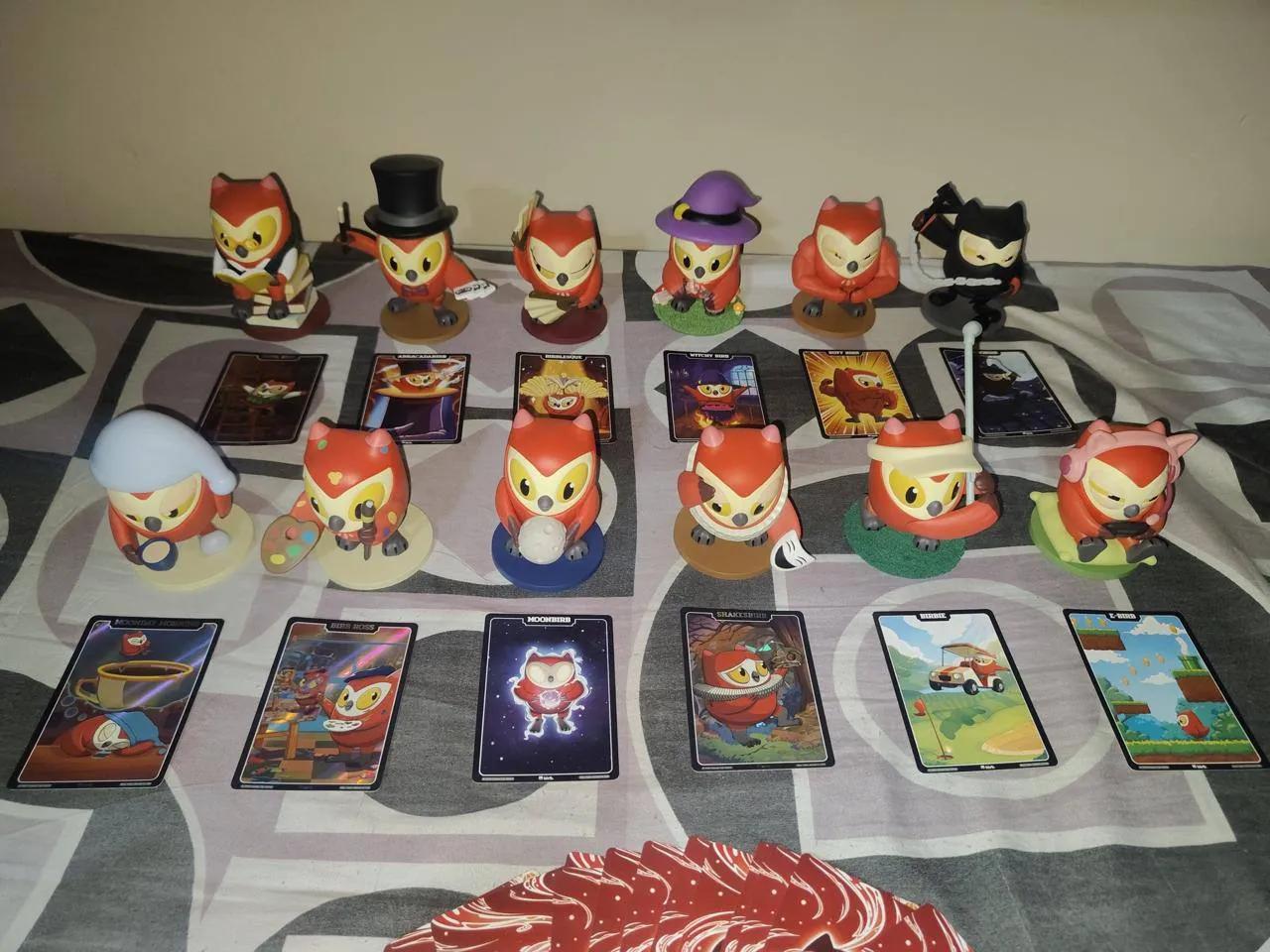
Moonbirds takes a different approach—Blind Box 2.0. Each box contains three different collectibles:
- Plush toys or figurines
- Transaction Card
- NFT
By purchasing a single box, consumers engage in three separate experiences, rather than one.
Orange Cap Games calls this model a "hybrid" category. It's not just about bundling three products. The core idea is cross-channel traffic generation, with each item serving as an entry point into a different part of the ecosystem.
- Buyers focused on toys discovered TCG cards and were introduced into the gameplay.
- Buyers focused on TCGs acquire NFTs and gain access to on-chain assets.
- Buyers focused on NFTs acquire physical toys and are then directed into offline communities.
A single blind box becomes the gateway to all three of Orange Cap Games' business lines (toys, TCGs, and NFTs). Consumers may only be engaged with the initial purchase intent. However, once curiosity transcends the initial purpose, they are naturally drawn into adjacent parts of the ecosystem.
4.3 Mobile games as an extension of daily participation
Source: Vibes
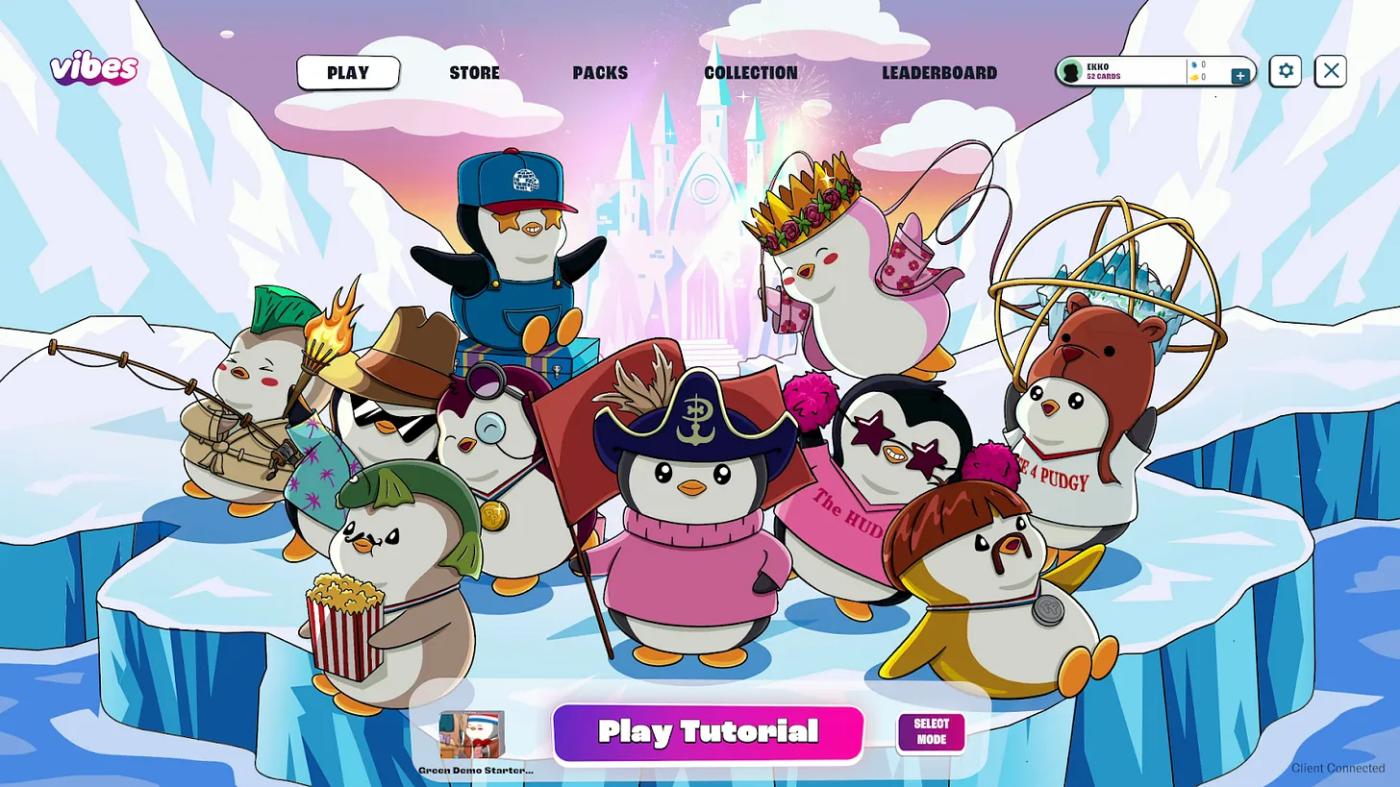
Purchasing trading cards requires money, and collecting figurines requires prior interest. In contrast, free mobile games only require downloading. Some users may later invest time or money to improve their decks or progress, but the initial barrier to entry remains very low.
Angry Birds provides a useful reference. The gameplay is simple, yet the characters gained global recognition. From there, the IP expanded to movies, merchandise, and theme parks. Games became the starting point for widespread IP distribution.
The mobile game Moonbirds aims to serve a similar purpose. Through gameplay, users become familiar with the characters and gradually absorb a broader world view. Even users who don't immediately intend to buy cards or figurines are introduced to Moonbirds through the game.
Over time, this familiarity creates awareness. When consumers later encounter Moonbirds products in a retail environment, these characters are no longer unfamiliar. The mobile game builds a psychological bridge that transforms passive awareness into potential purchase intentions.
5. From Moonbirds to Orange Cap Games: $BIRB's Role
Orange Cap Games has built the infrastructure and strategies to expand Moonbirds. However, the key question for investors remains: What does the $BIRB token actually do?
The team describes $BIRB as a "coordination layer." Within this framework, the token aims to accelerate cultural dissemination, enabling memes to spread more effectively. The strategy is to anchor the business to physical consumer products while leveraging crypto-native dynamics to amplify brand influence.
The challenge lies in the specifics. It's currently unclear what specific benefits token holders will receive. Revenue sharing from product sales, NFT-linked memberships, or other incentive mechanisms are not yet clearly defined.
Orange Cap Games emphasizes long-term ecosystem growth. Revenue is expected to be reinvested in the business, rather than distributed to token holders. The goal is to create a positive feedback loop, channeling attention generated in the non-crypto market back into the crypto community.
One notable advantage is that this is not a business assembled solely to prove token issuance. The company generated real revenue through Vibes TCG before introducing the token layer. This approach is fundamentally different from memecoins that lack an underlying operation.
However, some questions remain unanswered. Whether the token's proposed "cultural harmonization" function can operate in practice, and whether this function can translate into sustained token value, remains to be seen. The strategy of prioritizing reinvestment may also be less attractive to short-term investors.
Whether Moonbirds can achieve the same level of success as Pop Mart remains uncertain. Nevertheless, as a live experiment in how to monetize NFT-origin IP in the real world, the specific design and early performance of $BIRB will determine the outcome of this experiment.