#BSC SUMMER#
Latest
Featured
avatar
Murphy
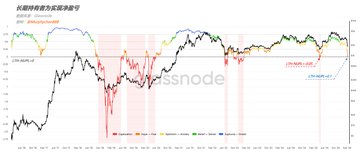
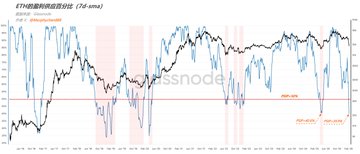
Yili Hua has fully liquidated his positions. As one of the biggest Ethereum bulls this cycle, he exits the stage with a staggering loss of around -$734 million. Honestly, it’s pretty heartbreaking… I originally thought he was just de-risking and reducing leverage, but it turns out he sold off his spot holdings too. I remember on December 30, 2025, I analyzed “when ETH is worth bottom-fishing” from four angles: sentiment, structure, cost, and overall score. Basically, when LTH-NUPL < 0, PSIP < 50%, price is below whale average cost, and market composite score < 1 — at least 2 out of these 4 conditions need to be met to start building a position; 3 or more, and you can consider scaling up. Back then, none of these conditions were met, so IMO, $2,950 ETH wasn’t worth buying. But Boss Yi’s fund, Trend Research, went all-in, completely opposite to my view. Hard to imagine institutions taking on that much risk. Fast forward to now, looking at these 4 charts: (Chart 1) 1. LTH-NUPL = 0.1; not met, but just one step away from dropping below zero. (Chart 2) 2. PSIP = 39.9%; met. The current percent of profitable supply is even lower than the lowest points in April 2025 and June 2022. (Chart 3) 3. Price is below the average cost of the 3 main whale cohorts ($2,051, $2,198, $2,392); met. (Chart 4) 4. Market composite score = 1; not <1, but already in the bottom range. So, if I had to rate ETH right now, I’d say “buy in batches (spot),” not “full liquidation”—once again, my view is the exact opposite of Boss Yi’s trade. Whether I’m right or wrong, only time will tell. Boss Yi nailed the ETH bottom in April 2025, and the timing matched all four criteria perfectly. But this time, with almost the same composite score, he chose to exit. Maybe the massive losses messed with his head, or maybe it’s just financial pressure. Either way, the outcome is really regrettable… ---------------------------------------------- For educational purposes only, not investment advice! twitter.com/Murphychen888/stat...
avatar
🎒Alpha School🎒
❌What is XPIN Network's XPIN eSIM? The way we use data abroad is rapidly changing these days. XPIN Network's XPIN eSIM is a global eSIM service that allows you to use the internet worldwide by simply scanning a QR code, without a physical SIM card. Its biggest advantage is that it can be used immediately with just one installation, without the need to replace the SIM card or apply for roaming. ❌Where can I use it? XPIN eSIM supports 149 countries worldwide. It's especially useful for frequent border crossings, such as overseas travel, business trips, and long-term stays. It offers instant connection without having to buy a SIM card at the airport or worry about roaming charges. ❌AI automatically manages network settings XPIN's AI automatically selects the fastest and most stable network based on your usage environment. If the signal weakens during use, it instantly switches to another network, so users can simply use it without any additional settings. I believe this is a crucial factor in achieving a high level of user experience. ❌Paying Telecommunications Bills with XPIN Coins Another unique feature of the XPIN eSIM is that you can pay for your telecommunications bills with the $XPIN coin. This means you can use the tokens not just for holding, but directly for actual telecommunications services. This is significant because it not only reduces telecommunications costs but also creates real-world use cases for the coin. ❌Decentralized Telecommunications Network XPIN connects global networks decentralized, rather than relying on traditional telecommunications companies. It ensures high reliability because it automatically connects to other networks even if a specific network is blocked. This can be seen as an example of the DePIN concept being applied to real-world telecommunications services. ❌Integrating with BNB Chain and Bitget Wallet XPIN is a BNB chain-based project and has also launched a co-branded eSIM with Bitget Wallet. This allows payments to be made directly from the wallet and directly to the telecommunications service, resulting in a seamless flow. I believe this is a prime example of connecting a Web3 wallet with real-world services. ❌LINE · KAIA Ecosystem Collaboration XPIN is also collaborating with the LINE and KAIA ecosystems. With LINE having a strong user base, primarily in Japan, and KAIA having a strong user base, centered in Korea, there's potential for expansion into the Asian market. 📖XPIN eSIM is more than just an eSIM service; it's an example of how Web3 payments and decentralized networks can be integrated into real-world telecommunications services. This project is worth checking out for those who frequently travel internationally or are interested in Web3-based real-world services. #XPIN
XPIN
5.7%
loading indicator
Loading..