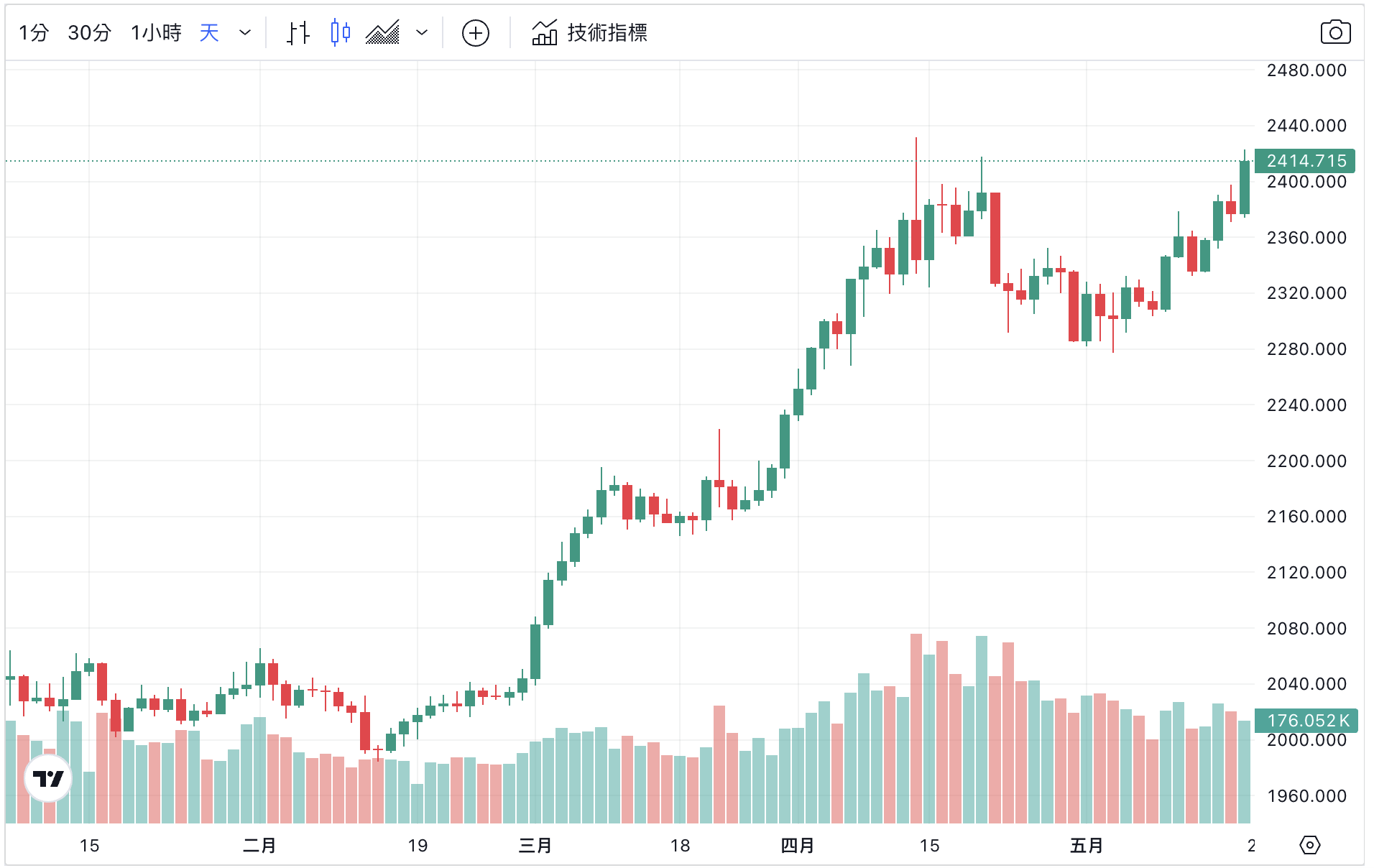
Affected by rising demand for safe havens, large-scale debt issuance in the United States, and high inflation this year, gold has risen sharply. Yesterday, spot gold closed up 1.59% at $2,414.715 per ounce, once again approaching the record high set earlier this year.
James Rickards: Central banks may be forced to return to the "gold standard"
In this context, James Rickards, a well-known American economist, lawyer and investment banker, and the author of the best-selling book "Currency Wars", wrote this week that he updated his previous belief that the price of gold may reach 15,000 in 2026. The US dollar forecast believes that gold prices will exceed US$27,000 by then.
Rickards even stated that if public confidence in sovereign currencies collapses due to multiple factors such as excessive currency issuance, competition from Bitcoin, extremely high US dollar debt, new financial crises, wars or natural disasters, etc.
In this case, the central bank may have to rely on gold again and return to the "gold standard." Of course this is not their will, but in order to re-establish order in the global monetary system, they must do this.
The reasoning behind gold’s price breakout above $27,000
Rickards then made inferences about the price of gold based on the principles of economics and past historical experience. He believed that if the U.S. dollar is pegged to gold again, then the price of gold must support the current money supply to maintain market stability and confidence.
Rickards uses the US M1 money supply as the basis. M1 includes actual cash, bank reserves, and demand deposits that can be easily converted into cash, which is the most liquid part of the money supply. Currently, the M1 money supply in the United States is approximately $17.9 trillion.
Based on the historical statutory requirements of the Federal Reserve from 1913 to 1946, Rickards assumes that a 40% gold coverage ratio is needed to maintain market confidence in the currency (although this ratio has since dropped to 25%, and is now zero). Under this assumption, 40% of the money supply of $17.9 trillion is approximately $7.2 trillion.
The U.S. Treasury currently holds approximately 8,100 tons (26.15 million troy ounces, 1 troy ounce is approximately equal to 31.1035 grams) of gold reserves. So based on the above data, Rickards calculates that the price of gold should be $27,533 per ounce.
Rickards pointed out: "This is the non-deflationary equilibrium price of gold implied under the new global gold standard." But he also added that there are many variables that will fluctuate, such as money supply. Recently, the data from many countries such as the United States has been It's been rising.
Extended reading: Saving local fiscal black holes》China issued 50-year ultra-long-term special government bonds for the first time, with a total scale of 1 trillion yuan
How will Bitcoin react if the US dollar collapses?
In summary, Rickards believes that when public confidence in sovereign currencies collapses, central banks will re-embrace gold, thereby driving gold prices higher. While we don’t want to see this happen, it might not be bad news for Bitcoin.
If the U.S. dollar really collapses, Bitcoin may be used as an anti-inflation asset like gold and will also rise. After all, the original intention of Bitcoin was to get rid of the control and intervention of traditional financial institutions (such as banks) and central institutions (such as central banks). The government's unlimited printing of money will lead to inflation, and the fixed total amount of Bitcoin is designed to prevent this risk.
But how exactly will this develop? When traditional economic uncertainty increases, investors will turn to non-sovereign assets such as Bitcoin to preserve value or avoid risks. More time remains to be verified.
Extended reading: Will the U.S. banking crisis push Bitcoin to $40,000?