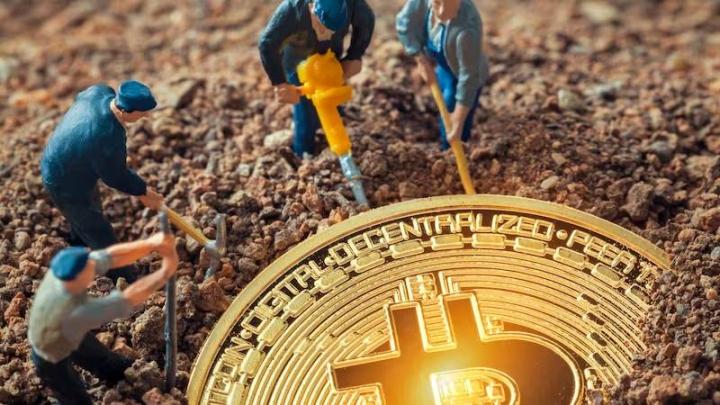
In fact, the current situation of Ethereum and SOL is very similar to that of Alibaba and Pinduoduo in 2019. Due to my work, I had the opportunity to experience the painful history of Alibaba being surpassed by Pinduoduo, and I have a deep understanding of where Alibaba lost and where Pinduoduo won. I will use these two famous business battles to review and map the status of Ethereum and SOL.
As the former absolute leader in e-commerce, Alibaba's development process went through 1688 wholesale, Taobao's bottom-end retail, Juhuasuan group buying, Tmall's high-end retail, and Hema's local life. The focus of the entire group's development has been constantly moving upwards. The biggest turning point was when Zhang Yong proposed the "new retail for consumption upgrade" concept and adopted a high-profile strategy. Since then, the two major foundations of 1688 and Taobao have been strategically downgraded by the group, with the focus shifting entirely to high-end retail such as Tmall. At that time, people often saw news of Jack Ma visiting Argentina to inspect beef, going to Russia to buy king crab, and going to Norway to investigate salmon, indicating a full embrace of high-end consumers.
This was the external situation. Internally, the atmosphere was even more drifting. They were doing a lot of virtual and spiritual-level work every day. The executives sat together discussing philosophy and socio-economics, and the middle-level managers also wrote lengthy weekly reports to cater to the leaders, with half of the content being reflections and thoughts. The keyword at that time was "value", meaning that for every task, every function developed, every requirement raised, and every cooperation, they had to argue "what is its value?".
At the same time, they also invested a lot of money to support scientists whose research could not generate productivity in the short term, such as the Damo Academy and Pinecone.
You can understand it as Alibaba has completed the most basic "making money" need in Maslow's hierarchy, and in the eyes of the well-off executives, they are now pursuing the spiritual and social value.
In fact, these strategies are not wrong. Google and Amazon have also gone through this process. If you only focus on short-term profit-making, no one will do long-term technology investment and humanistic construction. I also recommend everyone to watch the TV series "Silicon Valley", which I have watched twice and it's really great.
But the mistake was that Alibaba's entire atmosphere had already deviated from the masses, abandoning the basic user base of 1 billion ordinary people, believing that its future consumers would all be middle-class people drinking wine and eating steak.
At this time, Pinduoduo used the slogan "true consumption upgrade is not about letting Shanghai people drink French wine, but about letting people in third-tier cities use clean toilet paper", and captured the large middle and low-end consumer market that Alibaba had handed over. Note that this part of the market was not snatched by Pinduoduo, but given away by Alibaba. At that time, the internal network was full of voices looking down on Pinduoduo. I once posted a post explaining why I started using Pinduoduo, because it was cheap, and once I bought fresh food and the merchant directly refunded me when the fruit was rotten, but my colleague mocked me, saying "what's so good about the trash Pinduoduo? You're earning Alibaba's salary but spending it on Pinduoduo, you traitor."
When we bring Alibaba into Ethereum and Pinduoduo into SOL, can you see where the problem lies?
As the king of on-chain meme and the emperor of TRON, Ethereum established a huge user base through ICO in 2017, DeFi in 2019, and Non-Fungible Token in 2021. Then the old OGs of Ethereum who made a lot of money looked down on SOL playing all kinds of meme games, thinking "those are just the leftovers I played with years ago".
After satisfying the basic needs of Maslow's hierarchy by making a living, they began to pursue virtual spiritual matters, so they started to do a lot of work on things like internet countries, immortality, privacy, ZK, etc., which have little to do with ordinary people, but they can sit together and discuss spiritually.
The most impressive thing to me was two years ago when I attended Devcon in Montenegro, where Vitalik led a group of people to do Zuzalu, sitting by the lake and discussing in seclusion for two weeks, which was exactly the same as when my department manager took us to a small villa in the mountains of Hangzhou to discuss everyone's value in seclusion. Incredible.
They have deviated from the masses, brother.
I watched Vitalik's video interview with ETHPanda last week, which was very impressive as he spoke in Chinese for more than an hour. But after watching it, I was still quite disappointed, like drinking a belly full of plain water - full, but no nutrition. The topics discussed were too virtual.
The early OGs of Ethereum have reaped too much dividend, and they have no financial hunger at all. If someone shows the desire to make money, they will be rejected and looked down upon by others. This atmosphere has permeated the entire Ethereum ecosystem, and the developers are all "halal", yes, this word makes my head hurt every time I talk to these "halal" people (some are real, and some are fake just to fit in).
If you have ever applied for a grant from the Ethereum Foundation, you should remember that the application terms clearly stated "no funding for any profit-oriented projects".
So the developers in the Ethereum ecosystem are entrepreneurs, while the developers in the SOL ecosystem are startups.
SOL, on the other hand, after experiencing a near-zero situation, the new people and the big players in the team have no historical and spiritual baggage, and they have a strong desire to make money. They are still at the first level of Maslow's hierarchy, so their willingness to stir things up is naturally stronger, and they can naturally get closer to the masses.
I'm not against companies investing resources in virtual matters after becoming big, I even think it's necessary. Companies like Google and Amazon have a social responsibility to lead the development of technology and the spiritual realm, just as Ethereum, which has reached a market cap of $300 billion, must also assume the leading role in the industry. It's just like how no one says anything when small exchanges like Gate are trading on-chain meme coins, but people have moral demands on industry leaders like Binance.
But the problem is, you can't abandon the bottom for the top, you can't give up the material for the spiritual, you can't deviate from the masses.
Musk's rockets have nothing to do with ordinary people, but his Tesla is something that every consumer can play with.
I also greatly respect those who truly contribute to the industry, and I don't want this to be just a big casino. I believe Ethereum, seeing the current lack of innovation and just playing the same old on-chain meme games from a few years ago, is also helpless. They also realize that this endless loop game is not sustainable, so they want to do something truly leading and breaking the circle, but these things cannot directly bring value in the short term, so they are stuck here.