

In the rapidly growing Internet of Things (IoT) industry, the proliferation of connectivity standards has caused fragmentation. This often complicates the integration of IoT devices into a cohesive network. The Chirp project is a decentralized physical infrastructure network (DePIN) aimed at improving the connectivity and management of IoT devices.
Chirp: A Network Infrastructure for IoT Devices
Chirp is a network for IoT devices based on sub-GHz LoRa and LoRaWAN radio communication. It comes with a complete IoT ecosystem called Chirp Wireless, designed specifically to power decentralized sensors, robots, and other IoT devices.
Its hardware gateways, called Blackbirds, are maintained by a decentralized community of contributors, known as Keepers. Blackbird devices provide network coverage for IoT devices through 2.4 GHz LoRa, sub-GHz LoRaWAN, Zigbee, Bluetooth Low Energy (BLE), or Thread connectivity. They also form the backbone of the network through mutual LoRa communication.
Support for a range of protocols makes Chirp's platform suitable for both residential and commercial use, enabling both short-range, high-bandwidth, and long-range, sparse communication.
Keepers receive CHIRP Tokens as a reward for maintaining the network infrastructure. Unlike other platforms, Chirp has a single licensed manufacturer to produce the nodes for its DePIN, while other networks, such as Helium, have multiple licensed manufacturers. This supply control helps Chirp maintain appropriate reward levels and avoid network saturation.
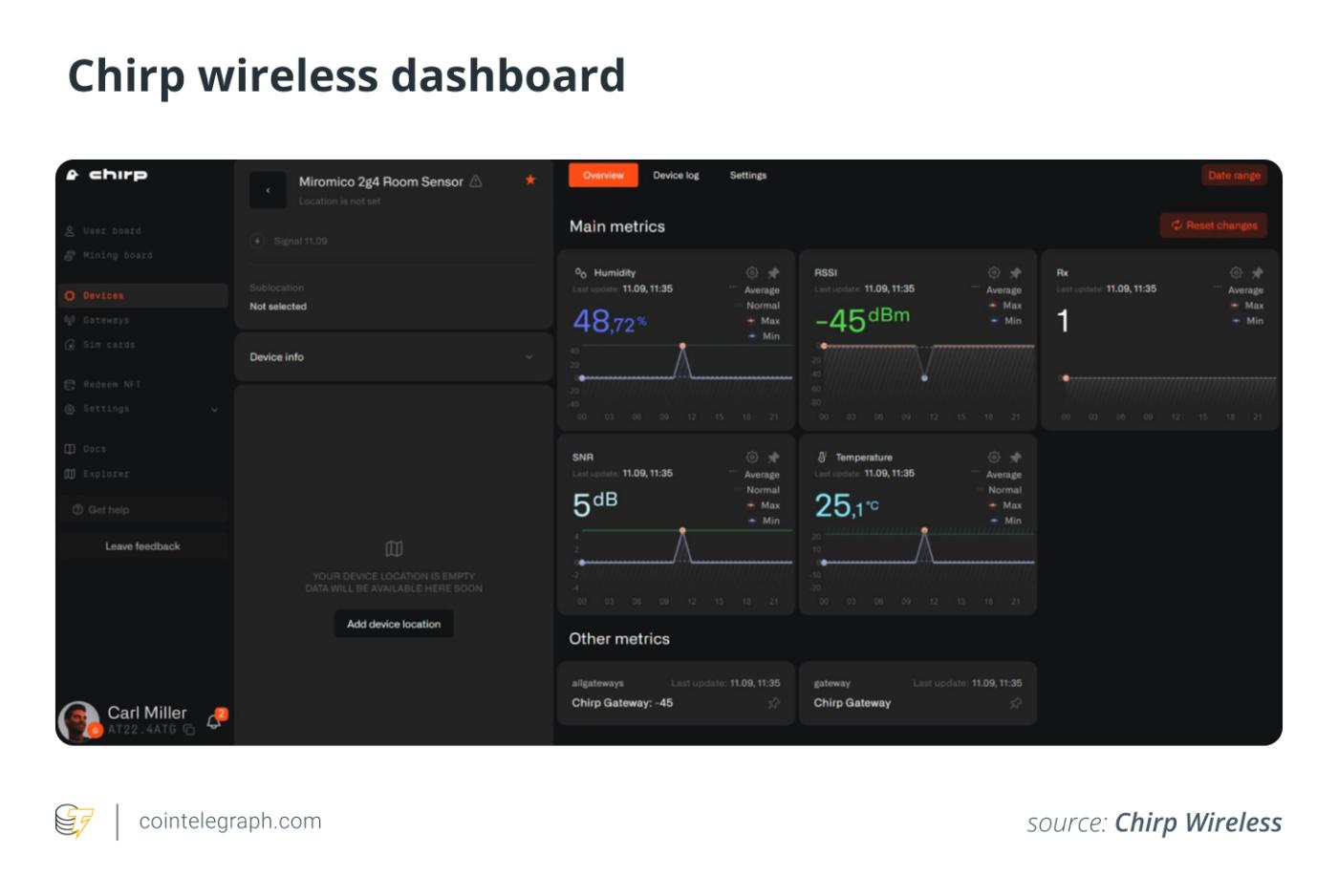
Chirp Wireless allows devices from different manufacturers to communicate with each other. In addition to the connectivity tools, it provides a dashboard and a low-code platform to help IoT network administrators collect and analyze data. With these tools, Chirp Wireless consolidates data from various sensors into a single, user-friendly interface.
To learn more about the full features of Chirp, download the full report here.
The Core of the Ecosystem: CHIRP Token
CHIRP is the native Token of the Chirp ecosystem, used in the core functions of the protocol as well as to reward the network Keepers. CHIRP has three main use cases: Keeper rewards, network access and ecosystem, and governance process management.
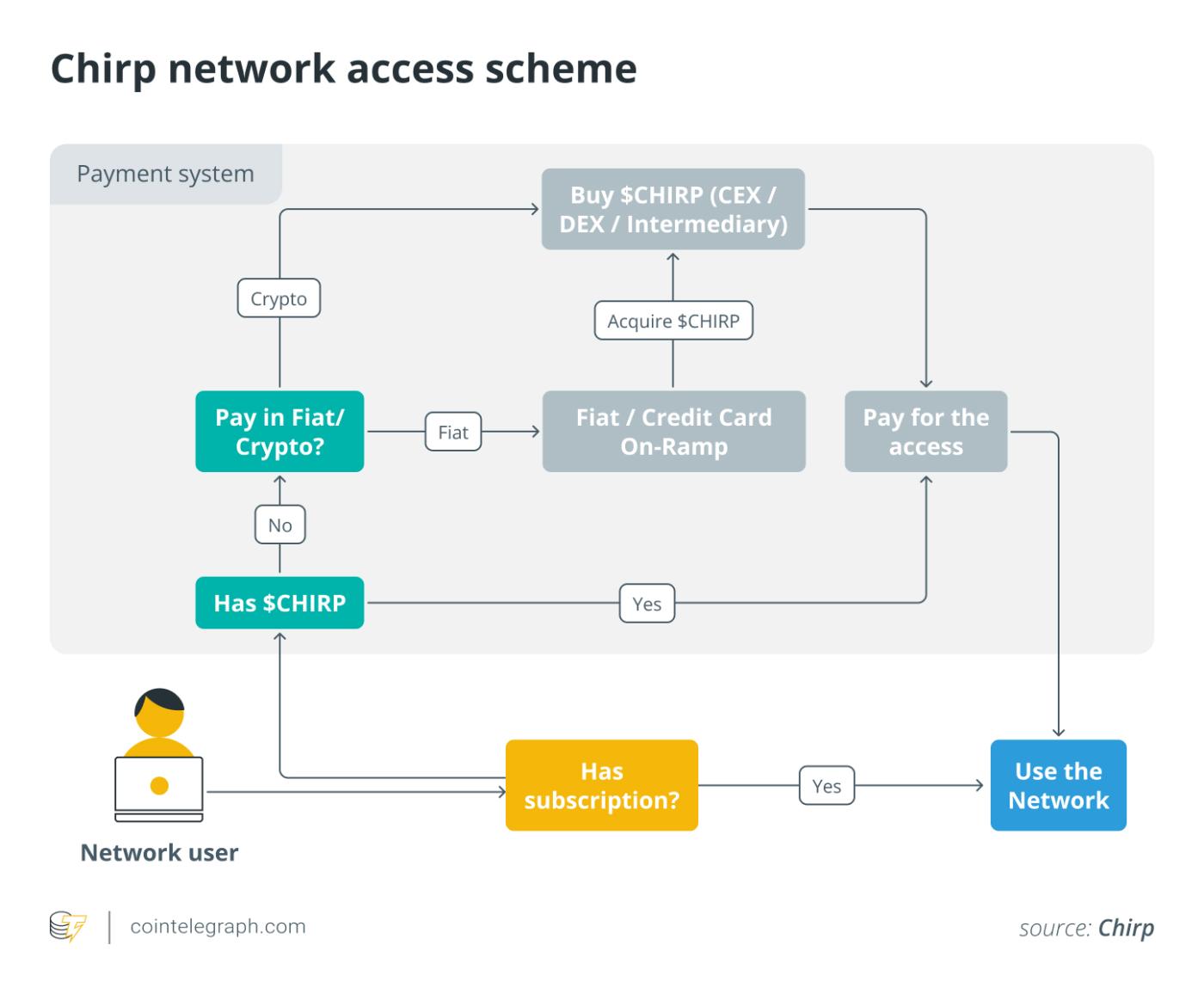
To connect a device to the network, users need to select an access plan, such as a monthly subscription or a pay-per-data plan. The plans are priced in local fiat currencies, but payments are made using CHIRP Tokens on the Sui blockchain.
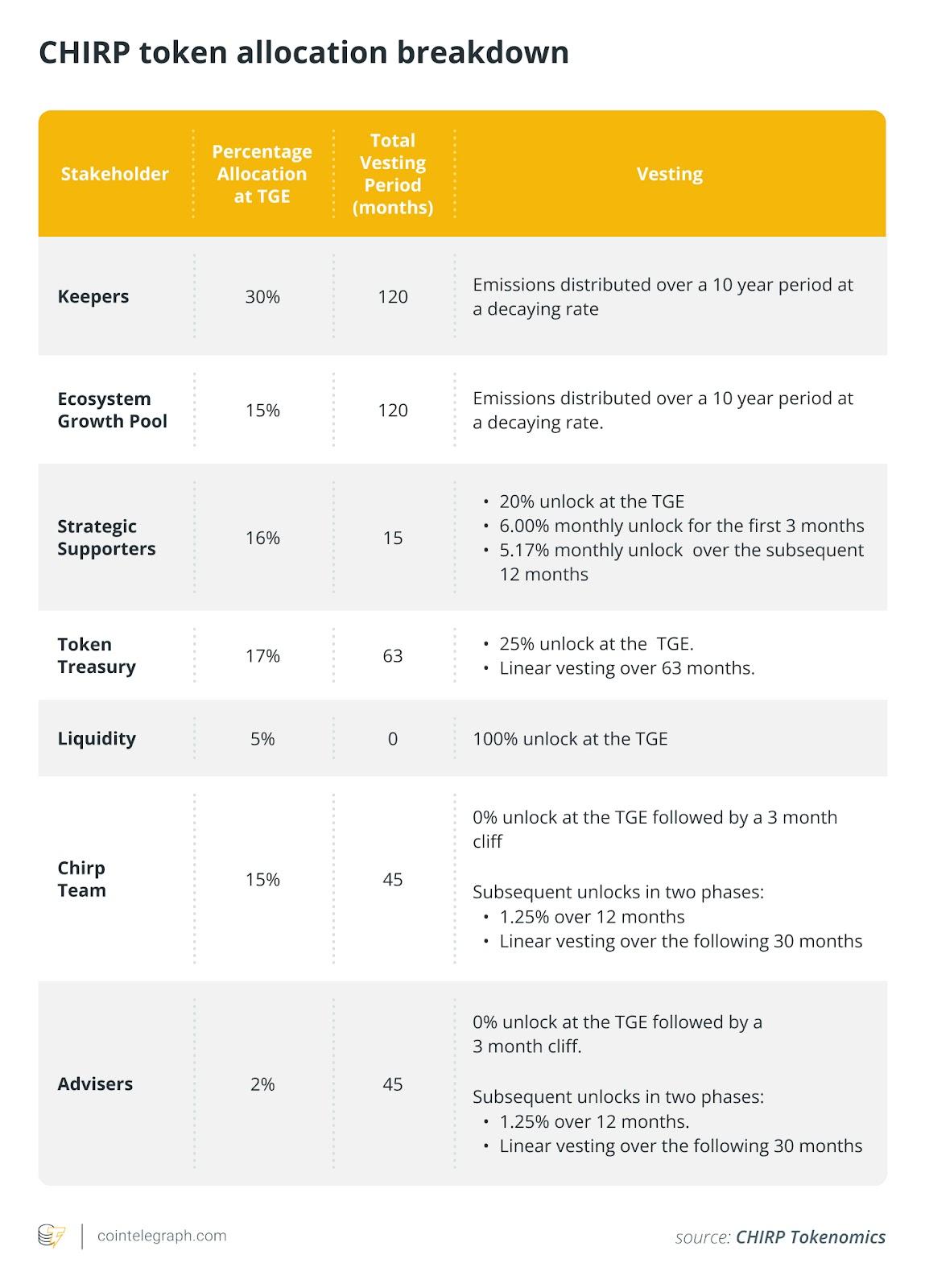
The total supply of CHIRP is capped at 300 million Tokens, to be distributed over the first 10 years after the Token Generation Event (TGE). The Token supply is allocated to four stakeholder groups and three dedicated pools managed by the Chirp team (Table 1). Each group, except for advisors and the Chirp team, receives a portion of the Tokens at the Token launch. Keepers, the key stakeholders responsible for maintaining the network, are allocated 30% of the Token supply with a pre-programmed distribution schedule over the first 10 years after the mainnet launch.
Chirp's Future Outlook
Chirp has developed a comprehensive tool to connect the fragmented IoT world. It opens up opportunities to create IoT systems that can collect, visualize, and automatically act on data. Supported by a Token-based economy with deflationary features, Chirp is a potential challenger to established players in this market.
However, it is still in the early stages, with around 400 active nodes in the network and a limited number of commercial customers. Its future success will depend on its ability to generate stable revenue to sustain network participation, particularly from commercial users who can provide a steady demand.