Author: Cheeezzyyyy
Compiled by: Felix, PANews
Since the launch of the "DeFi Summer" in 2021, DeFi has made significant progress. Today, DeFi has established several mature domains, with growth and activity in each domain becoming self-sustaining.
Even so, its development is still in the early stages, as the cryptocurrency market capitalization is still around $3.3 trillion, while the TradFi market capitalization is $133 trillion.
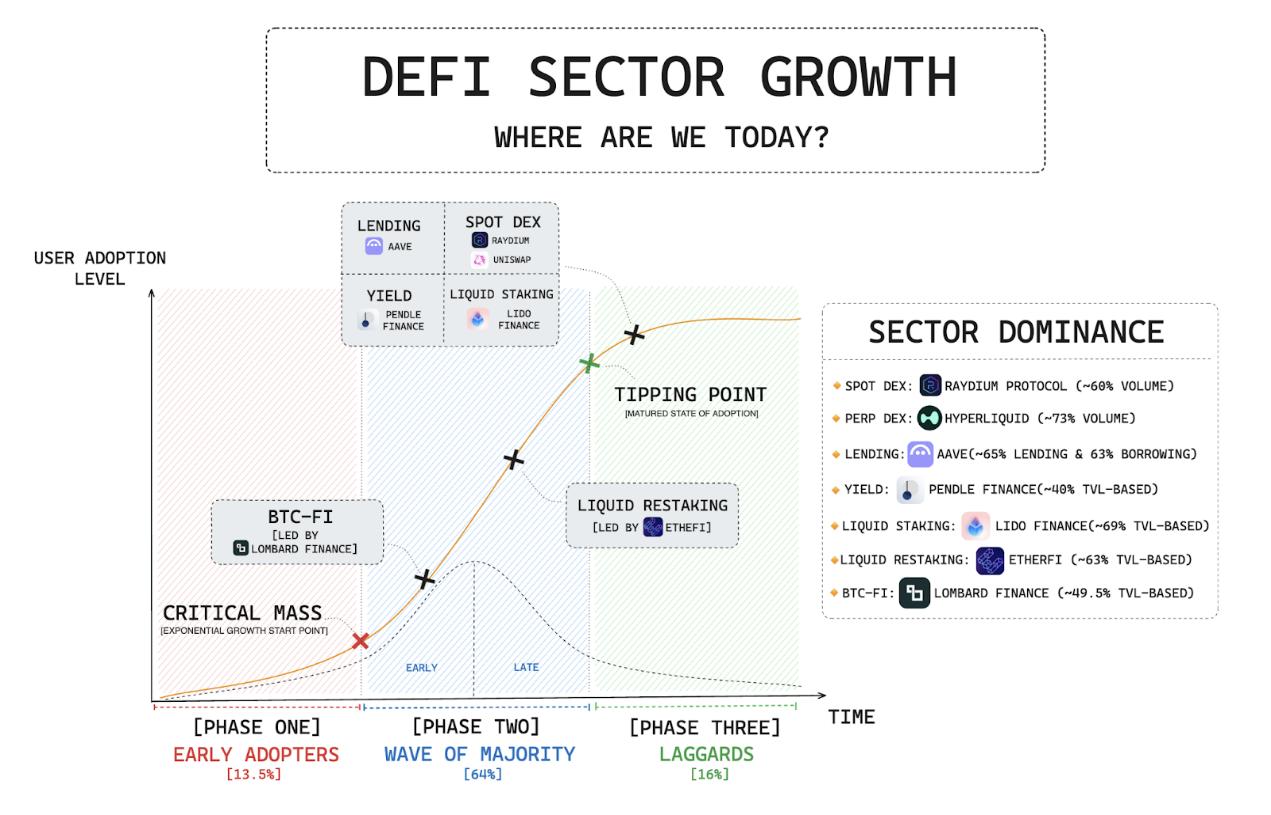
The core of DeFi is to provide a more innovative and efficient system, solving the inefficiency problems of TradFi through verified PMF (Product-Market Fit). DeFi is also composed of multiple key domains, which often follow an oligopolistic structure.
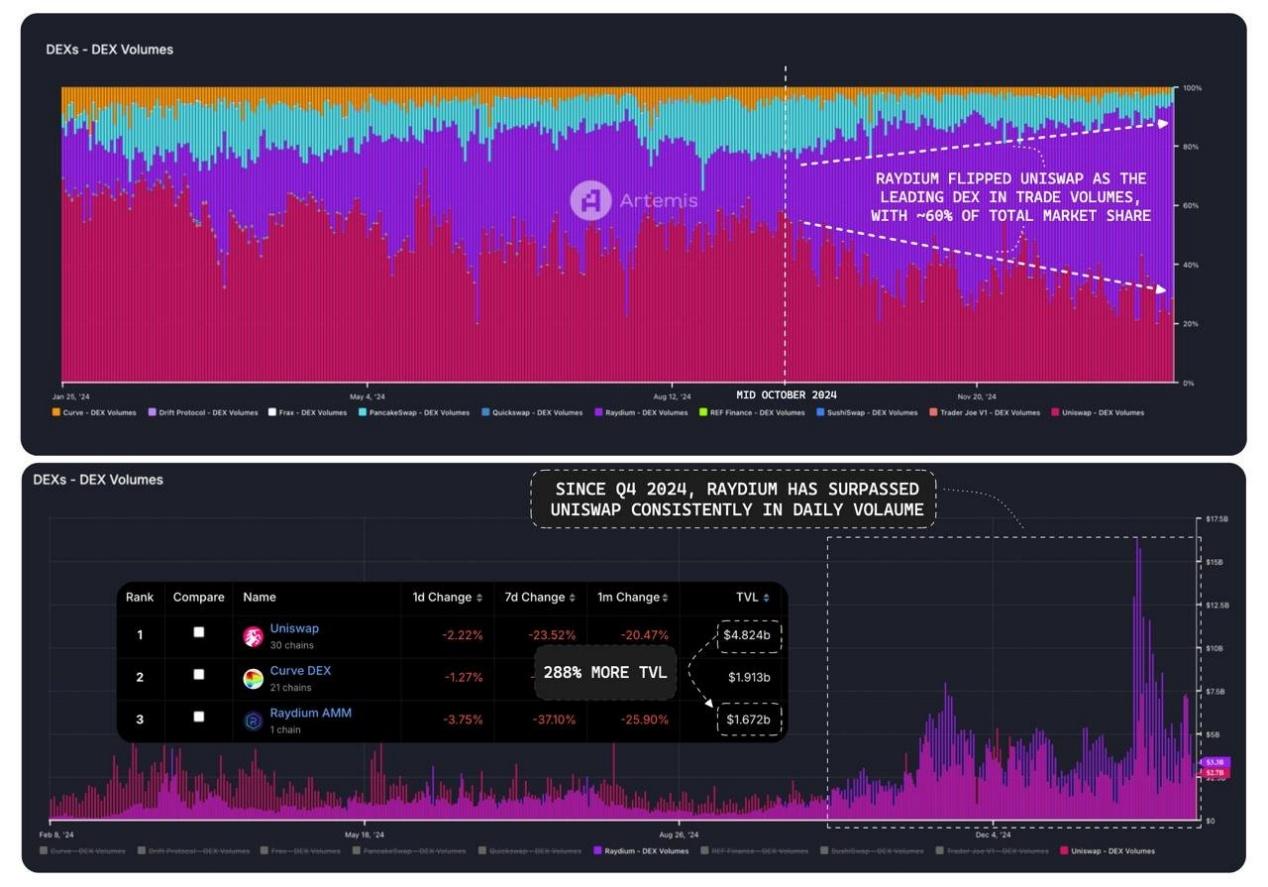
In Q4 2024, the DEX platform Raydium (a Solana-based automated market maker) occupied about 61% of the market share, surpassing Uniswap to become the industry leader. It is worth noting that Raydium's TVL is only about 39% of Uniswap's.
Although the rise of Raydium may be due to the Memecoin Season in the Solana ecosystem, the long-term (LT) sustainability of its user activity is still uncertain.
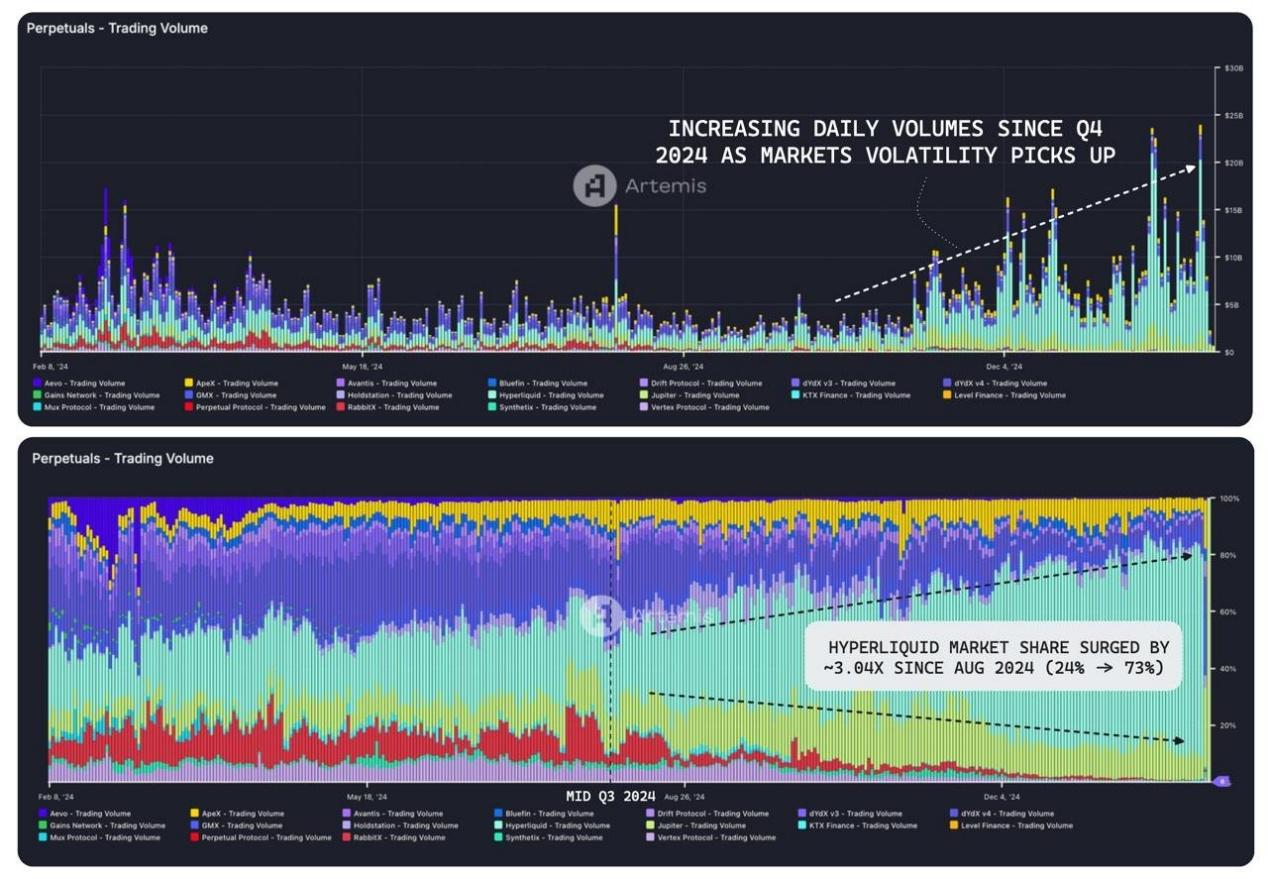
The winner in the perp DEX domain is very prominent. Hyperliquid's dominant position has been further consolidated since Q3 2024, with its market share increasing from 24% to 73% (3 times).
Since Q4 2024, the overall trading volume of perp DEX has been recovering, currently around $8 billion per day, compared to $4 billion at that time.
Hyperliquid continues to challenge CEX as the price discovery platform.
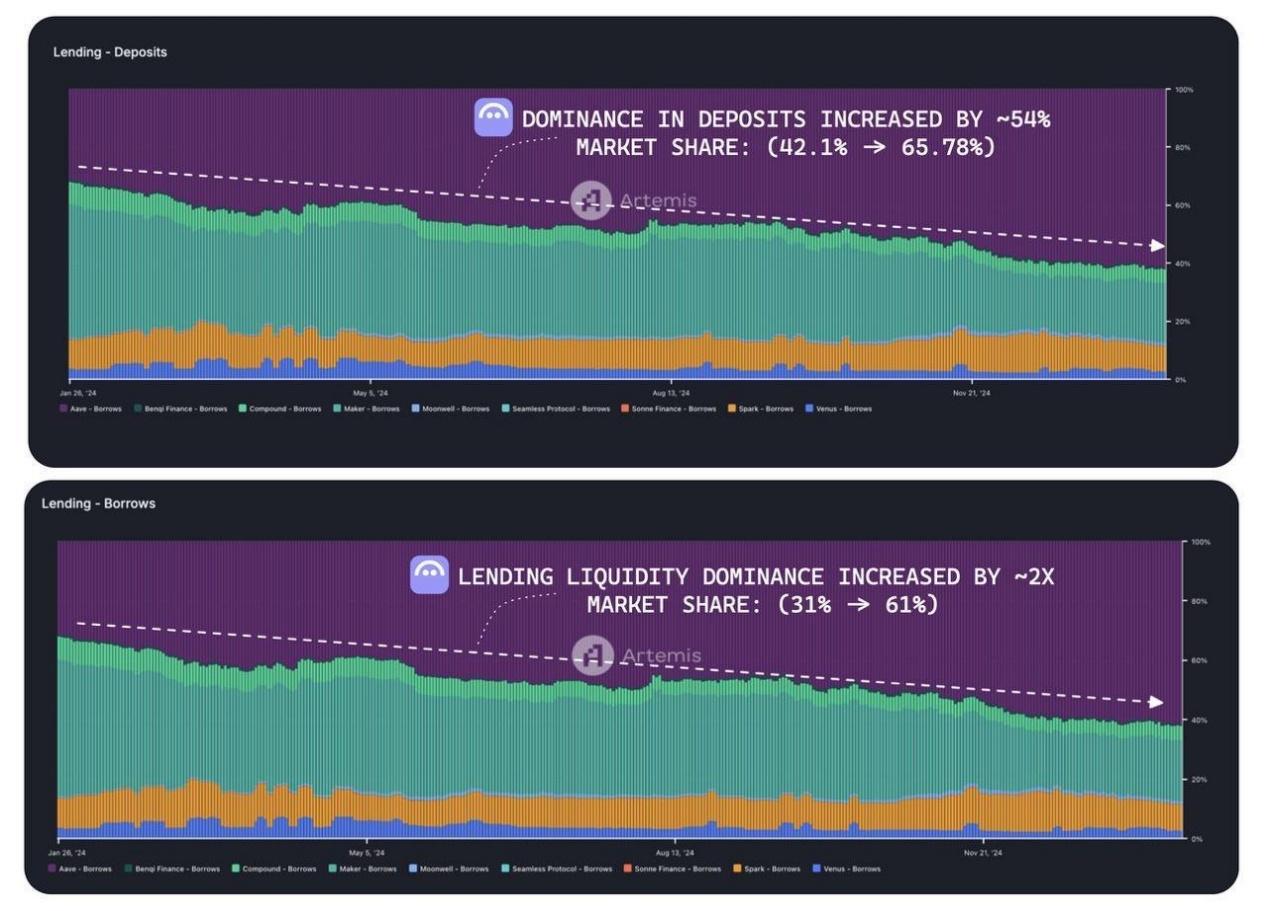
Since 2024, Aave's dominance in the lending domain has increased:
- Deposits: 42.1% to 65.78%
- Borrowings: 31% to 61%
Even though Aave does not have the most attractive yields, its long-standing reputation and user trust in the protocol make it the preferred choice in the lending domain.
In the yield domain, the dominant player Pendle is leading the development, with a market share exceeding 50%. Its unique value proposition is to be the preferred driver of discovering industry value. Despite the overall slowdown in the DeFi market and low market sentiment, Pendle has maintained its TVL record.
In terms of TVL, liquid staking (LST) is the largest domain in DeFi so far, around $35 billion.
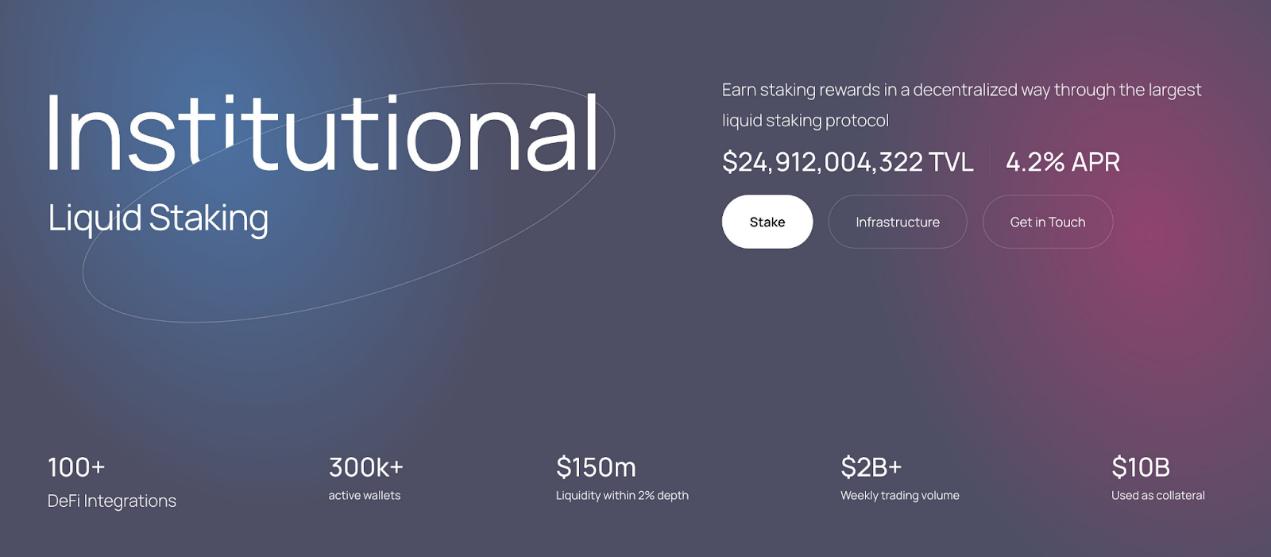
Lido Finance is the undisputed leader, with a market share of about 70%, almost monopolizing the LST domain, with its TVL ($24.8 billion) being 5.17 times that of its competitor Binance bETH ($4.8 billion).
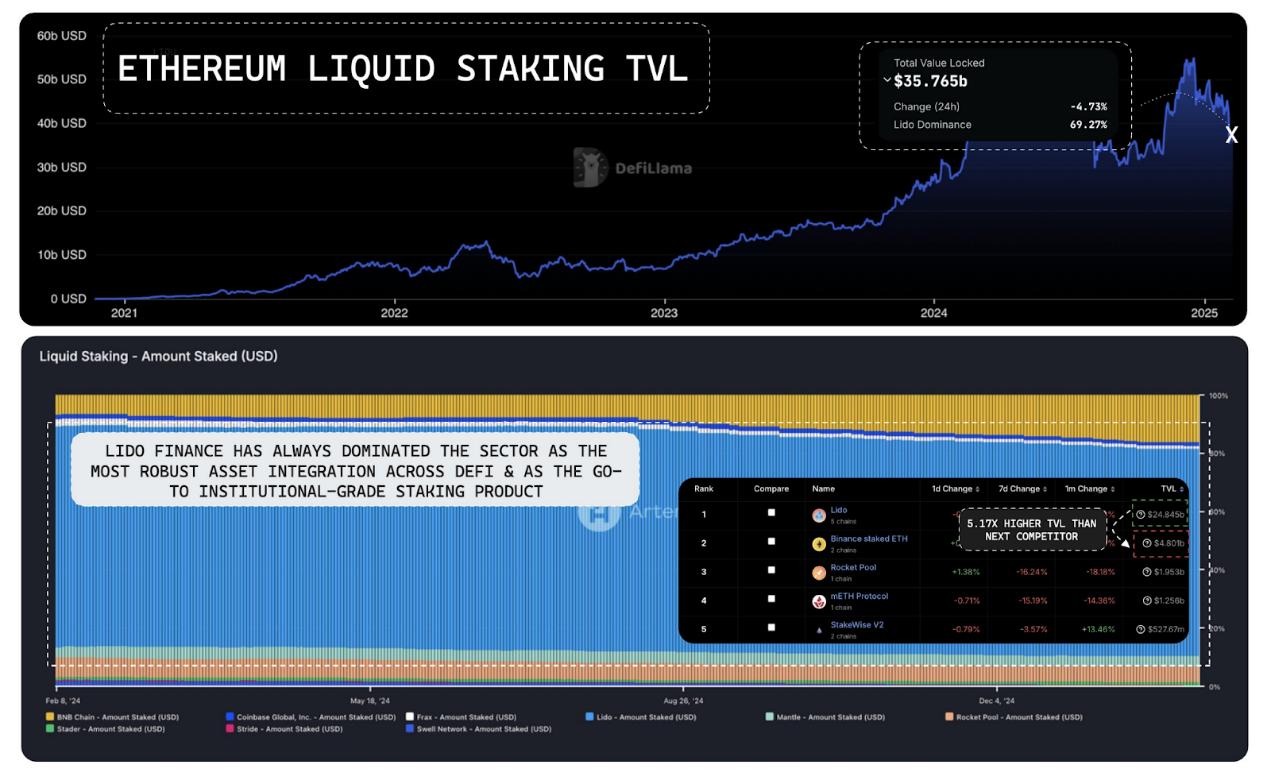
This dominance is not driven by staking yields, but by the asset value of stETH:
- Best asset utilization: The most integrated asset in DeFi
- Most trusted service: The preferred institutional-grade staking solution for funds and entities
Credibility and trust are the keys to adoption.
As for liquidity re-staking, the market trend is largely the same. It is worth noting that ether.fi's market share has increased from 35.3% to 63%. This is because even though ether.fi's staking volume in S1 and S2 has declined, its TVL grew by about 770% in 2024.
This growth is driven by the following factors:
- First-mover advantage in the ecosystem
- Broad DeFi integration
- Trust in the product suite

Lombard's performance in the BTC-Fi domain closely reflects the trends in the LST/LRT domains, with its market share steadily rising to 49.5%.
With the maturation of Babylon, the demand for BTC as the primary safe-haven asset will grow exponentially, presenting a $2 trillion market opportunity.
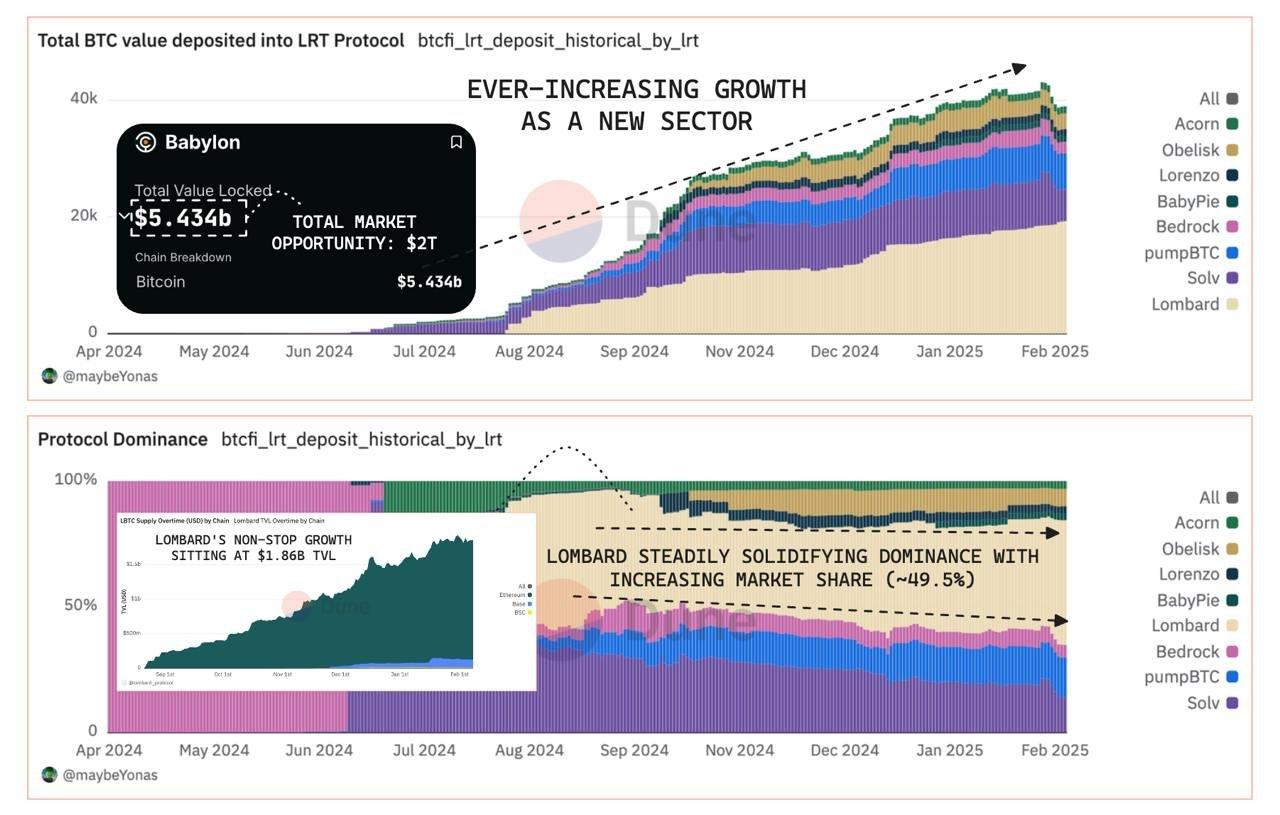
As LBTC is the most integrated, widely used, and security-focused LRT in DeFi, Lombard has become the primary asset that has gained institutional trust and widespread adoption, just like stETH. Lombard will dominate the industry.
In summary, the various DeFi domains have clearly found their PMF, forming an overall ecosystem that complements each other. This is the rise of a new set of primitives that will disrupt CeFi.
As DeFi enters the next expansion phase, we will see more new vertical domains introduced to untapped markets, and even integrated into CeFi:
- Ethena Labs: Planned integration of TradFi payments
- Mantle: Mantle Index Fund and Mantle Banking will integrate cryptocurrencies with TradFi
With more and more institutions showing interest in DeFi, such as BlackRock's participation in DeFi through BUIDL, WLFI's DeFi investment portfolio and spot ETF, the future development of DeFi is promising.
Related reading: Exploring DeFAI: The Deep Integration of DeFi and AI, Three Core Scenarios Promoting Large-Scale DeFi Application