Author: Big Old Dog, Dr. X
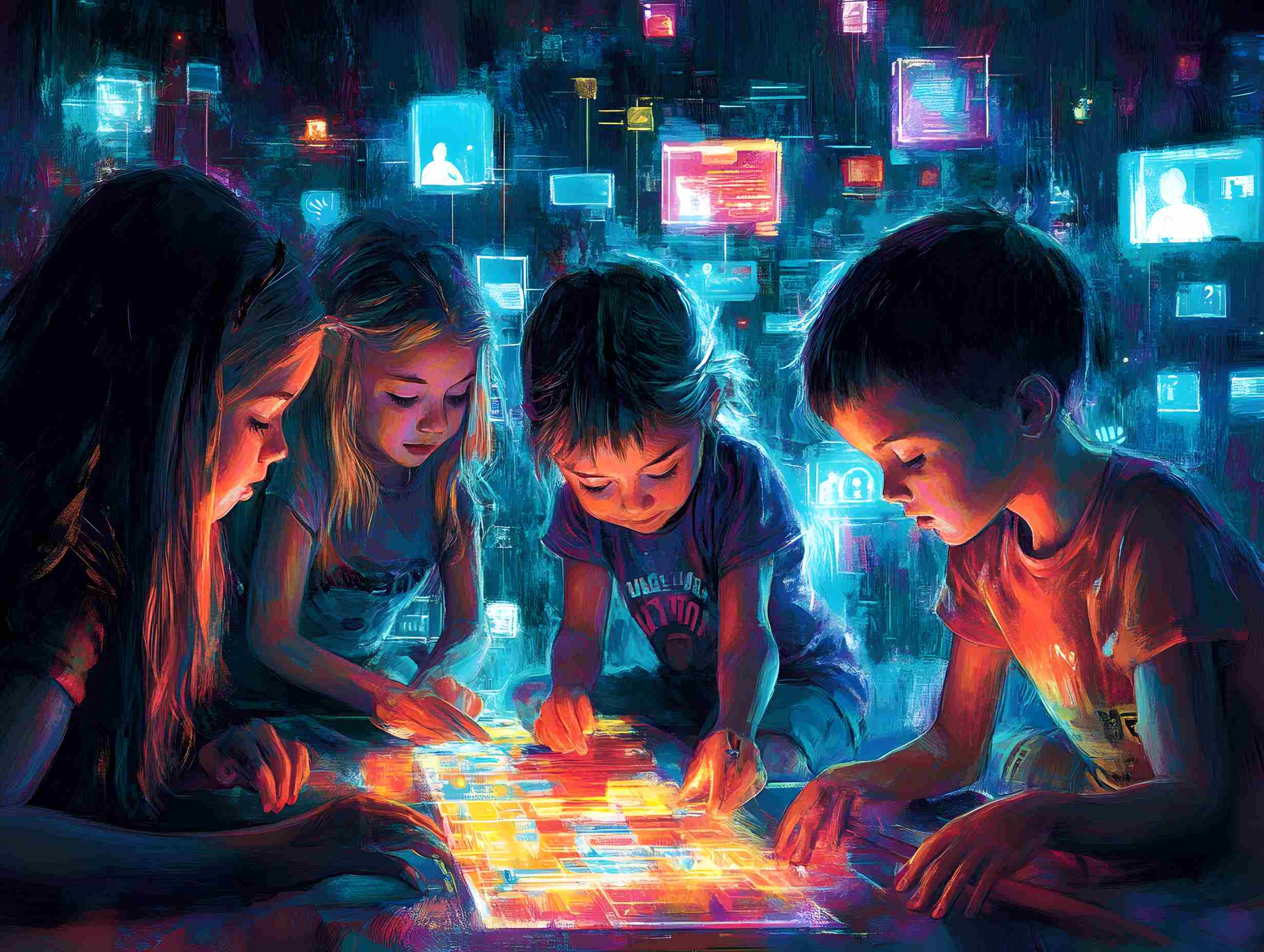
Image source: Generated by boundless AI
Deepseek has emerged, and the discussion fever has lasted for half a month: from Deepseek topping the global app store, to various AI courses, using Deepseek to calculate eight characters, the elderly using AI to write poems, and getting AI to imitate Lu Xun's sharp criticism...
I just smiled a little at these, nothing surprising.
Until I saw a Xiaohongshu post, I was shocked:
A user made a video to teach everyone how to use AI to assist in writing code to solve the problem of programming efficiency.
Here, an AI programming software called Cursor is needed. After entering the instructions, a C++ Snake game is done.
Proficient in programming and skilled in using AI... You must think this is a tech blogger who works in programming, right?
Wrong! This "teacher" @Likes Programming Yang is only in his early 10s, and is still an elementary school student. Moreover, by opening his Xiaohongshu homepage, we can also see him teaching everyone how to use AI to improve word memorization efficiency, recommending algorithm books he has read, and even announcing that he is preparing to participate in the American programming competition - USACO.
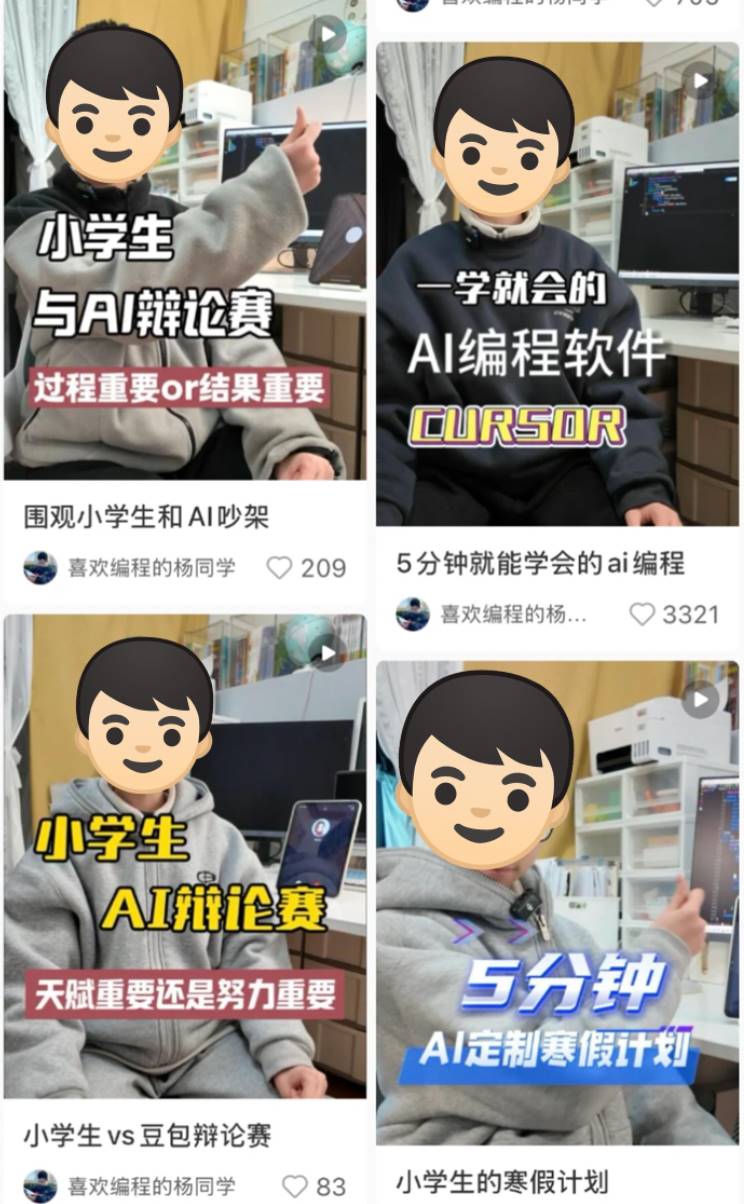
Xiaohongshu homepage of @Likes Programming Yang
When I first saw this note, I was indeed shocked. How come I came across such tech and geek content on Xiaohongshu? Isn't Xiaohongshu a community for life styles of eating, drinking and playing?
The more I browse, the more I find that the content of elementary school students mastering AI is not an isolated case. On Xiaohongshu, I actually saw a group of children sharing AI content, and their ages are often only around 10 years old, but they can skillfully use AI and elaborate on the terminology that even adults find difficult to understand.
At this moment, the boundary of the future has already emerged.
Because, aren't these children who master AI the so-called AI natives?!
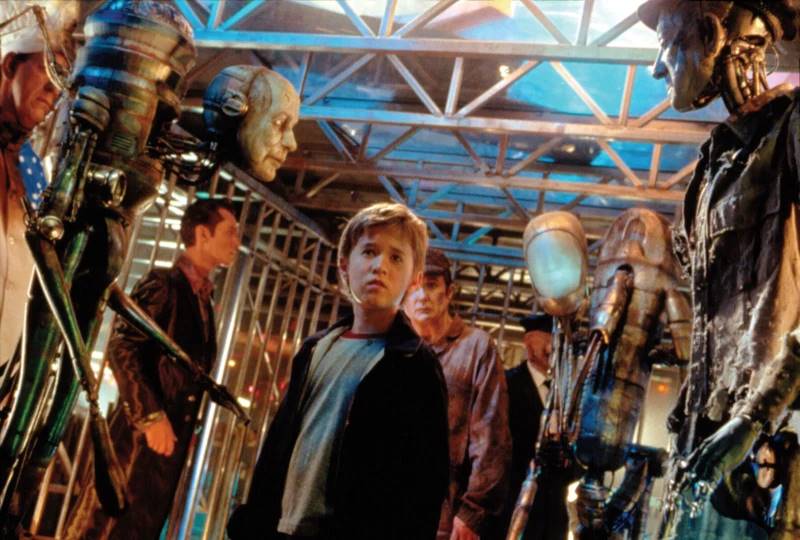
The movie "Artificial Intelligence" (2001)
AI Natives and the Future Boundary
Why does the emergence of AI natives mark the boundary of the future?
Raising this question is not deliberately trying to create a sensational effect. In fact, a few years ago, the Silicon Valley circle that focuses on the future and frontiers has already had discussions about the "AI Native generation/Gen AI".
Recognizing AI Natives
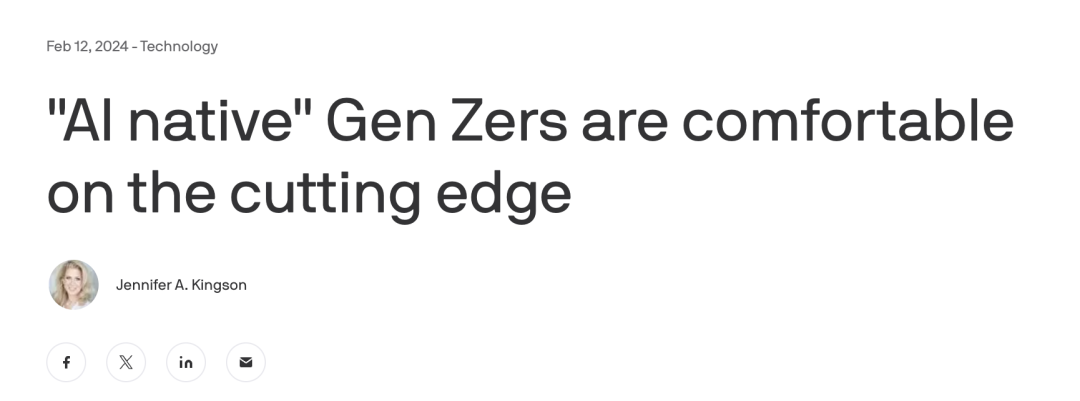
"AI Natives" Gen Z are willing to stand at the forefront
Regarding the characteristics of AI natives, an article summarized it quite interestingly, called "2025 marks the beginning of Generation Beta, the AI-native kids", which says they have three main features:
1. They were born after 2010.
2. They have been exposed to AI since childhood, and are born to use it and understand it.
3. AI is a part of their life.
Please note that the key point here is the time of birth. Because from a historical perspective, every technological revolution will bring about the emergence of a watershed, creating a huge gap between the two generations. And these two generations will always have huge differences in terms of mindset and cognition.
This huge generational difference, the most recent case is the "Internet natives" that we have all experienced, but rarely delved into.
In the 1990s, the Internet was an absolute novelty to the general public. Some old-fashioned experts, when the Internet first appeared, also greatly questioned and belittled it. They not only failed to foresee the future from it, but also believed that the Internet, apart from chatting and selling yellow stuff, had no real business value.
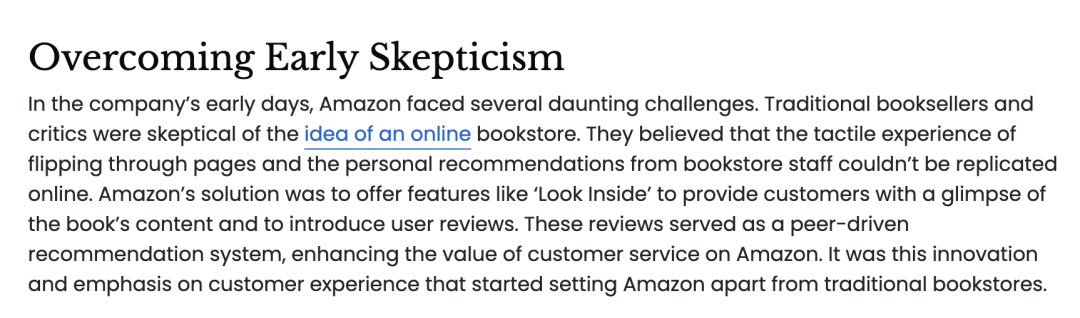
Among them, an online bookstore that was once questioned in the start-up stage, with reasons including but not limited to "books sold online cannot be seen or touched, the experience is poor", "online stores do not have live store staff to serve like physical stores", and this bookstore that was questioned is the future Amazon with a revenue of over $380 billion.
At that time, most people could not understand that within a few years, all elementary school and high school students would be proficient in chatting on QQ, a group of non-literary teenagers would create online literature, and a group of online game teenagers would put a 30-year-old young man on the throne of China's richest man, whose name is Chen Tianxiang.
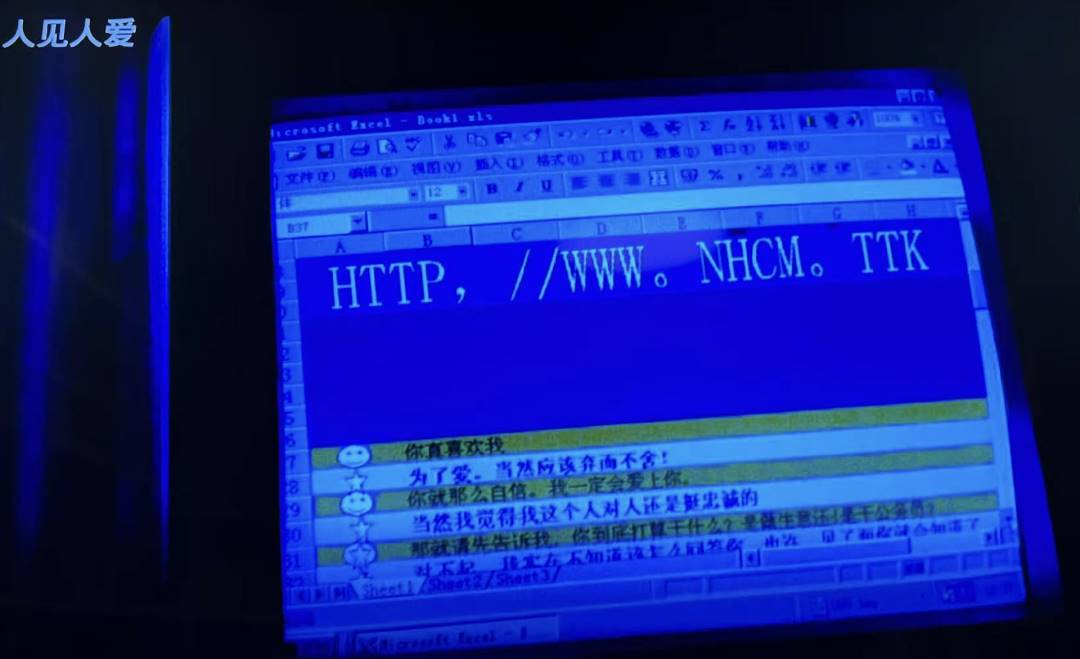
Early interactions of Internet natives - still in the budding stage, no one would have imagined that this kind of chat would produce QQ and an Internet giant.
Remember when we were young, we had a course called "Microcomputer Course", where the elementary school students would solemnly wear shoe covers, line up to enter the microcomputer room, sit up straight, and learn to turn on/off the computer, operate the DOS system to draw pictures, edit Word documents... Why wear shoe covers? Because computers are high-tech, you must be respectful and dust-proof to use them!
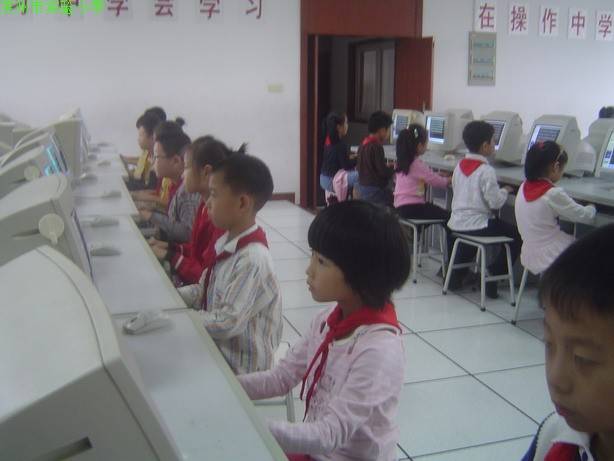
This is called ineffective learning, a performance created by outdated people.
But at the same time, another group of young people, the so-called Internet natives, naturally see the Internet as a part of their lives. They naturally like to watch "The Matrix", can quickly learn to use instant messaging software to chat, and intuitively understand the social structure and trading system of online games, download BT seeds...
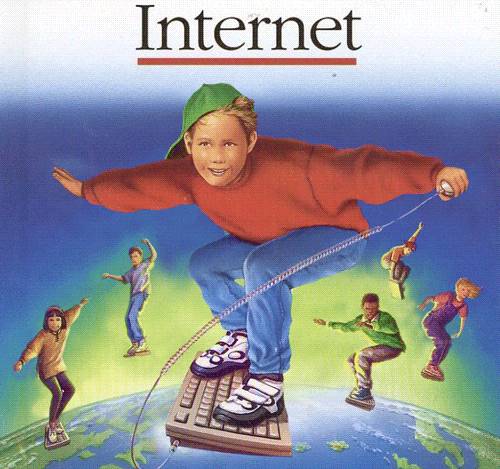
As time goes by, the gap between the two generations becomes wider and wider. The "pre-Internet" generation is burdened with too many baggage, and their judgments are all wrong, making it difficult for them to understand the significance of the "Internet natives" for the future.
They absolutely cannot imagine that a group of young people who seem to be fooling around, tinkering with code, with no credentials and no reputation, actually hold the tools to connect the future. The outstanding ones among them will surely use the "technology leverage" to create companies worth hundreds of billions or trillions of dollars in the future, shaping the direction of the future.
For example, a typical example is Zuckerberg, who started writing programs in high school and later created Facebook, becoming a billionaire in his 20s.

Facebook is also a product that only the Internet generation can understand (Screenshot from "The Social Network")
Another typical case is Snapchat, the prototype of this app came from the idea of "self-destructing" among some young people in the Stanford University dormitory. Its process from zero to one, and then the rapid rise, has a bit of the "garage entrepreneurship" of the Internet natives.

Today, Internet natives are no longer a novelty.
But the rapid rise of AI has to make people look back at the time when the Internet was just emerging.
Undeniably, the future is shifting from "Internet natives" to "AI natives".
And these "future masters" will be even more powerful and have greater potential.
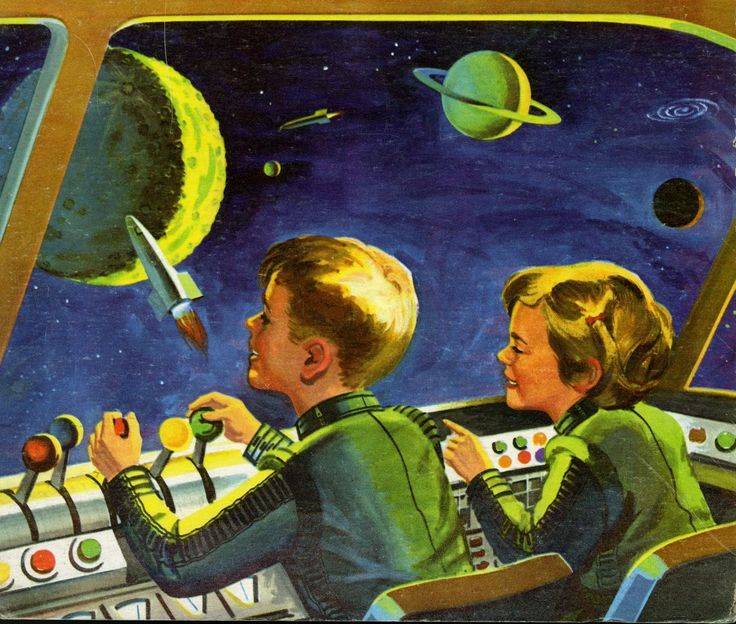
So, Silicon Valley bigwigs, investment gurus, and cryptocurrency patriarch Balaji also boldly predict that:
While the Internet native Zuckerberg became a billionaire in his 20s,
The AI generation may see billionaires in their teens.
His meaning is that this group of children who have grown up with AI, their way of thinking, working, and even interacting with society, must be completely different from our generation, almost like two different species.

Silicon Valley Thinker: Balaaji, the book he wrote, "Balaaji's Prophecy", focuses on analyzing how technology will shape our future
Make a somewhat inappropriate prediction. When we were reciting the "Chu Shi Biao" and playing "Romance of the Three Kingdoms" on the NES, "AI natives" might use AI to build a Three Kingdoms game model; when we were worrying about boring interest classes, "AI natives" might be using their familiar technology to make games, music, and short films...
I wonder what you think about this? Anyway, I'm very excited.
10-year-olds Mastering AI
What excites me is that the future is not completely invisible "fog of war", but is hidden in the details of the present.
Although "internet natives" are still in the process of growing up, the communities they gather are definitely worth focusing on, because they contain information to glimpse the future.
Based on my observation, in the English-speaking world, "AI natives" are highly concentrated in one community - reddit. And on the domestic side, the emerging one is - Xiaohongshu.
The old-fashioned reddit community covers anime, conspiracy theories, pop culture, entertainment gossip, digital currencies... all kinds of content, with a huge age span of users
Currently on reddit, AI natives are most active in the technology, learnmachinelearning, and ArtificialIntelligence technology sections. The discussions are not very widespread, just pure geek park.
What are they busy with? I guess a lot of adults would look at it like reading a foreign language.
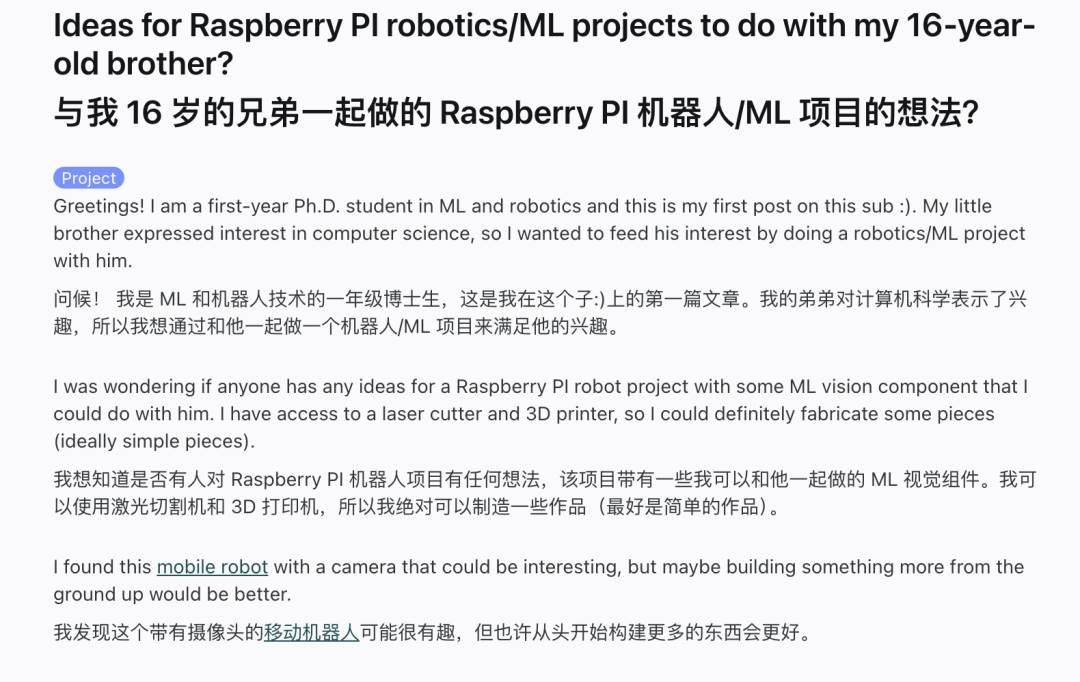
For example, a doctoral student wants to start a business with his 16-year-old brother, planning to develop a robot with machine learning vision components using a Raspberry Pi micro-single-board computer, and is now recruiting partners.
This 14-year-old is trying to create a stock prediction tool with over 40% accuracy using AI machine learning in a week.
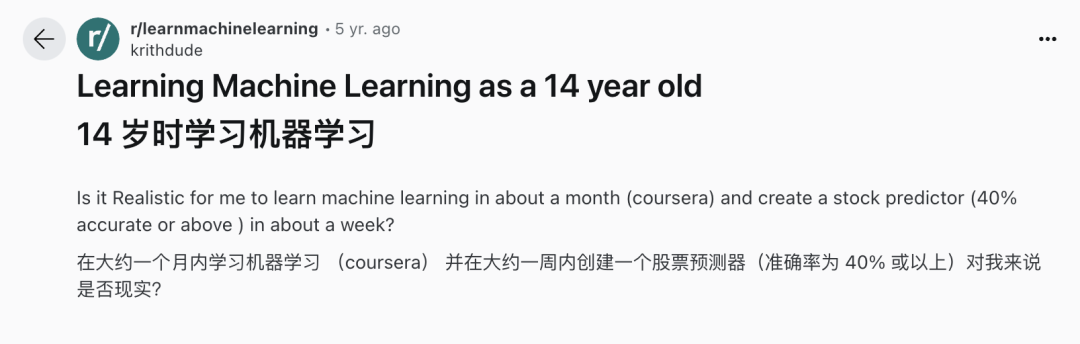
I can smell the money
On the domestic side, the "AI natives" on Xiaohongshu seem more practical and down-to-earth, and the discussion atmosphere is very strong.
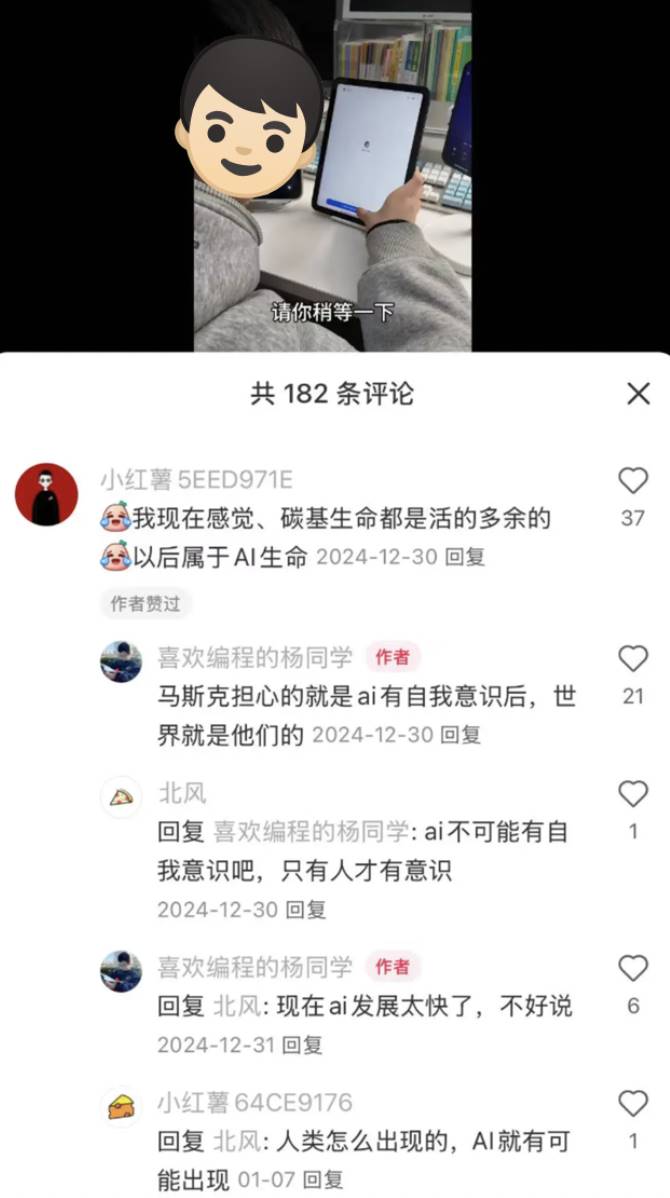
Under the notes shared by the AI natives on Xiaohongshu, there are often all kinds of discussions. For example, under this note of a primary school student debating with AI "Do you still need to learn programming with AI?", people discussed whether AI will develop self-awareness.
The "AI natives" show a "maturity" that belies their age (of course, this is not surprising).
For example, this child can not only analyze the pros and cons of OpenAI Sora and point out the physical errors in AI images, but also open a video lecture to share his insights.

Xiaohongshu ID: Tracy the Tinkerer
And this primary school student teaches everyone how to customize a personal AI language tutor with crispe, using terms like "prompt template format" and "human-machine collaboration framework" fluently.
The professional knowledge even leaves adults scratching their heads.
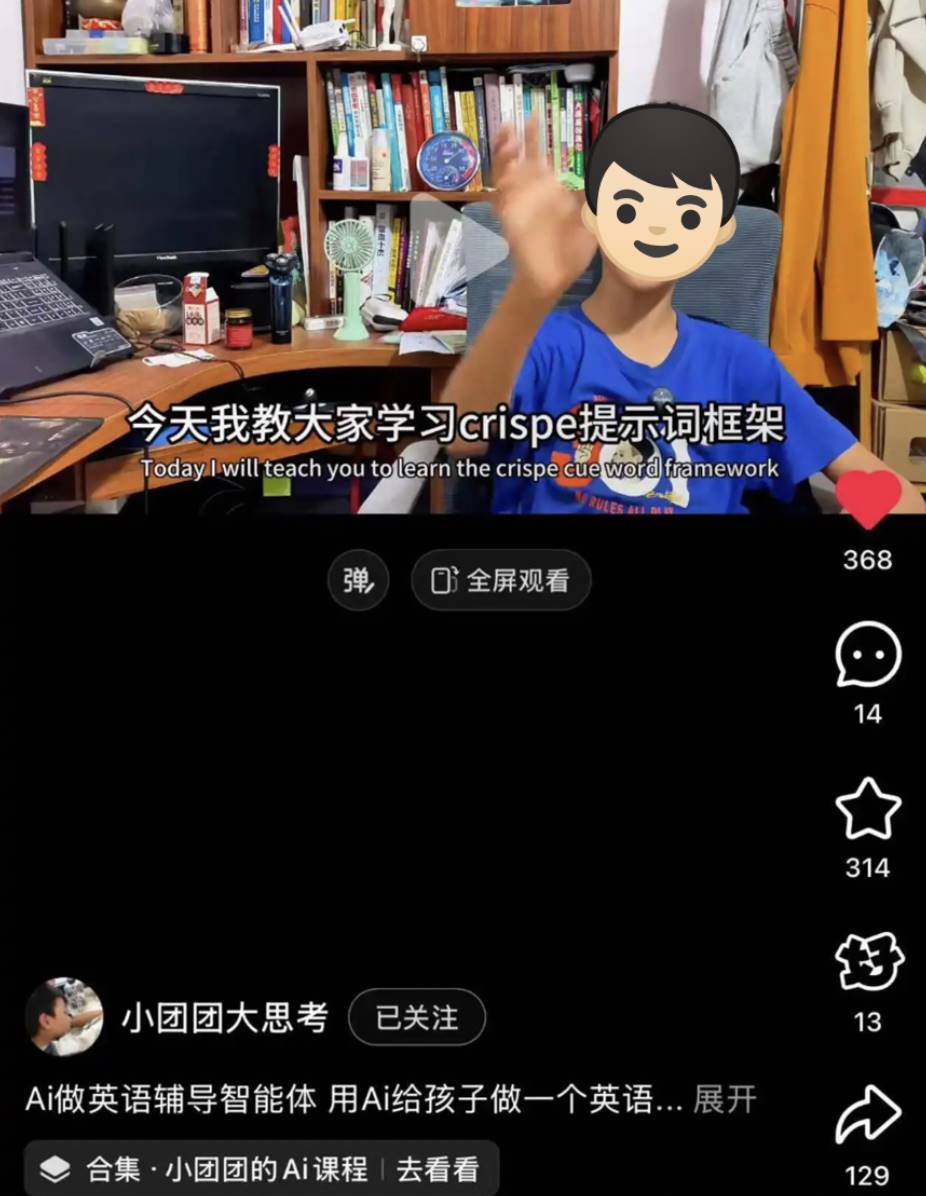
Xiaohongshu ID: Little Tuantuan's Big Thoughts
This primary school student teaches how to use deepseek+natralReader for homework, and even taught how to use AI tools to conveniently listen to English podcasts.
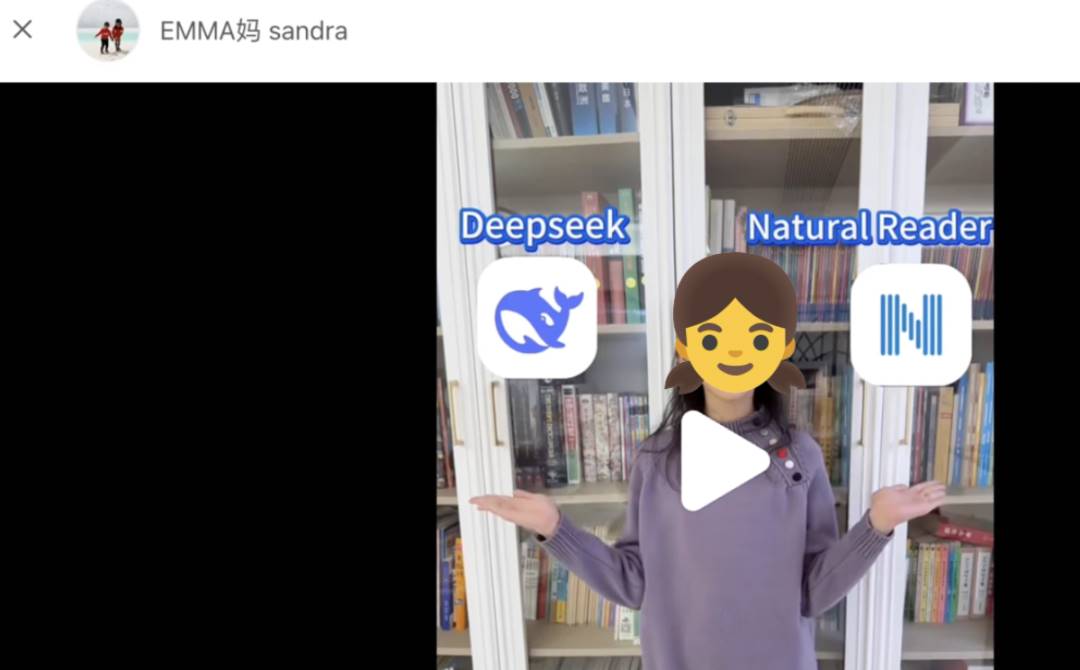
Xiaohongshu ID: EMMA's mom sandra
There are many similar examples on Xiaohongshu, you can go find them yourself if interested.
These discussions and sharing may still be in the underground stage, like sparks.
But based on the development pace of the previous node - "internet natives", I always feel that it won't be long before the "AI natives" concentrate and explode, producing a few representatives that will go down in history and shake everyone's cognition.
The number one player defining the future, the "Zuckerberg" of the AI era, may well appear in the not-too-distant future.
The Undercurrents of the Future Have Emerged
So, maybe in the not-too-distant future, there will be notes on Xiaohongshu like: "I'm 14 years old, I've done an AI game project, and I'm going to raise 10 million for it and recruit same-age partners!"
If this happens, I won't be surprised. Because AI natives have already emerged on Xiaohongshu, and the "future rebels" who dare to dream and act may soon appear on Xiaohongshu.
Then someone might ask, shouldn't the so-called "AI natives" be born in more vertical tech communities? How come they appear on Xiaohongshu?
This may be mainly related to the diversity of the community. Like reddit, as a UGC community, the user group on Xiaohongshu spans a wide range, and the independent individuals in the community are real and diverse. The content generated is no longer limited to lifestyle, from cutting-edge technology to daily life, from stock trading to UFOs, from independent games to niche music, everything is there.
It's like an ecosystem can't be made up of a single species group, it needs species diversity to maintain the most fundamental vitality. And the prosperity of a UGC community also requires the collision of different individuals' thoughts, feelings and experiences.
From foreigners flooding the comment area to "reconcile accounts", to the emergence of hardcore AI's diverse playfulness on Xiaohongshu, we can see that no matter what your nationality is, how small your hobbies are, how incomprehensible your technology or how obscure, esoteric and cutting-edge your knowledge is, you can always take root and sprout in this highly inclusive community, and even extend into new creations.
Internet natives and AI natives have one significant feature in common, which is that they have no fear of the internet and AI, but embrace them quickly.
And on the Xiaohongshu platform, I've also seen a specific manifestation: a group of kids discussing AI content is no different from sharing burgers, playing games, and buying clothes. AI is just a part of their lives for AI natives. It's not a single discourse system of content narrative, nor is it a small group monopolizing the discourse power.
Please don't think that all this is just a fantasy, a vision of the future. After all, many of the big projects that "internet natives" have done started with small observations of life and small ideas related to life, which seemed quite insignificant at first.
And our future may well be born in the daily life shared by AI natives.