Do you trust Meta or me as the First Emperor of Qin? In recent years, social media giant Meta has been continuously questioned by Taiwanese users, with online accusations that Meta's suite of products (Facebook, Instagram, Threads, and other platforms) collaborate with the Chinese government in content censorship and sharing Taiwanese user data, sparking concerns and a "#DeleteFacebook" movement.
Former Meta executive Sarah Wynn-Williams testified before the US Congress in April, alleging that Meta founder Zuckerberg personally led a plan to curry favor with Beijing to enter the Chinese market and developed censorship tools already in use in Taiwan and Hong Kong.
In response, Meta issued a rare official statement on May 2, 2025, to comprehensively clarify these sensitive issues.
Meta's core clarification can be summarized in three points:
- First, firmly stating they have never accepted content censorship from the Chinese government for Taiwanese users;
- Second, emphasizing they have never shared any Taiwanese user data with the Chinese government, and their content review team is not located within China;
- Third, reaffirming their commitment to creating a safe and free platform in Taiwan, defending freedom of speech and protecting user data.
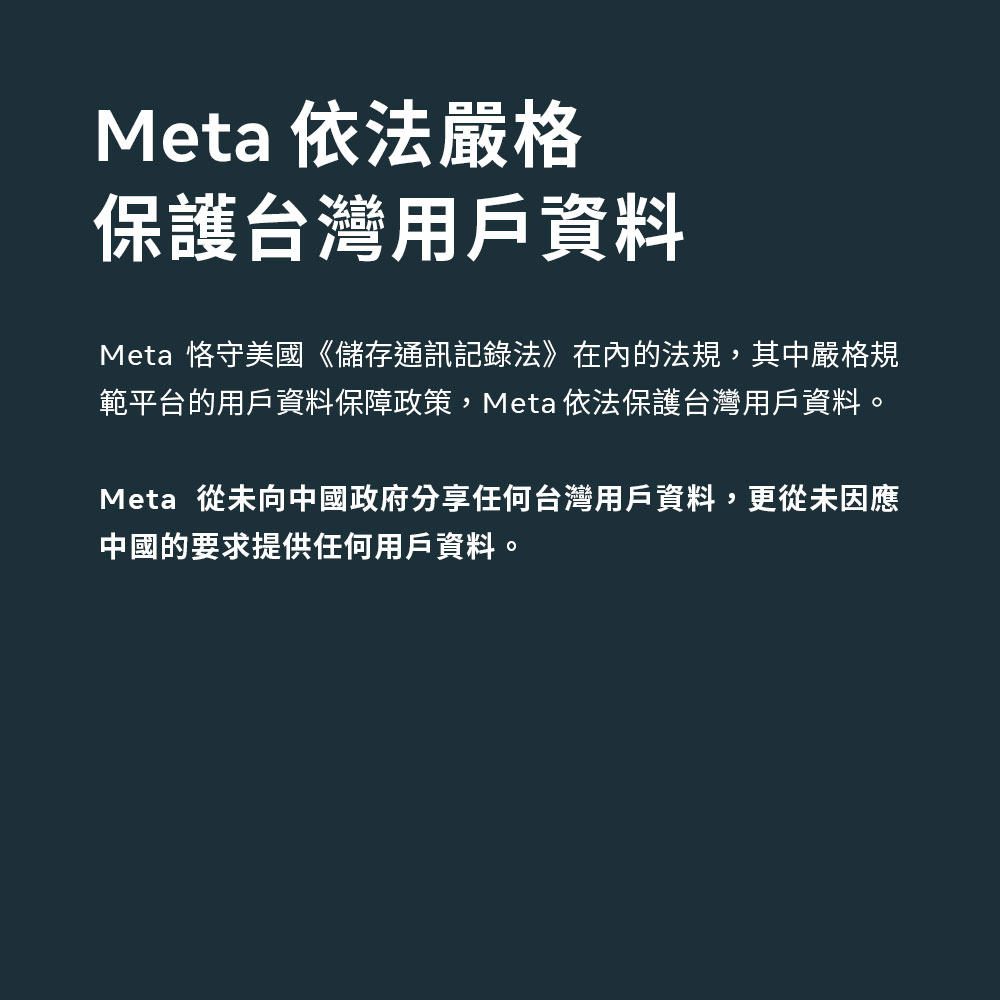
Meta: Global and Localized Execution
Meta states that all user-posted content is reviewed according to a globally unified 'Community Guidelines', aimed at prohibiting inappropriate content and not serving any specific government. The review combines technology and human teams.
For Taiwanese content, they have specifically hired native Traditional Chinese speakers to form a review team, distributed globally across time zones, who understand the cultural context of Taiwan, which also refutes rumors about the team being in China. Regarding politically sensitive terms, Meta says they need to judge their political implications based on context.
Compliance and Transparency Report
In terms of user data protection, Meta emphasizes strict adherence to US regulations like the Stored Communications Act. Meta firmly clarifies they have never shared or provided any Taiwanese user data to the Chinese government upon request. Their data protection policy is strict and legally protects Taiwanese users. The government data request reports Meta publishes every six months show they legally respond to requests from various countries, and these reports do not include data requests from China regarding Taiwan.
Users Still Unsatisfied
This controversy stems from rumors circulating in Taiwanese social media, linked to some users' dissatisfaction with handling fraudulent accounts and questioning the transparency of political sensitive word determinations, which triggered the "#DeleteFacebook" movement.
Meta's response to the controversy is to reiterate the principle of "fair and transparent" and encourage users to report through complaint mechanisms. Legally, although Taiwan's Personal Information Protection Act has limited constraints on multinational companies, Meta emphasizes that they prioritize "US regulations" in handling data protection issues. However, looking at the comments below Meta's post, 80% are negative responses, questioning Meta's truthfulness.
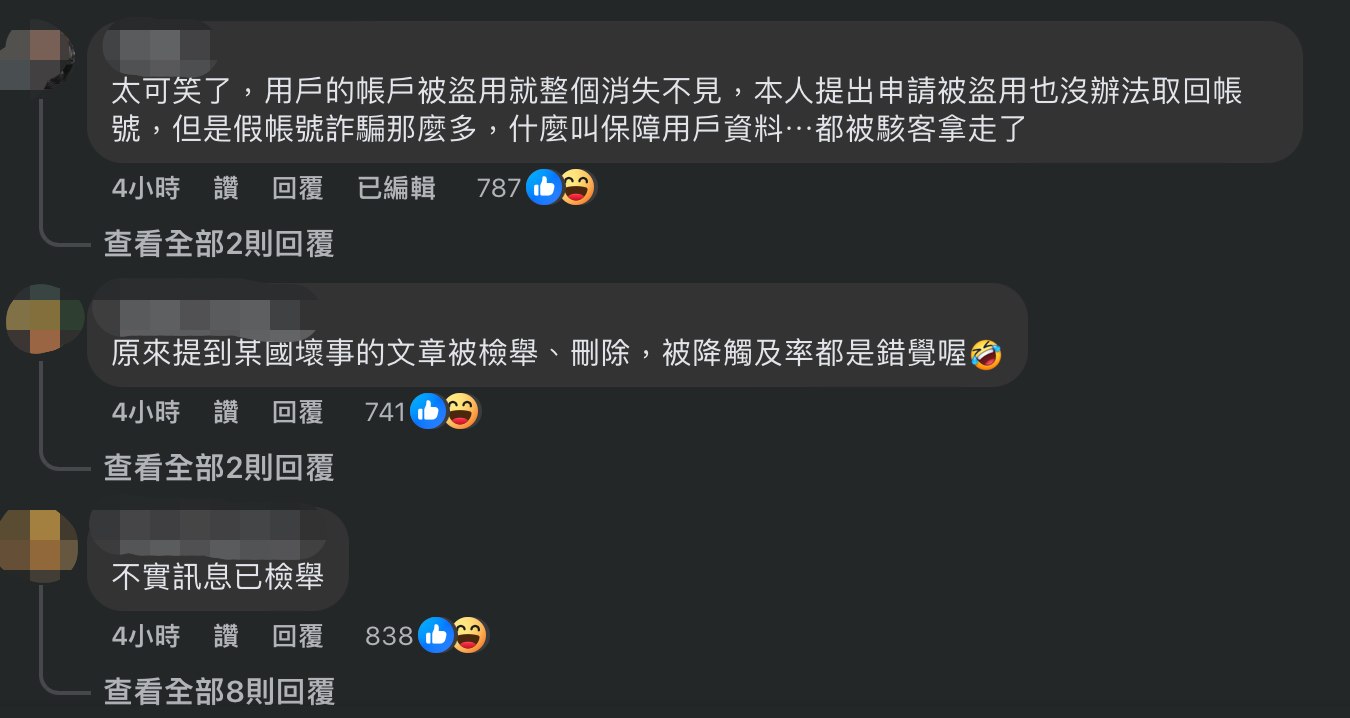
Recalling Meta's previous public statement of interest in entering the Chinese market but not reaching a consensus, and that their services are not operating in China, Meta's Asia-Pacific head Simon Milner personally denied allegations of developing censorship tools to accommodate China.
Although Meta seems to be trying to "stop the bleeding" immediately, from the perspective of social sentiment, it appears this wound has been torn open for years, and now trying to patch it up seems too late, giving a sense of post-facto public relations that only makes the already dissatisfied crowd even more angry.