On the evening of July 10th, Yzi Labs announced a strategic investment in Aspecta. This article aims to provide a brief interpretation of Aspecta - its attempt to build on-chain standards and trust mechanisms for "illiquid assets" in traditional capital markets, including the project's design logic, product system, application progress, and industry potential.
Team Background
In terms of team background, Aspecta did not start from scratch. The project was incubated at the Tsai CITY (Tsai Center for Innovative Thinking at Yale) in 2022, with core team members hailing from top universities and research institutions including Yale, Tsinghua, Berkeley, and McGill, possessing multiple patents and research achievements in AI and graph learning. The founding team includes Steve Liu (a member of the Canadian Engineering Academy), a former Tinder chief scientist, serving as chief scientist, Jack He as co-founder, and the team has also gathered several senior engineers and growth managers such as Jane Yang.
Why Emerge? What Pain Points Does It Solve?
In traditional markets, numerous assets such as early equity, locked tokens, private equity, and real-world assets (RWA) cannot be traded in public markets, lack transparent pricing, and severely constrain liquidity and pricing efficiency. Aspecta proposes: allowing these "closed assets" to have an on-chain "life" can not only achieve pricing but also provide trading capabilities, thereby reducing information asymmetry and improving asset utilization.
When analyzing this logic, imagine: a project locks a portion of tokens in Series A, and hesitates to exit upon expiration due to market lack of liquidity and pricing mechanisms. Aspecta, through a standardized "packaging + reputation mechanism", enables these assets to be priced, traded, and tracked - "unlocking" new value.
Two Core Products: BuildKey and Aspecta ID
Aspecta's design context is clear, with two core, mutually supportive paths:
BuildKey: Asset Standardization and Lifecycle Pricing
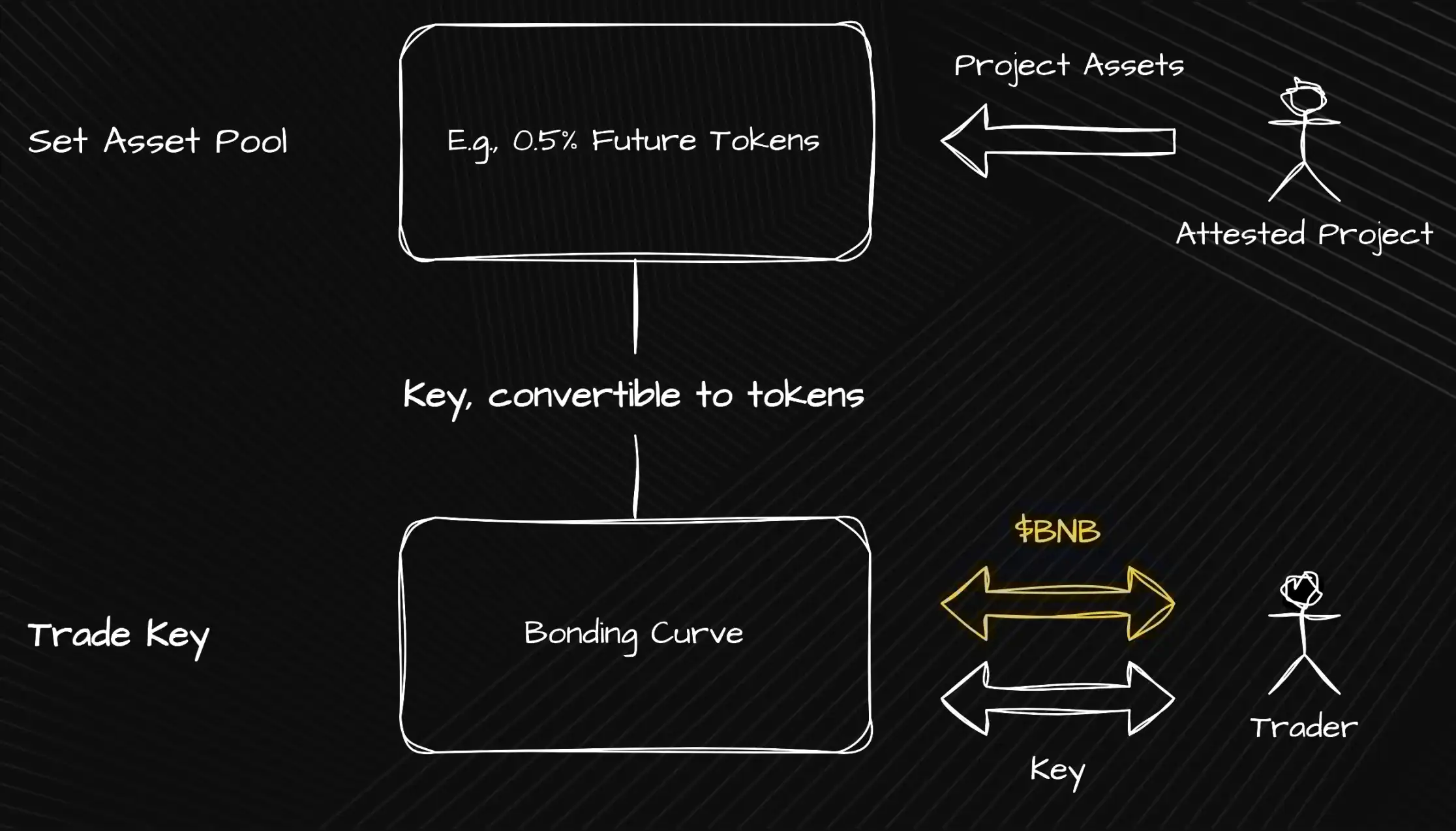
BuildKey presents non-liquid assets in a tradable ERC-20-like certificate form. For example, pre-TGE equity, locked tokens, private placement rights, etc., can all be issued and traded on-chain through BuildKey. This mechanism not only supports multiple pricing methods like AMM, order books, and auctions but also allows assets to switch between different lifecycle stages, such as an "on-chain relay" between venture capital and public trading markets.
Notably, since its launch, BuildKey has supported pricing for over 25 digital assets, completing more than 50 million trades, momentarily proving that closed capital has a strong demand for on-chain liquidity mechanisms. It is not simply token minting, but a "lifecycle asset variant" system: users can freely enter and exit at multiple stages like TGE, lock-up, and secondary markets, with asset prices being more continuous.
Aspecta ID: AI-Driven Trusted Identity Protocol
If BuildKey is an asset certificate tool, Aspecta ID is the trust mechanism that provides endorsement from issuers. By integrating GitHub submissions, on-chain behaviors, and project contributions, it uses AI algorithms to create credit profiles for developers, projects, and asset issuers, and issue reputation scores.
This mechanism eliminates the "trust vacuum" in asset packaging. During a project's early or closed stages, Aspecta ID's trust output can reduce investors' and traders' concerns. Currently, over 54,000 GitHub developers have completed verification, and the system is moving from a trust protocol towards community governance.
Product Interaction: How to Form a Closed Loop?
[The rest of the translation follows the same professional and accurate approach, maintaining the technical and descriptive tone of the original text.]