
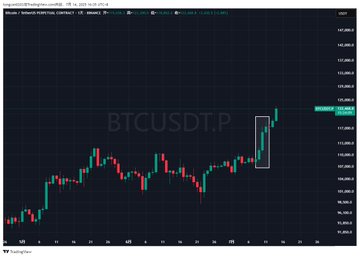
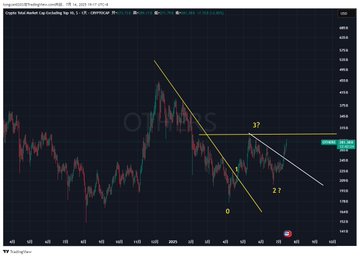
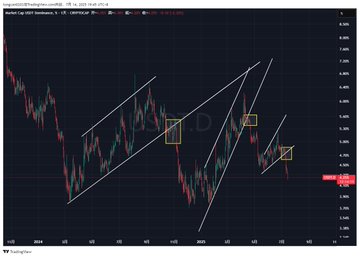
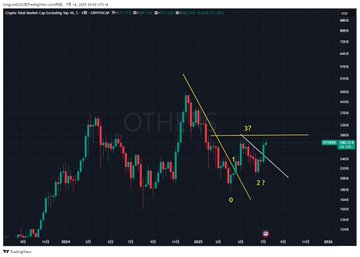
Took the weekend off for a break. Here’s a detailed breakdown of my long entry logic from July 11, plus some follow-up entry advice for everyone. I’ll try to share as much as possible in this thread—won’t be repeating it later. My real trades have never been public, but somehow people have found me, and the recent attention has really spiked. As I said before, once my actual trading is fully public, all my previous posts on trading concepts/techniques will be hidden. So if you’re interested in those, better save them now. Back to trading and the review. I tweeted at around 3:30AM on July 11, documenting my entry into longs. It’s been three days since then. If you’d entered longs at the same time I tweeted—or even caught it later that morning—whether it’s $BTC, $ETH, or most major alts, you’d still be sitting on unrealized profits now. The only question is how much. I’ve mentioned before: my trading system rarely does short-term trades. I only follow trend trades on the 4H to daily timeframe. So the trend changes I catch are always at the turning points of larger cycles. My entry and the breakout candle are basically when I believe the trend is truly established and will extend. A lot of people DM me asking how I spot trend reversals. That’s a long topic, but I’ll keep it simple and use July 11 as the example. First, $BTC: On July 9, after $BTC broke the previous high at 112,000, we saw three straight daily green candles on July 9, 10, and 11. This is classic strong price action. Any experienced trader should see that this isn’t just a liquidity grab from shorts—it’s a legit breakout, and most likely the start of a new uptrend. Also, divergences on the daily and weekly indicators were potentially resolved. If you couldn’t see that, or were still being told to short, I have no comment—respect the differences. Around 6:00AM on July 11, I saw $BTC pull back from 117,500 to 116,000 on the 5-min chart. Before I went to sleep, I tweeted: “It’s best not to short $BTC here, don’t try to catch the top or hold through. Ignore if you’re a 5-min scalper. If you love the thrill, do what you want.” $BTC has since broken 120K and moved up another 6%. I think I’ve done my part reminding my followers—honestly, it’s not even my job to do so. There was even a troll who DMed/commented saying I was bullish to trap people, and that he’d go all-in short because of me… Wonder how he’s doing now. I don’t do short-term trades anymore, but I used to scalp 5-15min, even 10x leverage. Hard to explain my candle-reading in a sentence, but when I saw that 5-min pullback before bed, I knew it was a bear trap. Bears would think they’re catching the top and plan to hold big, or scalpers would try a high-leverage short—most would get stopped out before even closing. These are lessons I paid for in losses, so I couldn’t help but drop a reminder before sleeping. Second logic for my long entry: USDT.D chart. USDT.D had already broken below support on the 4H/daily since July 9, but just from that indicator, there was still a chance for a bounce and more chop. Still, this is where you should be on high alert for an imminent trend change. Check my earlier tweet from July 9: I documented switching from bearish/short to neutral/wait-and-see, and explained a possible scenario where a single green candle could flip the trend from bear to bull. I’d been flat for four days, waiting for a clear new trend. On July 11, in the early hours, USDT.D’s 4H/daily chart broke down again after a short consolidation—pretty much confirming the trend shift. Third point: altcoins, $OTHERS chart. I posted on July 4 about how I use naked Dow 1-2-3 to judge trend changes and when I’ll flip bullish again. You can check that thread for details. Here are two charts: weekly and daily. A bunch of alts broke their daily downtrends around 3:00AM on July 11—confirming a weekly higher low [2]. So, to sum up my long entry logic at 3:00AM July 11: $BTC daily breakout + USDT.D breakdown + mass alt breakout—triple confluence. There are other supporting signals, but these three are more than enough for most retail traders and enthusiasts—if you really master them. The key is to backtest these three points and spot their “similarities” in historical charts. The next level is your own sensitivity and pattern recognition. Like the few top traders in crypto—show them a random historical chart and they can tell you the year and month instantly. They might say it’s just guessing or luck—don’t believe it. That kind of “muscle memory” and instinct only comes from grinding charts day and night while others sleep or rest. As for entry advice going forward: If you’re buying spot alts, start scaling in from here, control position sizing. If we get a dip this week, you’ll have ammo to add; if we break higher, you can add more. If you’re trading leveraged contracts and haven’t entered yet, start with a small position, keep leverage below 1.5x—same strategy as spot. Add on dips, chase on breakouts. If you’re a swing/right-side trader, watch the $OTHERS chart above—wait for a breakout at [3] and enter hard on the retest. July 11 was wave 1 on the daily; my initial long was on the first breakout. I personally focus on hitting wave 2 hard, as I’ve shared before. If you feel you missed the move, don’t stress. Early trend formation always offers enough entry chances. Decide your timeframe—low leverage on higher timeframes lets you stay flexible and roll profits. On lower timeframes you can use higher leverage, but don’t randomly switch your trading plan. Trade by segments. Biggest mistake: high leverage on higher timeframes; or starting on low timeframes then switching cycles mid-trade. Trading isn’t that complicated. Just remember these two things. Shorted the bounce in late April, went long in early May, took profits and went flat in June, started shorting again. In early July, stayed patient and flat, then re-entered longs on the 11th. Every key point and my view on the market has been shared here on Twitter. OG followers know I don’t tweet often—maybe once or twice a week, and my threads are always long. Honestly, my posting style is the worst for building an audience—doesn’t boost followers, not many have the patience to read long posts. But the value in each post, and the knowledge/market timing insights for those who stick with it, are obvious to anyone who’s been following. Saw the new movie F1: Apex this weekend. Brad Pitt’s character, a pro driver, tells a rookie obsessed with social media: “I just want to focus on racing, feel the car. Everything else is noise.” Love trading, feel trading, document trading. My attitude is to pursue trading with pure, extreme focus and surpass myself through it. Let’s keep pushing forward.
This article is machine translated
Show original

From Twitter
Disclaimer: The content above is only the author's opinion which does not represent any position of Followin, and is not intended as, and shall not be understood or construed as, investment advice from Followin.
Like
Add to Favorites
Comments
Share
Relevant content