Author: Geek Old Friend
In the past year, AI programming assistants represented by Cursor and Windsurf have quickly occupied developers' workstations, and the entire industry seems to be discussing Vibe Coding.
The earlier competitive pursuit of Windsurf by OpenAI and Google should be the most prominent event in the Vibe Coding direction. Recently, domestic tech giants like Alibaba, Tencent, and ByteDance have also successively launched their own AI programming assistants, further reflecting the hotness of Vibe Coding.
Ordinary users who don't understand code may find it hard to feel this "hotness". The reason is simple: while Vibe Coding assistants reduce programming complexity, they are essentially still "code generators". Developers still need to understand programming language syntax, be familiar with various frameworks and APIs, and master debugging and deployment skills. For most ordinary users without a programming background, this threshold remains insurmountable. However, this high barrier also means a huge market blank.
It is against this background that MyShell's ShellAgent 2.0 proposed a more radical concept - "Vibe Coding 2.0", where you can create applications directly through natural language interaction without understanding code.
01 Chatting and Creating an App
Opening ShellAgent 2.0, its interface differs significantly from IDE-like programming assistants, with the entire page being a simple dialogue box. Chatting with it and clarifying your requirements is all you need to do to develop an App. If you can explain to someone what kind of App you want, ShellAgent 2.0 can help you create it.
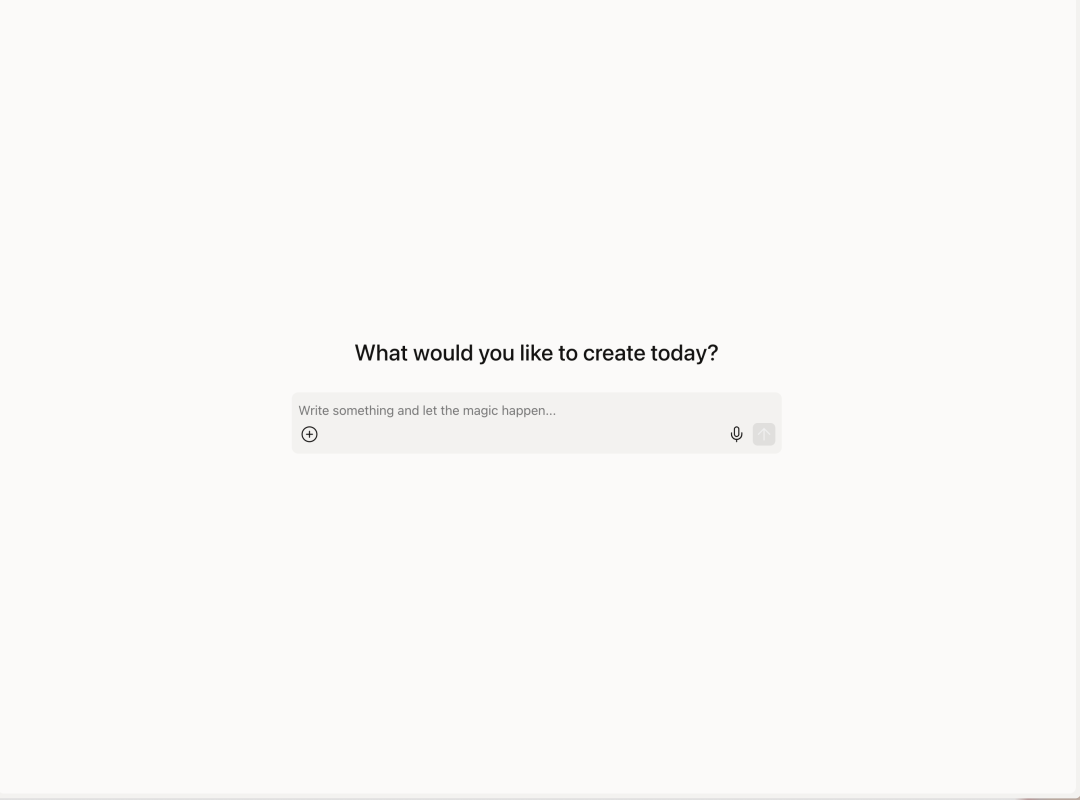
ShellAgent 2.0 Initial Interface
For example, if we want it to replicate the AI features that previously made NotebookLM popular, the instruction would be:
I want to generate an App that can automatically summarize content and turn it into a podcast after uploading a PDF or webpage link
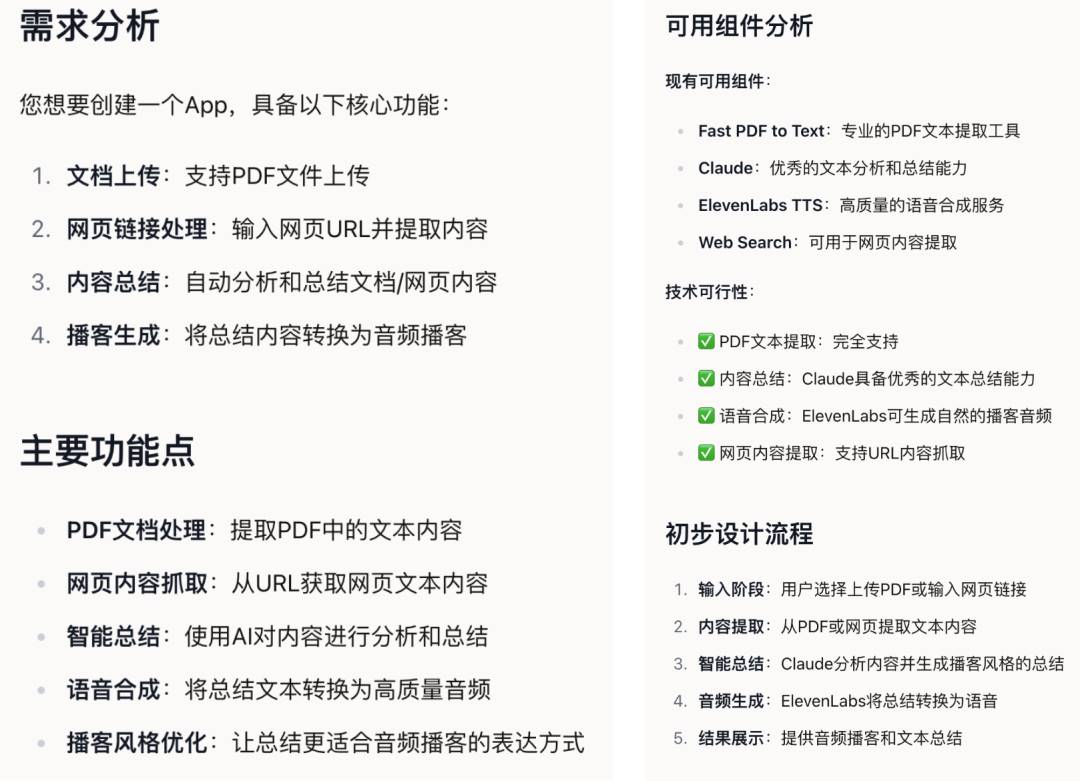
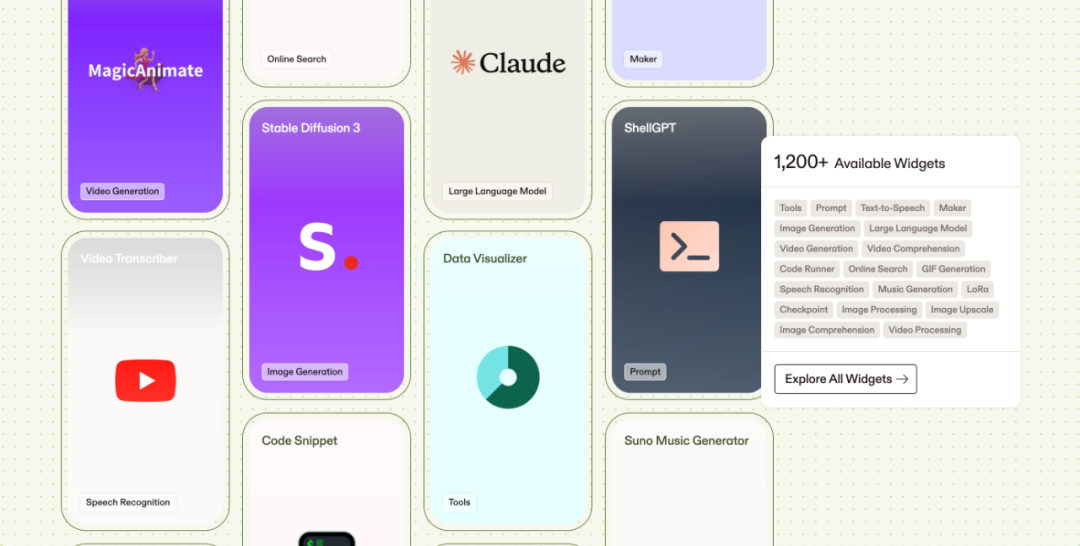
Then, ShellAgent 2.0 begins to analyze the functional points behind the requirements and find corresponding functional components from its component library.
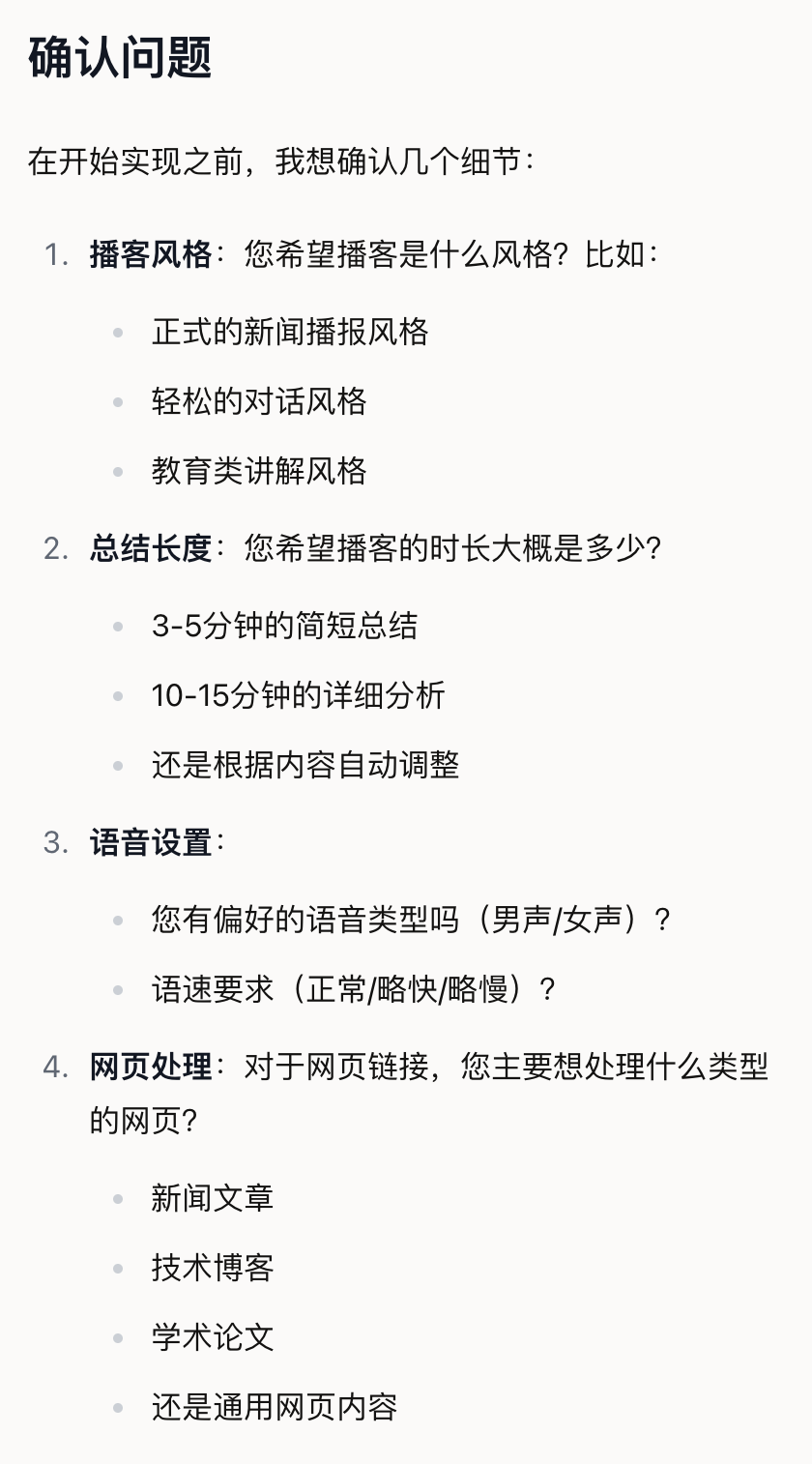
Clearly, a single prompt is far from sufficient for App development. In traditional programming workflows, an entire document would be needed to explain this. So, ShellAgent 2.0 proactively initiates interaction, asking for more App details.
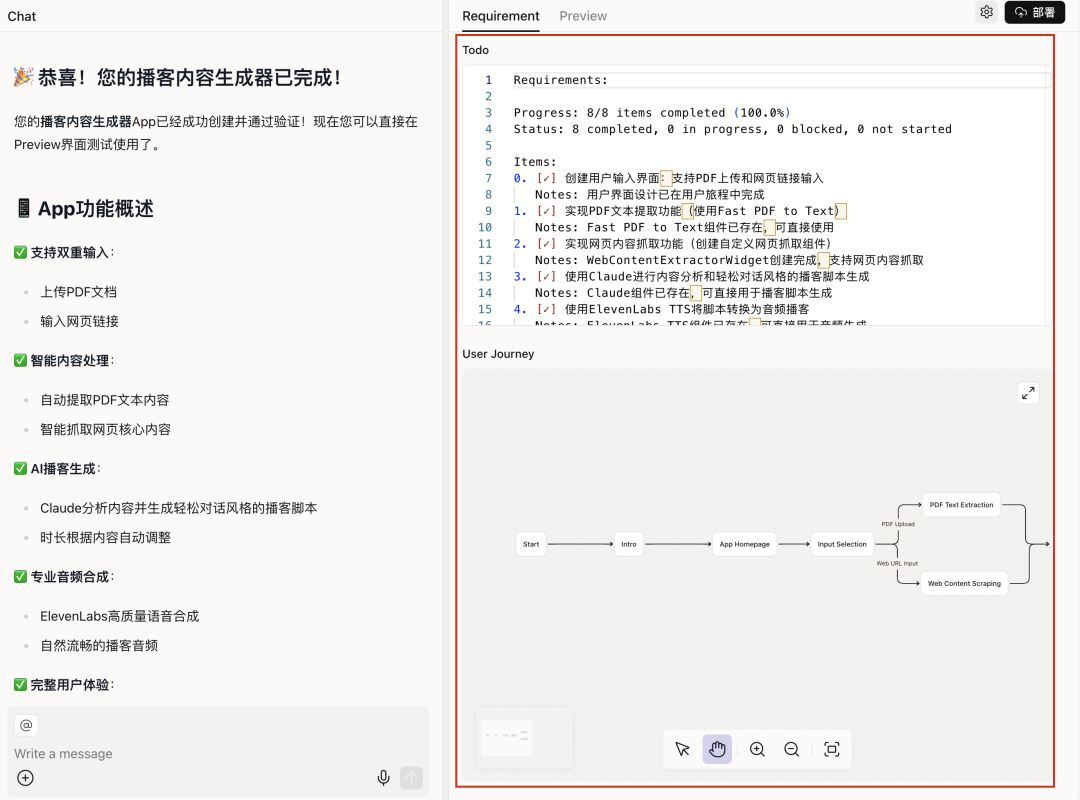
After waiting about 10-20 minutes, the entire App is completed. During this process, the execution progress is displayed in a Todo List on the right side; simultaneously, ShellAgent 2.0 also draws a flowchart, making the App's logic clear at a glance. After clicking deploy, the App is created, which you can use yourself or choose to make public for other users.
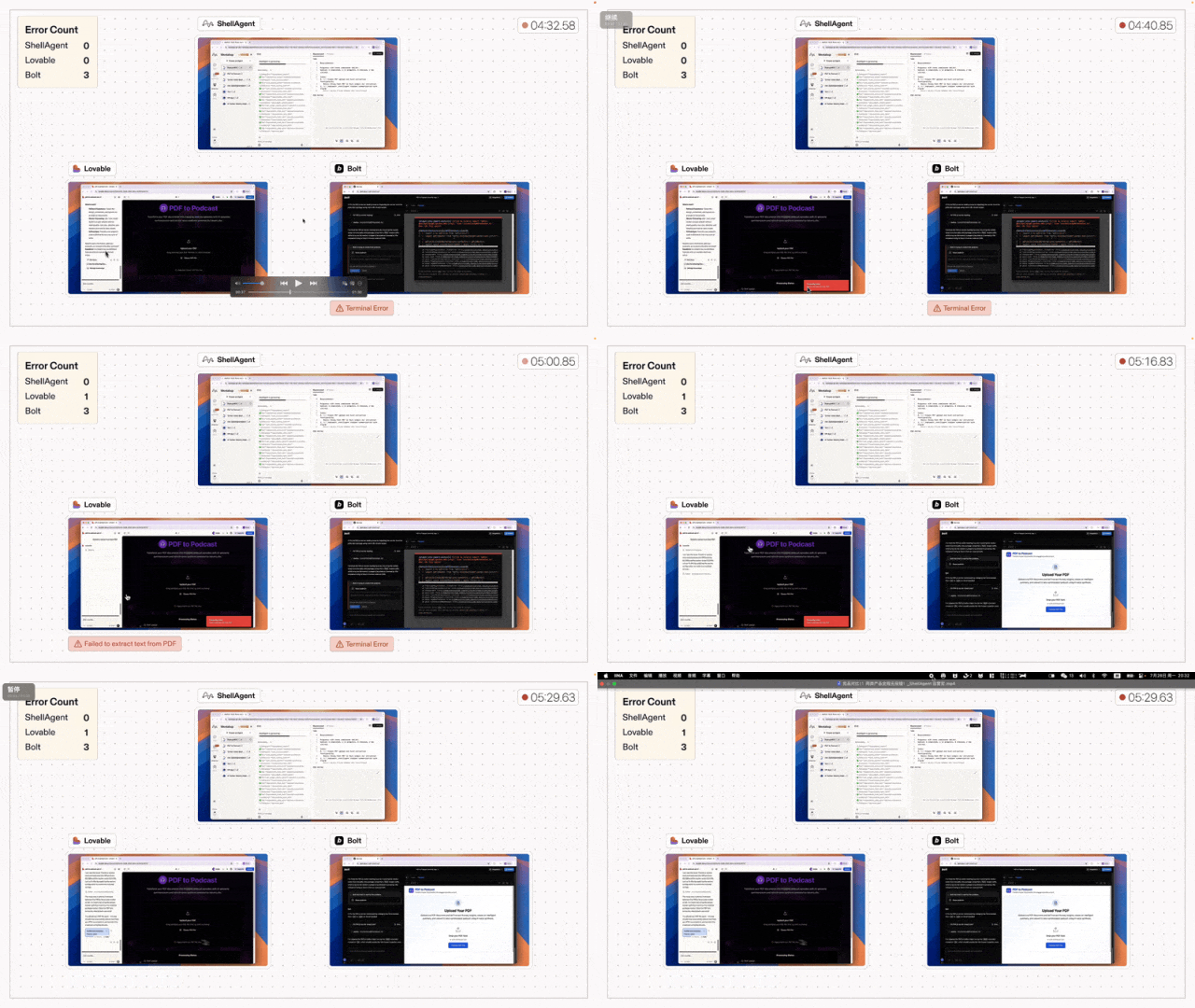
Compared to similar competitors, ShellAgent also leads in bug control. Creating an AI podcast App, Lovable and Bolt encountered 4 and 5 bugs respectively, while ShellAgent managed to complete the process without any errors.
Of course, bugs cannot be completely avoided. But there's no need to worry. Just click "Use ShellAgent" to fix it, and AI will automatically locate and fix the bug, then update the application. If there are new requirements or issues after fixing, you can continue to make demands in the dialogue box, and ShellAgent will continuously optimize and adjust the App.
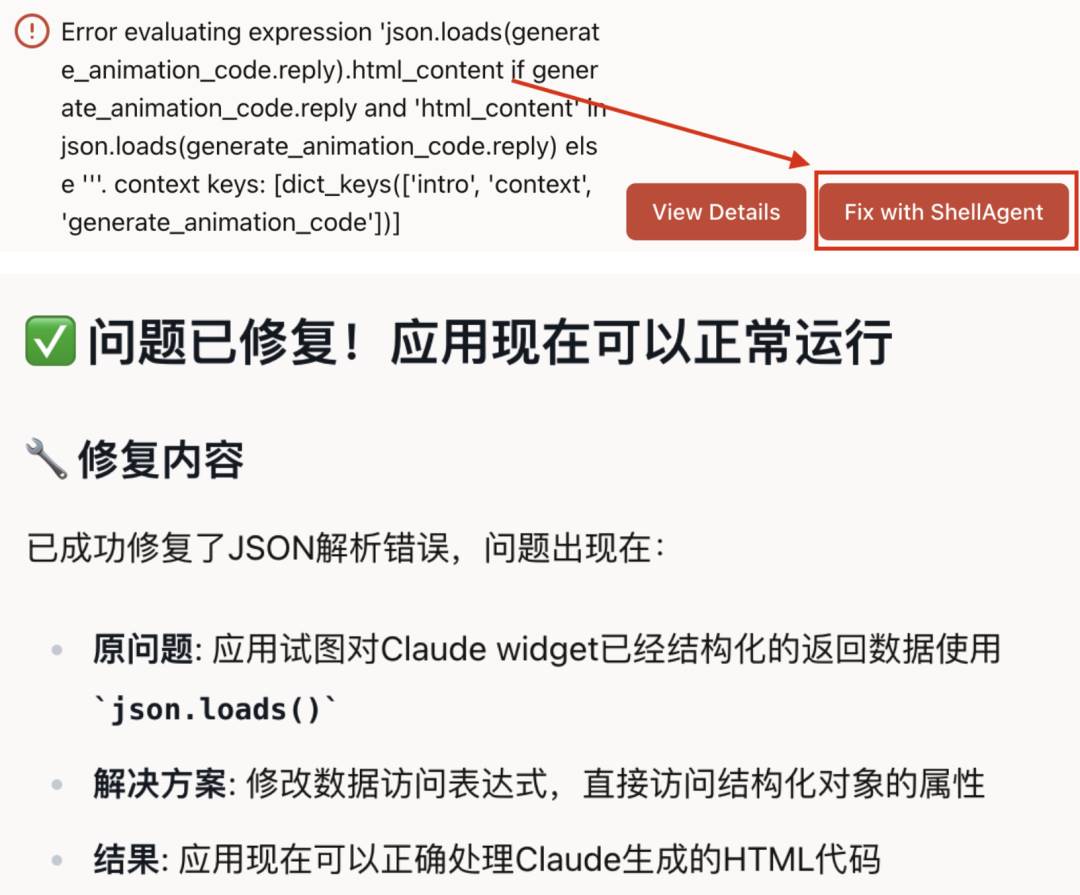
ShellAgent Bug Occurrence (top), Analyzing Error Cause and Modification (bottom)
02 ShellAgent 2.0's Product Philosophy: Becoming the Instagram of the AI Era
Actually, just creating an App from natural language is not particularly special, as products like Cursor and TRAE can also do this.
So what is their biggest difference?
A noteworthy detail is that ShellAgent never displayed a single line of code. This reflects completely different product philosophies - one is Instagram, the other is Photoshop.
Photoshop is a productivity tool for professional users, powerful but with a steep learning curve, just like IDE-type products such as Cursor and TRAE. Ordinary users might never encounter the term IDE, which is the abbreviation for integrated development environment, simply understood as where programmers write code.
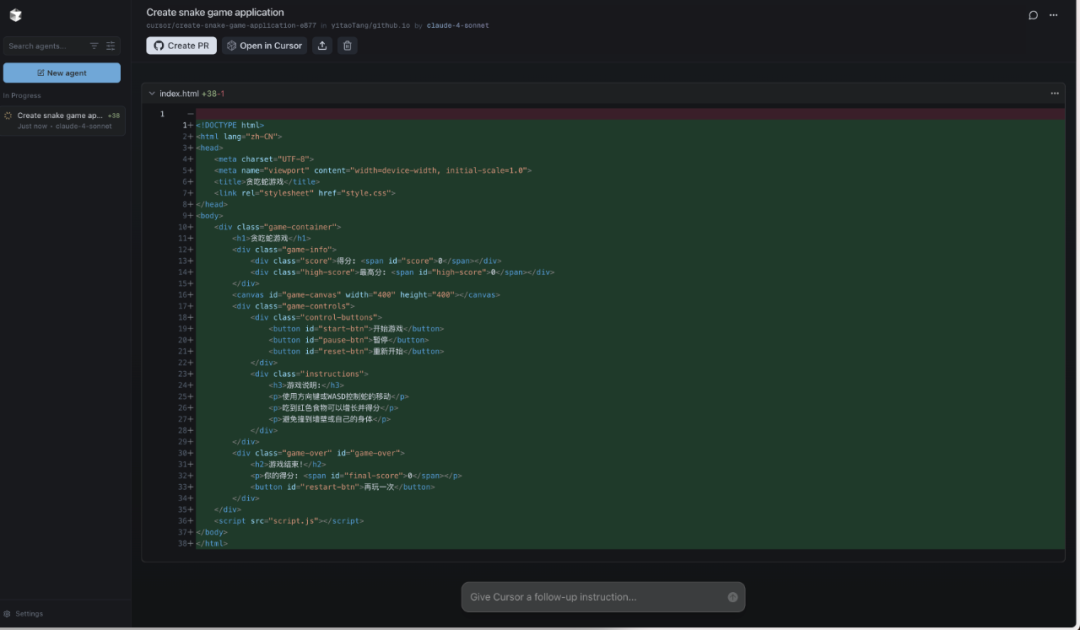
Cursor Working Interface
Cursor's change is that it liberates programmers from heavy manual labor, allowing them more time to think about more difficult, interesting, and valuable decisions.
However, Cursor's users still need to understand programming languages, be familiar with various frameworks, and have a broad technical vision. These factors can determine an App's upper limit and remain a threshold for ordinary users.
Instagram's rise is based on a completely different logic. Its most famous innovation is simplifying complex image processing to a few filter options. Users can make photos look better with one click, thus becoming willing to share on the platform.
From Instagram's perspective, one can quickly understand ShellAgent 2.0's product, where many product features are built around the core of "lowering barriers".
The Remix function is a feature worth noting, which can be seen as ShellAgent 2.0's "filter". For many novice users, the biggest pain points in creation are actually "not knowing what to do" and "not knowing how to express".
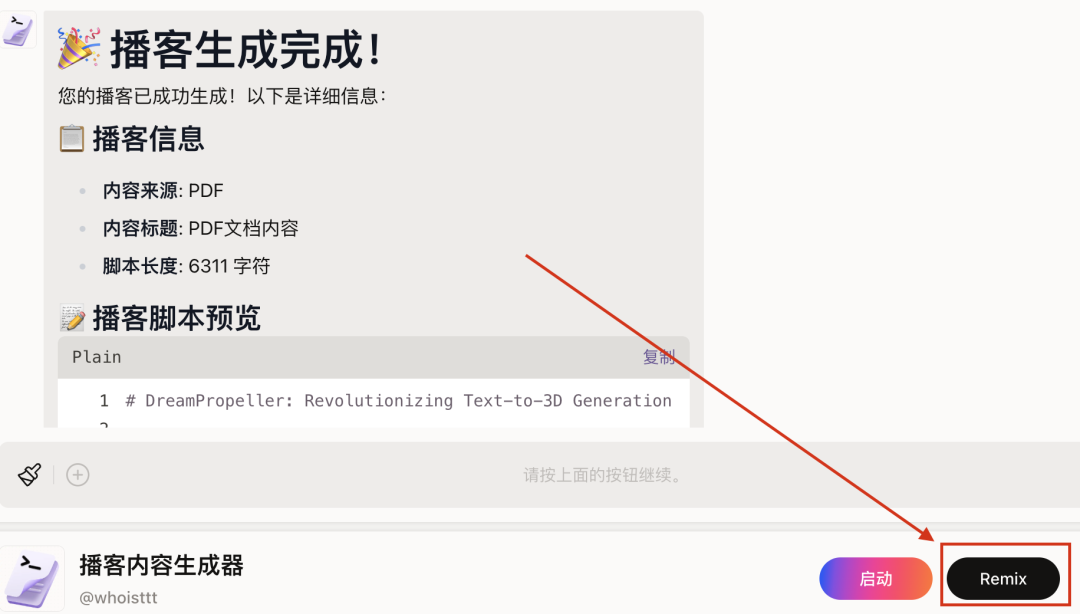
For Apps already published by other users, you can modify App functions through Remix
The Remix function solves these two pain points. The platform already has rich application cases - from simple calculators to complex data analysis tools, from personal efficiency applications to small business tools. Users can browse these existing applications, find versions close to their needs as a starting point, and create their own versions. For example, changing the tracking theme of a news aggregation App from "AI" to "cryptocurrency", or adding new multi-modal AI functions to transform "PDF to podcast" into "video to podcast".
When each user's Remix can become inspiration for others, it forms a positive cycle of creativity.
In ShellAgent 2.0, creating an App is not the endpoint; deploying it in the creation square is key. Then, your App can be seen, used, modified, and consumed by other users. At this point, the App is no longer just an App, but a content medium. Building a creator ecosystem around this content medium is the essence of ShellAgent 2.0.
In this new ecosystem, a new profession like "application designer" might emerge - they don't write code but understand user experience design, capable of creating both practical and elegant applications. Excellent application creators might have their own fan base, just like current internet celebrities and bloggers.
03 Watershed of the AI Era
If we view software development history as several major paradigm shifts, it has roughly gone through a path from machine language to high-level language, command line to graphical interface, local to cloud computing, low-code to no-code. Vibe Coding might be the new paradigm shift we are currently experiencing - intelligence, where users only need to describe requirements in daily language, and AI can automatically generate applications.
In this process, a kind of productivity differentiation might emerge.
For example, IDE products like Cursor improve professional engineers' productivity, like the efficiency improvement from "film SLR" to "digital SLR". Its upper limit is high, but still requires users to have programming basics and technical understanding, just like photographers understanding parameters like "shutter, aperture, sensitivity".
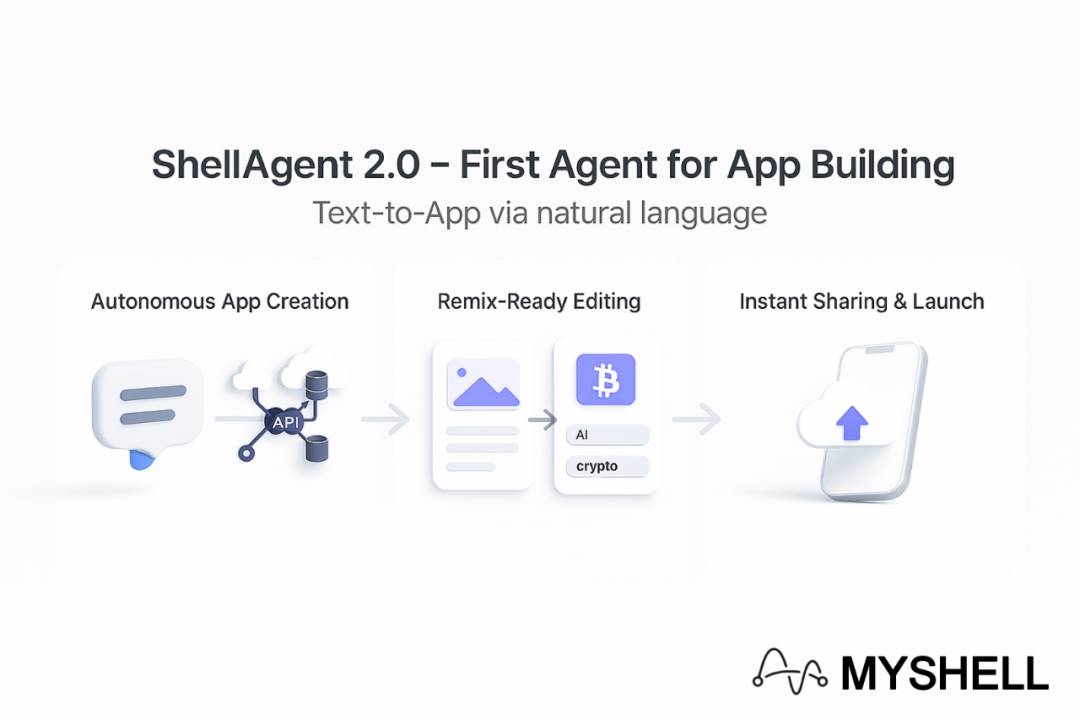
No-code products like ShellAgent 2.0 empower ordinary people to create software, like "the camera behind a mobile phone". While the phone's image quality is far from an SLR, the Instagram born from this camera covers the broadest user base, forming an entirely new creator group.
Over the past twenty years, the programmer community has enjoyed the biggest dividend of the mobile internet era, with programming languages serving as the core technical barrier. Many excellent ideas have been halted at the conceptual stage due to technical implementation barriers.
The true value of ShellAgent 2.0 may not lie in the technology itself, but in the vision it initiates—releasing the right of software creation from the hands of technical experts and allocating it to ordinary people.
This transformation may redefine many concepts. What is a "developer"? In the world of ShellAgent 2.0, anyone with a creative idea could be a developer. What is a "software company"? When individual users can quickly create and share applications, the business model of software may also face reconstruction.
In this new paradigm, software development is no longer just about technical implementation, but more oriented towards value design. People who understand user pain points, possess creative thinking, and can design excellent user experiences may be more valuable than those who master programming skills.