
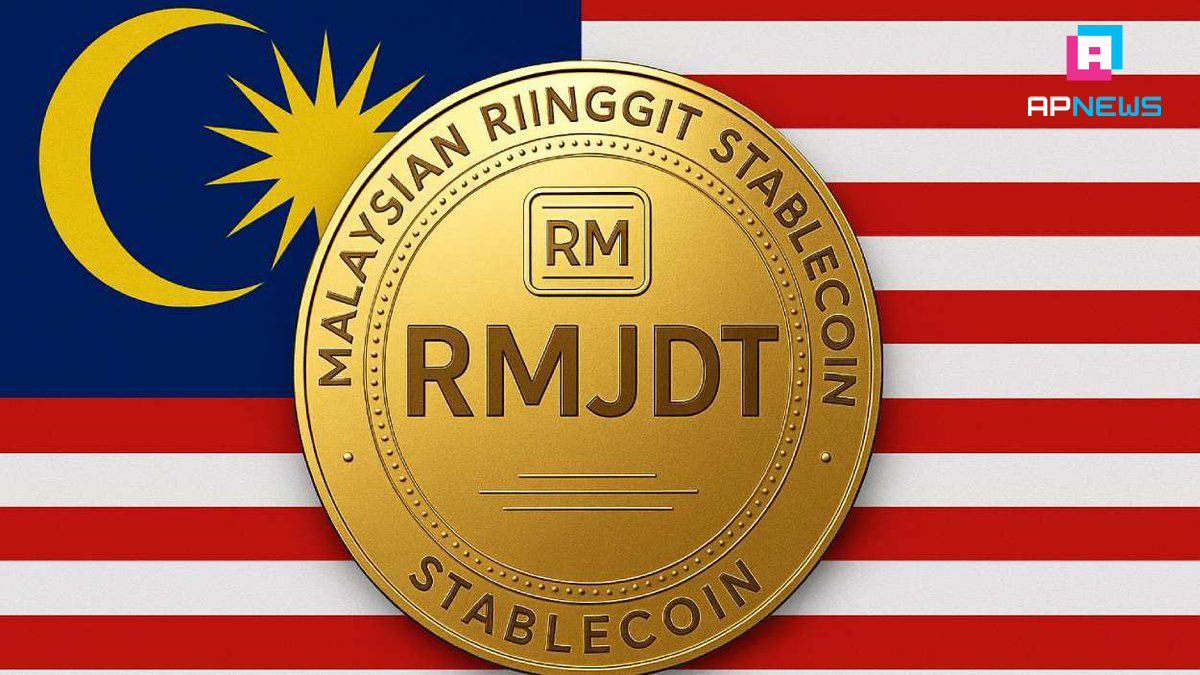
Recently, Tunku Ismail, the Regent of Johor, announced that his company Bullish Aim has partnered with local blockchain flagship Zetrix AI Bhd to launch RMJDT, a stablecoin pegged 1:1 to the Malaysian ringgit. This is far from an ordinary tech release—it represents the injection of “strategic lifeblood” into Malaysia’s national blockchain infrastructure. It marks the transition of the country’s digital-asset ambitions from high-level policy blueprints into a new era of real-world deployment, grounded in sovereign credit and aimed at reshaping the rules of cross-border trade settlement.

A leap from technical infrastructure to financial infrastructure
The creation of RMJDT answers the most fundamental question in Malaysia’s blockchain strategy: What value will circulate on-chain? Until now, the Zetrix-based national blockchain infrastructure was largely a technological layout. The launch of RMJDT means that, for the first time, this “national highway” will operate an “official train” powered by the credibility of the national currency. With its stated aim—boosting the international use of the ringgit in cross-border trade settlement—it directly aligns with Malaysia’s macro-strategic goals of strengthening currency internationalization and attracting foreign direct investment. In doing so, it anchors blockchain innovation in the service of national economic interests.
“National interest” meets “market confidence”
The most distinctive aspect of this development lies in the fact that its initiator is not merely a commercial entity but a royal-backed company, Bullish Aim. In the Southeast Asian context, this conveys signals beyond business. First, it reflects the deep integration of national intent and top-tier capital in a strategic emerging industry, ensuring that the project remains closely aligned with Malaysia’s national digital-asset policies. Second, the credibility associated with the monarchy offers a unique form of “credit enhancement” for a financial product like a stablecoin—one that relies heavily on trust—helping ease concerns about compliance, longevity, and reliability.
Building an internally stable and secure “flywheel effect”
To ensure the long-term resilience of the RMJDT ecosystem, the project has designed a sophisticated “dual-wheel” mechanism. The first wheel is the establishment of a digital asset treasury company with an initial scale of RM500 million. This treasury will use its Zetrix token holdings as collateral to stabilize network gas fees—addressing a longstanding pain point for public chains and removing cost-volatility barriers that impede large-scale commercial adoption. The second wheel involves staking these treasury assets to support MBI network validator nodes. This not only strengthens network security but, more importantly, tightly binds RMJDT’s success to the robustness of the national blockchain infrastructure. It creates a positive cycle: the wider the stablecoin’s adoption, the more secure the network becomes, and the higher the value of the ecosystem.
Compliance and backing
RMJDT has chosen the most cautious yet solid path. It will be launched within a regulatory sandbox approved by the Securities Commission Malaysia, ensuring that innovation unfolds in a controlled environment. Its reserves—ringgit cash deposits and short-term Malaysian government securities—are clearly defined and subject to auditing, avoiding the ambiguous backing that characterized early crypto projects. While this “full-armor” compliance approach sacrifices certain decentralization ideals, it gains what enterprise users value most: certainty, safety, and interoperability with traditional finance.
Market reaction and future challenges
Following the announcement, capital markets responded positively, with Zetrix’s stock price rising. This reaction fits neatly within the policy tailwinds Malaysia has been generating since April 2025 in support of blockchain development—from Prime Minister Anwar’s public endorsements to Bank Negara Malaysia’s tokenization discussion papers. RMJDT’s true challenge lies ahead: moving from “compliance showcase” to “mainstream application.” It must prove, in the complex environment of international trade, that it can deliver tangible advantages over the traditional SWIFT system in speed, cost, and transparency.
How sovereign power shapes the future of Web3
The RMJDT case offers a fresh paradigm for understanding global digital-asset evolution. It shows that the next phase of competition may be driven not by Silicon Valley-style disruption but by the coordinated advance of sovereign power—national policy, royal capital, and central-bank exploration—working alongside core domestic tech players. This is no longer a story about “disrupting banks,” but about “how nations use blockchain to upgrade their financial infrastructure and monetary influence.” The Regent of Johor’s move is not merely a business investment; it is a strategic deployment to secure Malaysia’s financial voice in the digital era.
As the global narrative around stablecoins shifts from pure transaction instruments to core payment infrastructure, Malaysia is offering its own answer through RMJDT: a path combining sovereign credibility, royal capital, regulatory sandboxes, and a strategic technology platform. Its success or failure will test a central question: In a world where technological globalization coexists with sovereign boundaries, can a state-empowered, fully compliant digital currency carve out a competitive edge in cross-border trade? The answer will be written in every future international trade order settled through RMJDT.