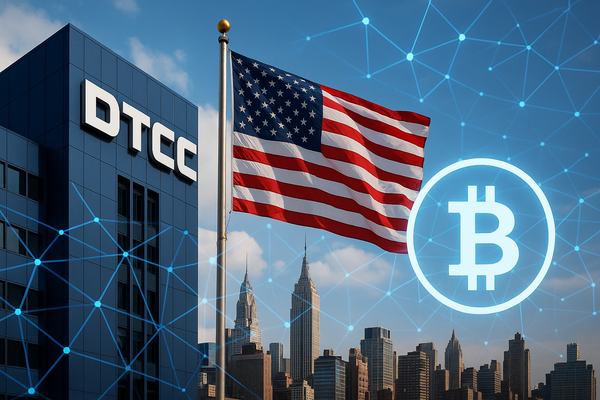
A turning point has emerged, marking the shift of core infrastructure in the US financial market to blockchain. The US Securities and Exchange Commission (SEC) issued a "No-Action Letter" to DTC, a depository under the US Securities and Clearing Corporation (DTCC), officially authorizing the tokenization of major financial assets such as stocks, bonds, and Treasury bonds for on-chain storage and settlement.
This measure is significant not only because it goes beyond simple technological experimentation but also because it clarifies that traditional financial assets can be transferred to blockchain within a regulatory framework. While tokenization had previously been confined to a few fintech companies and limited pilot projects, the direct involvement of DTCC, a leading player in the US financial market, has brought it into the realm of institutional finance.
SEC Commissioner Hester Peirce characterized this decision as a pilot, but praised it as a significant step forward toward the on-chain movement of traditional assets. This suggests that regulators are beginning to embrace blockchain as a means of expanding infrastructure, rather than as an alternative to the existing financial system.
DTCC, the institutional hub for tokenized assets
With this approval, DTCC will be responsible for storing tokenized stocks, ETFs, and U.S. Treasury bonds on the blockchain and recognizing them as official assets. Even after tokenization, the same legal rights and ownership structure as traditional securities will be maintained.
The scope of change is significant, particularly as blockchain-based solutions are expected to expand to include deposits, payments, and record management. This marks the first time that back-office functions in financial markets have migrated on-chain, potentially directly impacting the future operation of global capital markets.
From the most traded assets to on-chain
Tokenization will begin with the most liquid asset classes in the market, not experimental assets. Initial targets include Russell 1000 constituents, major index-tracking ETFs, and Treasury bills, notes, and bonds issued by the U.S. Treasury.
This means institutional investors and global capital will move core assets actually used on the blockchain. This is interpreted as a choice to ensure tokenization operates as a practical financial infrastructure, rather than simply a new technology.
The financial markets are running out of time.
The most significant change brought about by this decision is the removal of restrictions on trading and settlement times. While existing stock and bond markets were tied to weekday trading hours, the expansion of on-chain tokenization will enable asset transfers and settlements 24 hours a day.
The boundaries between traditional finance and the digital asset market are also expected to rapidly collapse. DTCC has proposed a long-term goal of transferring its entire deposited assets, approximately $100 trillion, to a blockchain-based platform. This scenario will restructure the very structure of the financial infrastructure.
Tokenization: From Experiment to Standard
DTCC's actions are likely to impact other market infrastructure companies, including Nasdaq. Major exchanges and clearinghouses are also reportedly preparing to establish tokenization-based settlement and clearing systems.
If tokenization becomes the standard, it could significantly improve efficiency across financial markets, including reducing payment delays, improving collateral efficiency, and accelerating global capital flows. At the same time, ensuring regulatory compliance, investor protection, and system stability remain key challenges for future expansion.
The US is opening the door to on-chain finance.
This SEC decision is seen as a starting point for blockchain to move beyond the financial experimentation phase and become a core infrastructure of global capital markets. The pace of change could be faster than expected, as even the most conservative assets, such as U.S. Treasury bonds, large-cap stocks, and ETFs, have already begun migrating to on-chain.
The financial market has now moved beyond the question of "Can digital assets replace traditional finance?" to the question of "How will traditional finance evolve to on-chain?" This decision is a clear signal that this shift has already begun.