Holding a thick concept report, Hong Kong Financial Services Development Council Chairman Peter Hung announced a more ambitious goal than simply becoming an "international financial center"—to transform Hong Kong into "Asia's most influential global capital hub" within five to ten years. The core engine of this ambitious blueprint is clearly defined as "tokenization."
On December 13, the Hong Kong Financial Services Development Council released a concept report entitled “Hong Kong Capital Markets Leading the Way: Super Connector - Global Capital Hub in the Digital Age”, which proposes a strategic framework centered around “four I’s”, with each initiative following a clear timeline.
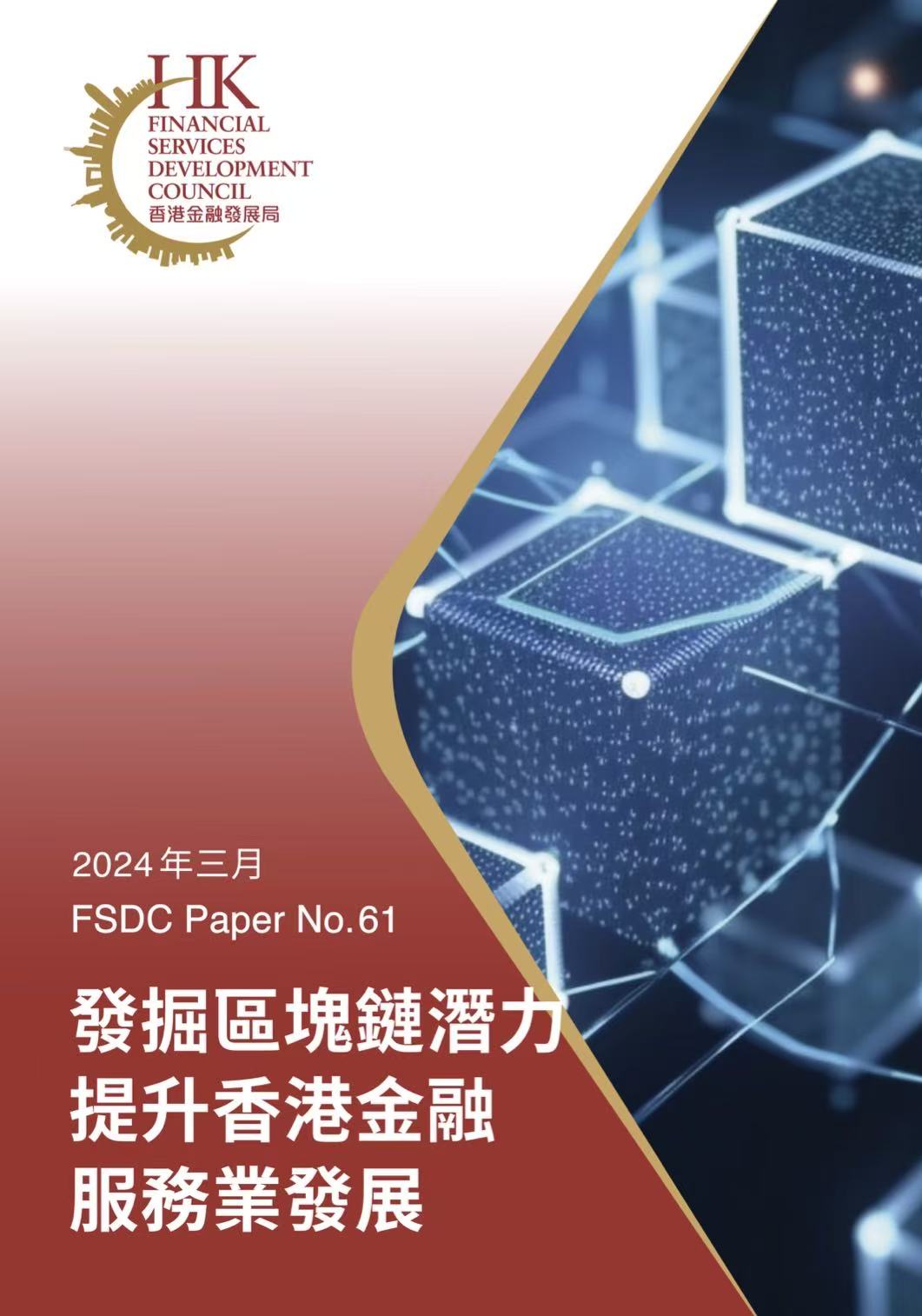
Notably, the report clearly outlines a timeline for the development of tokenized assets: the medium-term direction, spanning 2-5 years, will focus on developing tools such as tokenized physical assets, while the long-term vision, spanning 5-10 years, will gradually enhance the ability to support tokenized issuance and post-trade operations.
Just about a month before the report was released, Hong Kong had just completed a globally significant achievement: the Hong Kong SAR government successfully priced digital green bonds totaling approximately HK$10 billion, the largest digital bond issuance in the world to date.
This issuance not only represents a breakthrough in scale, but also marks the first time that tokenized central bank currencies of Hong Kong dollars and renminbi have been used for settlement.
This achievement, which corroborates the blueprint, reveals the core logic of Hong Kong's financial strategic transformation: it is attempting to transcend the traditional role of a funding "channel" and become one of the rule-makers of the future global capital game by "tokenizing" assets and building a new generation of digital financial infrastructure.
I. Strategic Blueprint: Beyond "Super-Connector," Anchoring as a "Global Capital Hub"
Hong Kong has new expectations for its financial role. According to the Financial Services Development Council's concept report, its goal is to develop into a "key global capital hub in Asia" supporting multiple assets and currencies within five to ten years.
This statement goes beyond Hong Kong's traditional positioning as an "international financial center" and a "super-connector" linking China and the world. HKFS Chairman Peter Hung explained the necessity of this upgrade: in the new era of rapid digitalization in global markets and real-time cross-border capital flows, a financial center's leadership depends not only on liquidity and the number of listings, but also on its ability to become a "capital hub" that efficiently connects global issuers, investors, and financial instruments.
Supporting this ambition is Hong Kong’s existing solid foundation: assets under management exceeding HK$35 trillion, a mature common law system, and a unique connectivity mechanism.
The strategic framework proposed in the report revolves around the "four I's": attracting a diverse "issuers", expanding the "investor" base, strengthening the "intermediary" ecosystem, and enriching "financial instruments".
The most noteworthy aspect is the plan for "financial instruments," which explicitly prioritizes the development of tokenized assets, sustainable financial products, and alternative investments.
To achieve this vision, the report outlines a clear three-phase timeline for transformation, revealing Hong Kong's "gradual and radical" strategic approach.
II. Transformation Path: A Clear Timeline for "Tokenization"
Hong Kong's transformation is not something that can be accomplished overnight, but rather a roadmap that is clearly divided into three phases: short-term, medium-term, and long-term.
The short-term task focuses on optimizing the market environment, with a timeframe of one to two years. The core objective is to improve listing rules, attract new economy companies, and inject fresh blood into the capital market. Observations from Yi Yue, Chief Manager of the Financial Services Development Council (FSDC), during his recent visits to the Middle East, Southeast Asia, and Central Asia also support this direction. He found that many local companies have the intention to list but face choices regarding location. Given the geopolitical situation, Hong Kong's importance as a reliable "second listing venue" or "dual primary listing venue" is becoming increasingly prominent.
The mid-term phase, spanning two to five years, involves expansion and deepening. The focus is on extending existing interconnectivity mechanisms to broader areas such as derivatives and commodities, and developing tools such as tokenized physical assets. This phase signifies a shift from connecting traditional financial products to exploring and embracing new digital financial assets.
The long-term goal is a fundamental infrastructure reshaping over a period of five to ten years. The core is building a new generation of digital financial infrastructure to support asset tokenization and multi-currency fixed-income markets, ultimately consolidating Hong Kong's position as a capital allocation and risk management center. Specifically, this involves gradually enhancing the ability to support tokenized issuance and post-trade operations, and promoting the harmonization and unification of data and compliance standards on a larger scale.
This timeline shows that tokenization is not an isolated product innovation, but a core theme that runs through the mid-term product exploration to the long-term infrastructure reconstruction.
III. Why "Tokenization"? Hong Kong's Strategic Logic
Hong Kong has elevated "tokenization" to the core of its financial strategy for the next five to ten years, underpinned by a profound and multi-dimensional strategic logic. This goes far beyond simply following technological trends; it aims to address the structural challenges of Hong Kong's financial markets and seize a commanding position in the new global financial order.
The primary logic is to overcome the bottleneck of a singular market structure. Hong Kong's capital market has long been dominated by stocks, resulting in a relatively simple structure. Tokenization provides the technological key to revitalizing a massive but illiquid asset class.
By using blockchain technology to transform real-world assets such as real estate, private equity, infrastructure, and even intellectual property into digital tokens, the liquidity, divisibility, and trading efficiency of these assets can be greatly improved. This will not only enrich the product portfolio of Hong Kong's financial market but also attract "patient capital" from around the world seeking diversified and long-term stable returns.
The second logic lies in building new advantages in efficiency and cost. Traditional financial transactions, especially cross-border transactions, are characterized by long chains, numerous intermediaries, slow settlement, and high costs. The combination of tokenization and smart contracts can achieve near real-time, end-to-end transactions and settlements.
Eddie Yue, Chief Executive of the Hong Kong Monetary Authority, once likened tokenization to an upgrade to a "smart highway," enabling faster and smoother transactions. Hong Kong's latest issuance of HK$10 billion in digital green bonds has successfully introduced tokenized central bank currency for settlement, demonstrating the market's potential for this efficiency improvement.
The deepest logic may lie in the struggle for the right to set future financial standards. The digital transformation of the global financial system is in full swing, but rules and standards are yet to be finalized. Hong Kong's goal is to become a "pioneer and exemplar of next-generation capital market solutions."
Through large-scale, high-standard practice, Hong Kong has the opportunity to integrate its experience in the common law system and financial regulation into the standards for all aspects of tokenized asset issuance, custody, information disclosure, and compliance.
In commenting on the latest digital bond issuance, Hong Kong Financial Secretary Paul Chan Mo-po pointed out that the regular issuance of tokenized bonds will help the market establish a more comprehensive benchmark. This word "benchmark" aptly highlights Hong Kong's ambition at the standards level.
IV. Practice First: Hong Kong's "Real-World" Experience Through Billion-Dollar Digital Bonds
Strategic ambitions require solid practical support. Prior to unveiling its grand blueprint, Hong Kong had already conducted multiple rounds of exploration in the practical application of tokenized finance, most notably the digital green bonds issued by the Hong Kong SAR government. This series of practices provides a vivid illustration of the strategic logic described above.
Hong Kong’s journey into digital bonds began in 2023. Following two successful smaller-scale pilot programs in 2023 and 2024, the Hong Kong SAR Government completed its third and largest digital green bond issuance to date in November 2025, totaling approximately HK$10 billion in value and encompassing four currencies: Hong Kong dollars, renminbi, US dollars, and euros.
This issuance is far more than just a simple expansion in scale; it represents a substantial breakthrough in multiple dimensions, demonstrating Hong Kong's pragmatic approach to advancing digital finance.
At the technology integration level, a breakthrough in dual tokenization has been achieved on both the "asset side" and the "funding side." This issuance, for the first time, introduced tokenized central bank currencies in Hong Kong dollars and renminbi as options in the settlement process. This means that the bonds themselves (assets) are digital, and the funds (currency) used to purchase the bonds can also be digital. This "atomic settlement" significantly shortens settlement time and reduces counterparty risk, marking a milestone in the application of global fintech.
In terms of market acceptance, the issuance demonstrated broad participation from mainstream financial institutions. It attracted numerous top international financial institutions, including HSBC, Bank of China (Hong Kong), JPMorgan Chase, and Standard Chartered, as joint global coordinators, lead banks, or direct participants in the platform.
More importantly, the investor base encompasses a wide range of global institutional investors, including asset management companies, banks, insurance companies, and private banks, among others, many of whom are first-time subscribers to digital bonds. This demonstrates that tokenized financial products are gradually moving beyond niche experiments and gaining acceptance in mainstream capital markets.
In terms of standards alignment, Hong Kong is actively integrating into the global system. All bonds issued this time use digital token identifiers (defined by the International Organization for Standardization, ISO) and are directly linked to traditional financial identifiers such as the International Securities Identifier (ISI). While this move is technically demanding, it is significant because it demonstrates Hong Kong's commitment to promoting the integration of tokenized assets with traditional global financial standards architecture, rather than starting from scratch. This is beneficial for improving interoperability and lowering the acceptance threshold for global investors.
Secretary for Financial Services and the Treasury Christopher Hui clearly pointed out that this issuance marks the first time that tokenized government bonds have been normalized since the publication of the "Hong Kong Digital Asset Development Policy Declaration 2.0". From experimentation to normalization, this signifies that Hong Kong's tokenized bond market is moving from a "pilot demonstration" stage to a new phase of "large-scale development".
V. Infrastructure Support: The Digital Foundation Formed by Digital Currency and Data "Bridges"
Any grand financial vision requires robust infrastructure. Hong Kong understands that the prosperity of tokenized assets cannot be built on sand. Therefore, while advancing product innovation, Hong Kong Parallel has launched an equally ambitious digital financial infrastructure plan, with digital currency and data flow bridges as its core pillars.
At the monetary level, Hong Kong is meticulously constructing a multi-layered, complementary digital currency ecosystem. The Hong Kong Monetary Authority (HKMA) plays a central role as the designer and promoter of this ecosystem. At the top of this ecosystem is the wholesale "digital Hong Kong dollar" that the HKMA is currently researching.
Unlike retail central bank digital currencies (CBDCs) that are open to the public, wholesale digital Hong Kong dollars are primarily targeted at financial institutions for large-value payments, cross-border trade settlements, and financial transactions. Their biggest advantage lies in being issued by the central bank, eliminating credit risk, and making them particularly suitable as a settlement tool for large, critical financial transactions.
Beneath the digital Hong Kong dollar are tokenized deposits and regulated stablecoins. The Hong Kong Monetary Authority (HKMA) is actively collaborating with the industry through project sandboxes such as "Ensemble" to explore the use of tokenized deposits for digital asset transaction settlement.
Eddie Yue, Chief Executive of the Hong Kong Monetary Authority, outlined a vision to establish a comprehensive digital currency framework that promotes the complementary coexistence of different forms of tokenized currencies, such as digital Hong Kong dollars, tokenized deposits, and regulated stablecoins, in order to jointly support financial innovation.
At the data level, Hong Kong is committed to breaking down the "data silos" within its financial system. The Hong Kong Monetary Authority (HKMA) likens data to islands, and next-generation data infrastructure serves as the "digital bridge" connecting these islands. Its core achievement is "Business Data Interconnect" (CDI).
Since its launch in 2022, CDI has become a secure bridge connecting banks and multiple data providers. As of September 2025, it has facilitated over 71,000 loan applications, involving an estimated total credit approval of over HK$58.1 billion. From SME loans to personal financial services, the secure and efficient flow of data is effectively lowering the barriers and costs of financial services.
This "currency + data" digital infrastructure perfectly complements the tokenized asset strategy. Tokenized assets require an efficient and reliable payment and settlement network (provided by the digital currency ecosystem) and reliable identity and asset information verification (supported by data bridges). Together, they constitute the indispensable underlying operating system for Hong Kong's future role as a "global capital hub."
VI. A Sober Reflection: The Challenges and Profound Significance Beneath the Vision
The blueprint is inspiring, but the road ahead is far from smooth. Hong Kong's path to becoming a "global capital hub," especially its transformation strategy centered on tokenization, while possessing unique advantages, also faces multiple challenges from both within and outside the country, requiring careful consideration.
The primary challenge stems from the complexity of coordination. Tokenized finance spans multiple regulatory areas, involving various departments such as the Hong Kong Monetary Authority (HKMA), the Securities and Futures Commission (SFC), and the Financial Services and the Treasury. Establishing a clear, unified, and efficient regulatory coordination mechanism is a significant test. When cross-border tokenized assets are involved, the issues become even more complex, requiring communication and collaboration with regulatory bodies in different jurisdictions.
Technological risks and ecosystem maturity are another major practical constraint. Distributed ledger technology itself is still evolving, and its security, scalability, and interoperability still need to withstand the test of large-scale applications. At the same time, it will take time for Hong Kong's local blockchain developer ecosystem, professional legal and auditing services, and other supporting industries to keep pace with the rapid pace of financial innovation.
Intense international competition cannot be ignored. Global financial centers such as Singapore, London, and Dubai are actively developing digital assets and tokenization. For example, the World Gold Council plans to launch a digital token backed by physical gold in London. Hong Kong must continue to innovate and fully leverage its unique advantages—its common law system, free flow of capital, and proximity to the mainland Chinese market—to maintain its leading position in the competition.
Despite the numerous challenges, Hong Kong's move carries profound strategic significance. It signifies that the competition in the global financial landscape is escalating from a contest of "scale and flow" to a competition of "rules and standards." Hong Kong is no longer content to merely serve as a "pipeline" for capital flows, but is attempting to participate in defining the technical specifications and governance rules of the next generation of financial infrastructure through pioneering practices.
From a broader perspective, this is also a proactive and forward-looking strategic move by Hong Kong, under the "one country, two systems" framework, to consolidate its status as an international financial center and serve the country's financial opening-up and the internationalization of the RMB. By establishing itself as a trustworthy and efficient global capital hub in the digital age, Hong Kong can play a more crucial and creative role than ever before in connecting China with the world.
Following the issuance of the latest digital bonds, Hong Kong's Secretary for Financial Services and the Treasury, Christopher Hui, stated that Hong Kong's unique advantages give it a head start in promoting the transition of traditional finance into the digital asset era.
Just recently, Hong Kong topped the list of international financial centers in the fintech category. As global capital begins to focus on the digital tokens flashing on the blockchain, Hong Kong has already laid out its roadmap, attempting to transform institutional trust into technological standards and anchor itself as a new coordinate called "hub" on the global digital finance landscape.
Some of the information comes from the following sources:
• Hong Kong Capital Markets' Leading Path: A Global Capital Hub in the Digital Age of Hyperconnectivity
• Hong Kong Financial Services Development Council: 2-5 years to promote the tokenization of physical assets, 5-10 years to improve the tokenization issuance and trading system
Author: Liang Yu; Editor: Zhao Yidan