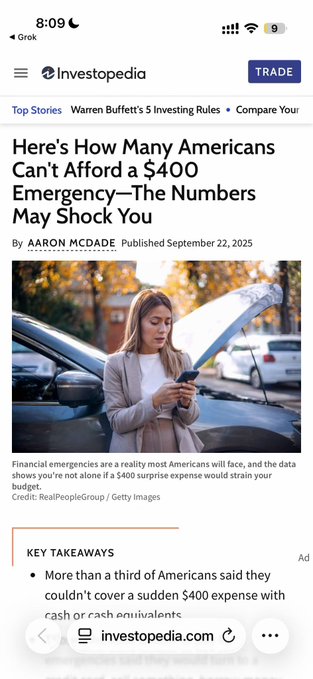
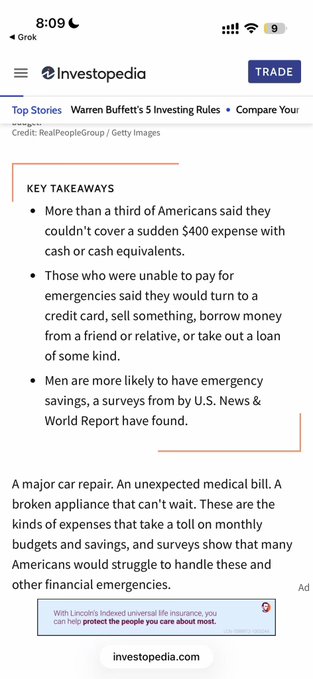
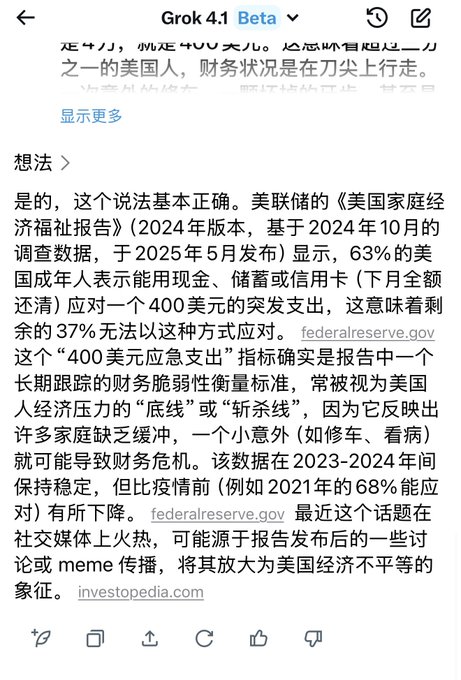
The recently popular term "dead-end line" actually originates from the Federal Reserve's "Report on the Economic Well-being of American Families" (2024 version, based on survey data from October 2024, to be released in May 2025). This report shows that only 63% of American adults reported being able to cope with a $400 unexpected expense using cash, savings, or credit cards (fully paid off next month). This means the remaining 37% cannot handle this "$400 emergency expense" in this way. The "$400 emergency expense" is a long-term measure of financial vulnerability tracked in this report, often considered the "bottom line" or "dead-end line" for Americans' economic stress, as it reflects the lack of buffer for many families; even a small accident (such as car repairs or medical expenses) can lead to financial crisis. This reminds me of former Chinese Premier Li Keqiang's statement 20 years ago that 600 million Chinese people have a monthly income of less than 1,000 yuan. This also means that this group is very vulnerable to financial risks. The "dead-end line" serves as a warning to ordinary people: earn as much money as possible, but always be mindful and reserve a lifeline for emergencies. Don't let unexpected events cause you to be stuck with cash flow problems. This is the bottom-line thinking for life: always have a safety net for yourself!
This article is machine translated
Show original

qinbafrank
@qinbafrank
09-22
再往后随着AI崛起,中产其实更容易陷落,向下滑落比向上跃迁容易多了 x.com/EyeonRyan92190…

From Twitter
Disclaimer: The content above is only the author's opinion which does not represent any position of Followin, and is not intended as, and shall not be understood or construed as, investment advice from Followin.
Like
Add to Favorites
Comments
Share
Relevant content