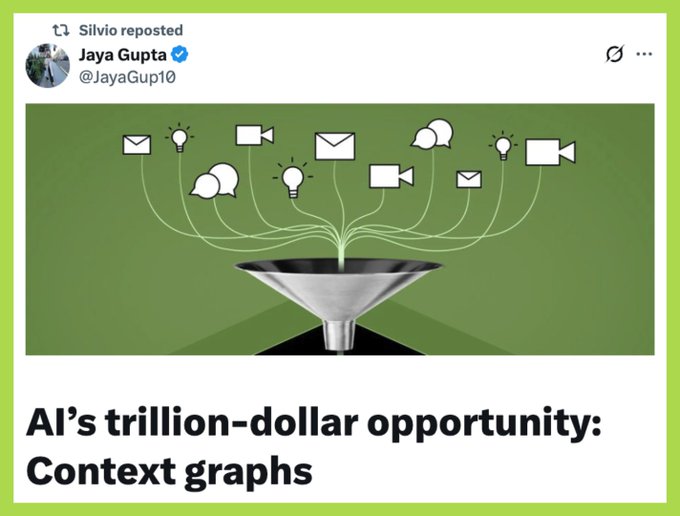
💎 The Trillion-Dollar Opportunity for AI: What are Context Graphs and Why Are They Important? The biggest trillion-dollar opportunity for AI in businesses may not lie in making models smarter, but in documenting how humans make decisions. Previous generations of software created immense value by becoming "truth-recording systems"—stores standardized data about customers, employees, or operations. However, these systems primarily recorded the final outcome, not why that outcome was accepted. When AI agents begin to enter real-world workflows, this limitation becomes very apparent. Businesses don't lack data, but rather the trace of decisions: why this deal received a deeper discount than stipulated, why that ticket was prioritized, why an exception was approved this time but not another time. Those answers are often found in Slack, Zoom calls, private messages from leaders, or in the memories of a few long-time employees—not in any formal system. Rules and policies only tell agents what to do in general situations. But operational reality is full of exceptions and precedents. People make good decisions not just because they know the rules, but because they remember: “how we handled a similar situation last time.” The same is true for agents. Without access to the history of previous decisions—who approved them, in what context, what exceptions were accepted—an agent is just a rigid, judgment-lacking execution machine. When an agent is placed directly into the workflow, it can record the entire decision-making process at the moment the decision occurs: where the input data comes from, which rules are applied, which exception branch is triggered, who approves it, and why. Over time, these traces connect to form a contextual map—a “living memory” reflecting how the business actually operates. It not only tells what happened, but also explains why it was allowed to happen. This is something that current systems struggle to build. CRM or ERP systems only store the current state, not the context at the time of the decision. Data warehouses only receive information after everything is done, when the reason is no longer relevant. To preserve the trace of a decision, the system must be at the point where the decision was made, not looking back afterward. This is the structural advantage of startups building a orchestration layer for AI agents. Therefore, the greatest opportunity may not lie in replacing the entire old system, but in the emergence of a new decision-making record system. Initially, it only supports automation, with human involvement in the approval process. But gradually, it becomes a place where businesses can look up: “Why did we do it that way?” As decision-making traces accumulate, precedents become searchable, and automation can be safely and controllably implemented. Ultimately, the question isn't whether the old record-keeping systems will survive, but rather: will the next trillion-dollar platform be built by attaching AI to old data, or by documenting how humans make decisions so that data truly becomes actionable? “Context mapping” is the foundation for the second approach. By Jaya Gupta @JayaGup10 - Entrepreneur & Partner at Foundation
This article is machine translated
Show original

Upside GM
@gm_upside
12-14
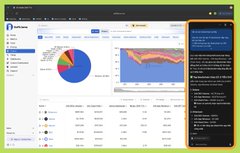
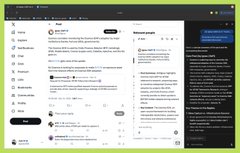
🔎 Vừa test thử ChatGPT Altas - Trình duyệt tích hợp AI
Mình vừa test thử 2 task
📌Task 1: Yêu cầu ChatGPT tóm tắt nội dung trên X
- Ưu điểm là mình không cần copy text dán vào khung chat của ChatGPT, bấm 1 phát là nó tóm tắt những gì nó thấy trên màn hình x.com/gm_upside/stat…

From Twitter
Disclaimer: The content above is only the author's opinion which does not represent any position of Followin, and is not intended as, and shall not be understood or construed as, investment advice from Followin.
Like
Add to Favorites
Comments
Share
Relevant content