By Cory Klippsten, Tomer Strolight, Sam Callahan
Original source: Coindesk
Compilation of the original text: Dust Technology
This article is from the WeChat public account FastDaily.
Plunging prices and the collapse of cryptocurrencies dominated the headlines in 2022, but it can still be considered that 2022 is also the year Bitcoin makes significant progress.
In 2022, we see Bitcoin as a protocol enabling a wide range of innovations, addressing whatever needs developers and entrepreneurs identify without requiring any changes to the protocol.
We have listed 10 important developments of Bitcoin in 2022. As the end of the year approaches, let's take a look at the specific aspects.

1. Another year of 100% uptime
Bitcoin's biggest achievement this year remains Bitcoin itself. Bitcoin continues to function flawlessly, with a block appearing roughly every 10 minutes, and its token issuance is exactly as specified in Satoshi Nakamoto's 2008 Whitepaper. No emergency restarts, no hard forks , no chain splits, no protocol-level hacks or vulnerabilities. However, against all odds in 2022, Bitcoin once again offers 100% uptime and is available to anyone in the world all year round. Billions of dollars worth of Bitcoin are moved on its blockchain every day.
Bitcoin does all this without any foundation backing, without any direct employees, without any leaders or venture capitalists. As a result, continued development that relies on Bitcoin's reliability and predictability can continue to focus on another year without interruption, with confidence that it will continue to do so for the foreseeable future.
Notably, none of the remaining projects on this list required any changes to Bitcoin’s base-layer consensus rules.
2. Development of Lightning Network
While Bitcoin’s base layer remains stable, its most important scaling protocol, the Lightning Network, has experienced massive growth and development in 2022. The Lightning Network enables instant, cheap off-chain payments, eliminating the need to wait for blocks to confirm transactions. It is fully decentralized and permissionless, improving Bitcoin's scalability while still leveraging the security and settlement guarantees of Bitcoin's base layer. In 2022, the publicly visible Liquidity capacity of the network rises from 1058 BTC to over 4771 BTC .

The number of Lightning Network channels increased by 80%, from 37,298 to 67,339.
The number of publicly visible Lightning nodes increased by +88%, from 8,295 nodes to 15,636 (although growth slowed in the second half of the year).
All in all, the growth of the Lightning Network this year has been astounding, due to the launch of numerous wallets , better tools built for users, and more educational resources. Instant, cheap payments (often less than a cent) will become commonplace in 2022 as Bitcoin users look to peer-to-peer value exchanges over the Lightning Network.
3. El Salvador
In 2022, under President Nayib Bukele's economic freedom and Bitcoin policy , El Salvador has undergone the greatest national reshaping in history. Appearing on the cover of Bitcoin Magazine's year-end edition, Bukele was the first pioneer and leader who dared to embrace pure Bitcoin and the economic freedom it provided to the people.

In the op-ed, Bukele called on Bitcoin users around the world to realize that El Salvador's struggle against the global elite is also theirs. El Salvador's embrace of the Bitcoin currency shows everyone that it understands exactly what a revolutionary currency actually means, despite the misgivings of the mainstream media. While U.S. regulators and political elites have been duped by the likes of Sam Bankman-Fried, Bitcoin has brought prosperity to El Salvador. Its tourism numbers are booming, its GDP is growing, and the country is adding satellites.
In October, El Salvador opened the world's first "Bitcoin Embassy" in Lugano. The chamber will be led by Josue Lopez, a Salvadoran bitcoin miner and investor , bitcoin diplomat and “honorary consul.” In November, a Bitcoin office was established within the Presidential Office of El Salvador. The office was created to meet the growing demand for information from investors around the world. Bitcoin Office further established the El Salvador template for more countries to replicate on the path to hyperbitcoinization. El Salvador ended the year in the most bitcoin way possible — President Bukele announced that El Salvador would start buying one bitcoin per day.
4. Machankura — Bitcoin Transactions in Africa by Text

The new service was coded in a matter of weeks by African developer Kgothatso Ngako, who noticed a problem — most Africans had basic cell phones but no reliable internet connection — so he created a solution . Machankura enables Africans to receive and spend Bitcoin via text message, without the need for an internet connection. According to a report by Caribou, 94% of financial transactions in Africa are conducted via SMS, while only 6% of transactions are via mobile apps. The new service allows individuals across Africa to use bitcoin for the first time on technology they already have access to. Projects like Machankura will help drive bitcoin adoption in regions that need the digital currency the most.
5. Taro — Assets on the Lightning Network
This year, Lightning Labs presented a protocol proposal to Bitcoin and the Lightning Network designed to allow assets to be minted, sent and received on the network. By upgrading Taproot with Bitcoin's latest protocol, Taro can theoretically issue any type of asset on the Bitcoin blockchain while still using the immutable verification of Bitcoin's proof-of-work consensus mechanism. Taro can allow various assets such as Stablecoin , stocks and bonds to be issued on top of the Bitcoin protocol, opening the door to more use cases and more functions on the network.
6. Impervious.ai - the first P2P lightning-native browser
Impervious Technologies has released the first web browser based on the Lightning Network, Bitcoin's second-layer scaling system. It is a peer-to-peer web browser that provides a complete set of communication, data transfer and lightning payment tools without any middlemen. This manifests itself in secure peer-to-peer messaging, P2P video calling, P2P workspaces, decentralized identity management, decentralized data storage, and direct monetization of users' data. All of these tools are fully encrypted, and they eliminate centralized intermediaries that collect and sell user data. By leveraging the decentralized nature of Bitcoin and the Lightning Network, Impervious Technologies gives us a hint of what the future of the internet might look like.
7. FediMints – Collaborative Hosting
FediMint is a new approach to Bitcoin custody that helps safeguard each other's Bitcoin and privacy by forming collaborative custody communities. This form of escrow exploits the inherent fact that humans trust those closest to them. It leverages technologies like federation and the (David) Chaumian e-cash mint to cryptographically maintain privacy between individuals in a group, while allowing them to share Bitcoin custody for the entire group. This custody solution offers the potential to scale Bitcoin, improve privacy, reduce on-chain fees, and allow more individuals to self-custody Bitcoin globally.
8. Value-4-Value - Embedding payment functionality anywhere
value-4-value is a new approach to content distribution where creators gain value after "clients" enjoy the content through the Lightning Network. Over 10,000 content creators have already implemented Value-4-Value on their podcasts, and solutions like LightningAddresses and Bolt-12 Invoicing are opening up this possibility for all other types of content and are on track to do so by 2023 continue to grow rapidly.
9. Plebnet Lightning – Community Tools That Make Lightning Powerful
This informal Telegram group of ordinary people interested in running their own Lightning nodes is about to have over 5,800 members.
Not only do participants support each other on best practices, community members have developed and released numerous open-source applications that make some of the Lightning Network's most advanced features easily accessible to anyone. sdLightning Terminal is a browser-based interface for managing channel Liquidity on self-hosted Lightning nodes, performing submarine swap through the Lightning Loop service, classifying channels and integrating loopd, poold and faraday daemons. Bitcoin's balance makes channel balancing easy, making it easy to issue Lightning Money Transfers to balance channel inflow and outflow Liquidity. LNDg and Lightning Jet offer similar functionality, with more advanced features for monitoring nodes and maximizing efficiency.
10. Gridless computing using BTC mining
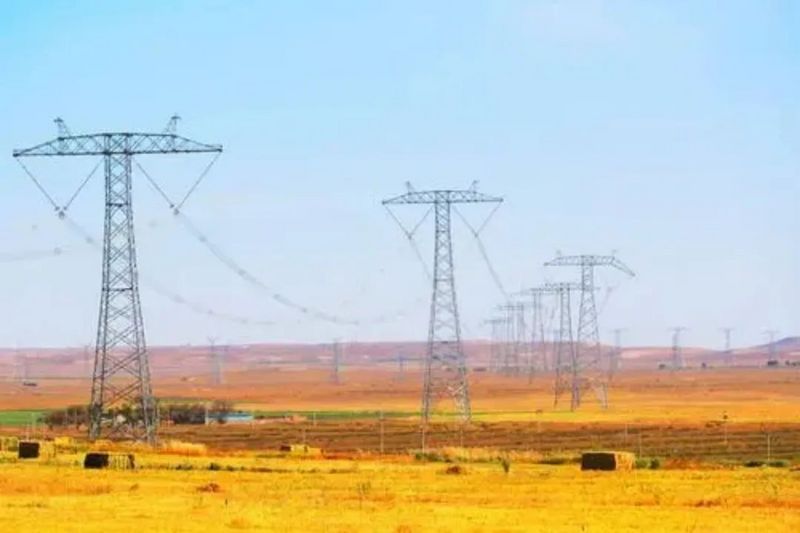
People all over the world live with very little, very expensive or no electricity. Bitcoin mining is changing all that. Twitter founder Jack Dorsey shared an example of securing the Bitcoin network with excess hydropower while powering a rural village in Kenya, while reducing electricity bills for 2,000 people (500 households) from about 10 The dollar dropped to just $4.
Far from being an isolated example, another $2 million funding round led by Stillmark VC and Block last December will be used to use bitcoin mining to increase energy supplies across Africa while further decentralizing and securing bitcoin. currency network.