Crypto card spending volume has increased by 500% since September 2024, reaching approximately $600 million per month. Visa (V) currently processes 90% of these on-chain transactions.
This data reveals a dramatic shift in how stablecoins reach users, from wallet balances to everyday spending. Stablecoin-linked card programs are now becoming one of the fastest-growing segments on public blockchains.
Visa leads the growth in stablecoin cards.
Visa has built its leading position through partnerships with native crypto infrastructure providers , reducing its reliance on traditional backing banks.
This strategy is similar to Visa's plan to launch the Bridge stablecoin card , as it expands to more new regions by 2026.
Simultaneously, partnerships like Wirex are also delivering stablecoins to billions of cards via Visa Direct . In March alone, Visa processed approximately 97% of the total volume .
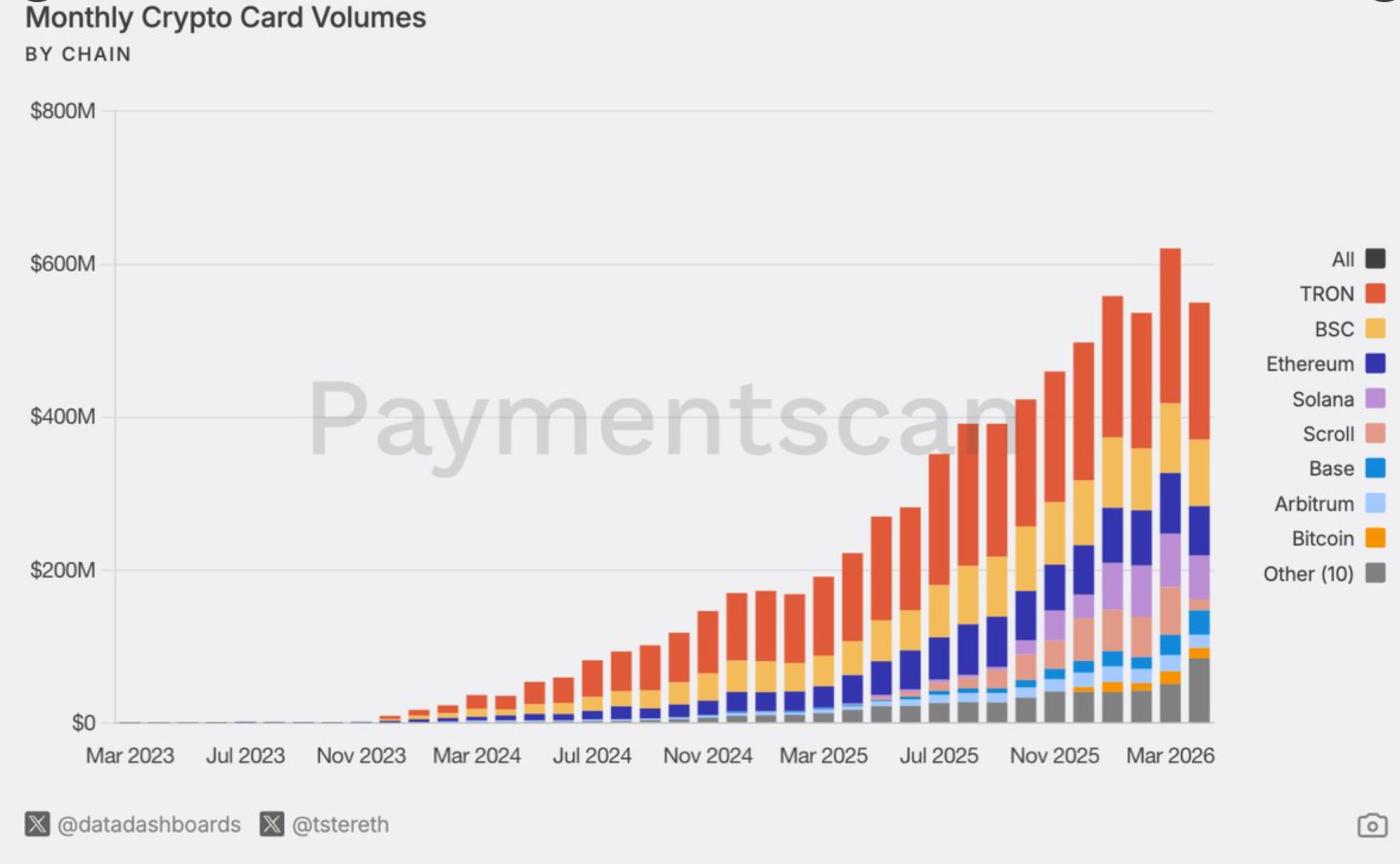 Monthly Crypto volume . Source: X/Kobeissi Letter
Jupiter and the race to expand its user base.
Many new players are also competing with more attractive cashback models. Among them is Jupiter's Visa card on the Solana platform. This product rewards cashback from 4% to 10% depending on the membership level and achieved a 660% volume growth in April alone. Notably, rewards are paid in stablecoins instead of traditional flight points.
TRON founder Justin Sun believes this is the next step in distributing stablecoins more widely. This view is consistent with his previous observations on the Vai of stablecoins in the global financial system .
“Crypto cards are not just a passing trend. They are the next evolutionary step in the distribution of digital assets. Stablecoins have moved beyond personal wallets to serve everyday spending on a global scale. The next step is a seamless payment experience: digital assets integrated directly into all forms of user payment, anywhere,” Justin Sun emphasized .
On the other hand, industry expert Marty Party predicts that Visa-issued stablecoin cards will soon appear on Apple Pay and Android Tap, adding 10 million new users. He believes this will happen before stores accept native stablecoin payments.
These figures show that stablecoins are directly competing for a place in consumers' wallets, rather than simply Vai as liquidation on the blockchain.
Whether rival networks can catch up to Visa's coverage will likely determine whether these cards become the primary gateway to crypto for retail investors.