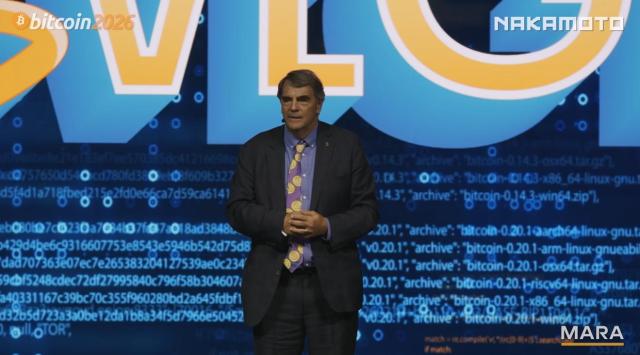
Ripple CEO Brad Garlinghouse publicly reaffirmed the company's strong commitment to XRP at the Bitcoin 2026 conference, directly refuting rumors that Ripple had distanced itself from its native Token .
This announcement comes at the same time as news that Ripple is rapidly expanding into the Middle East and Africa markets.
CEO faces skepticism.
Speaking at a conference in Vegas , Garlinghouse sent a clear message to critics. He stated that Ripple remains the world's largest holder of XRP and will continue to support Token further success.
“Ripple is very committed to making XRP the most useful, liquidation , and reliable digital asset,” Garlinghouse Chia .
This statement directly refutes long-standing criticisms that Ripple has abandoned XRP. Many argue that Ripple is focusing its efforts on developing institutional payment solutions like RippleNet and xCurrent, which do not require the use of the Token.
Garlinghouse's statement suggests that developing payment services for institutions and promoting the use of XRP are two complementary, rather than mutually exclusive, strategies.
Rapid expansion in the Middle East
In addition to its commitment to XRP, Ripple also announced the opening of a new regional office at the Dubai International Financial Centre (DIFC).
This move helps Ripple expand its operations in the Middle East and Africa, regions with significant potential for the development of payment systems and blockchain technology applications.
Ripple's fund management platform handles an annual payment volume of up to $12.5 trillion for 13,000 connected banks globally. Expanding into the Middle East could give Ripple access to additional liquidation from financial institutions and payment processors in the region.
XRP Army vindicated
The CEO's Chia truly resonated with the XRP supporters attending the conference. Years of skepticism about Ripple's commitment to XRP had strained the relationship between the company and its Token holders.
Garlinghouse's statement was both reassuring and affirmative . He emphasized that Ripple's ownership of a large amount of XRP puts the company in the same interest as retail investors holding the Token. As XRP grows, Ripple also benefits.
This contradicts the view that Ripple XEM XRP as merely a burden or legacy to be carried, rather than a core strategic asset.
Financial institutions adopt and integrate XRP.
What the CEO said also suggests that Ripple will integrate XRP more deeply into payment flows for institutional clients. As RippleNet becomes increasingly used, the opportunity to use XRP as a payment intermediary for various types of transactions will expand.
Garlinghouse emphasized the goal of making XRP the most liquidation digital asset . This means that in the future, Ripple will build the infrastructure so that financial institutions can easily trade and hold XRP for payment purposes.
Ripple's three goals – most useful, most liquidation , and most reliable – paint a picture of XRP becoming the preferred Token for international payment transactions.
There are still doubts.
However, not everyone views Ripple's strategy positively. Some argue that after years of development, XRP 's practical applications remain limited. Additionally, stablecoins like USDC are also highly regarded for their fast and stable payment capabilities.
The success of the XRP campaign will ultimately be judged by actual usage figures. Retail investors will be closely monitoring whether, following these announcements, volume and XRP adoption actually increase.