The rapid emergence of bitcoin and digital asset reserve legislation at the state level signals a fundamental shift in the government's view of cryptocurrencies as speculative assets and potential strategic reserves.
Author, Source: Michael Tabone, CoinTelegraph
Article Translated by: Jinse Finance
On February 4, newly appointed "crypto czar" David Sacks stated in a press conference that the bicameral Crypto Working Group is exploring a Strategic Bitcoin Reserve (SBR), emphasizing that "the concept of a sovereign wealth fund is a bit different."
In fact, sovereign wealth funds (SWFs) have long been widely understood in the cryptocurrency community, often mistakenly seen as a tool that can naturally include bitcoin or other digital assets. SWFs are government-owned investment funds that manage national savings, typically established with surplus revenues from sources such as oil profits or trade earnings.
Their primary objectives are long-term growth and wealth preservation, ensuring economic stability for future generations. Unlike central banks, which focus on managing currency and monetary policy, sovereign wealth funds take a more strategic approach, investing in real estate, equities, infrastructure, and local businesses.
Fundamentally, they prioritize stable growth over high-risk investments, making them an important tool for nations seeking to ensure financial security beyond immediate needs.
The definition of sovereign wealth funds is the reason Sacks quickly pointed out that sovereign wealth funds and SBRs should not be conflated. The scope of sovereign wealth funds may be used for purposes broader than a specific cryptocurrency reserve, including supporting domestic companies and market infrastructure.
Bill Hughes, senior legal counsel at blockchain software company Consensys, noted that the concept of sovereign wealth funds was ordered to be created by former U.S. President Donald Trump on February 3, and could serve as a "second choice if a strategic reserve limited to cryptocurrencies alone is not successful."
As these initiatives gain momentum, they raise an important question about the role of cryptocurrencies in national-level investment strategies and what this means for the broader digital asset industry in 2025 and beyond.
U.S. States Have Established Sovereign Wealth Funds and Bitcoin Reserve Programs
A handful of states already have sovereign wealth funds that fit the traditional U.S. definition. The Alaska Permanent Fund, established in 1976, channels oil revenues into a diversified investment portfolio to support the state budget and annual resident dividends.
The Texas Permanent School Fund uses oil and gas revenues to fund public education, while also ensuring financial stability. Similarly, the Wyoming Permanent Mineral Trust Fund and the North Dakota Legacy Fund invest revenues from oil, gas, and mineral extraction to smooth budget fluctuations and preserve wealth for future generations.
New Mexico's Severance Tax Permanent Fund follows a similar model, reinvesting the state's resource extraction severance tax revenues to support the state's fiscal health. While the purposes of these funds vary, they share a common goal: transforming temporary resource booms into lasting financial security.
If analysts also include state-managed funds with surplus earnings (such as rainy day funds or stabilization funds), the number would increase further. Some of these funds do make investments, sometimes into diversified portfolios.
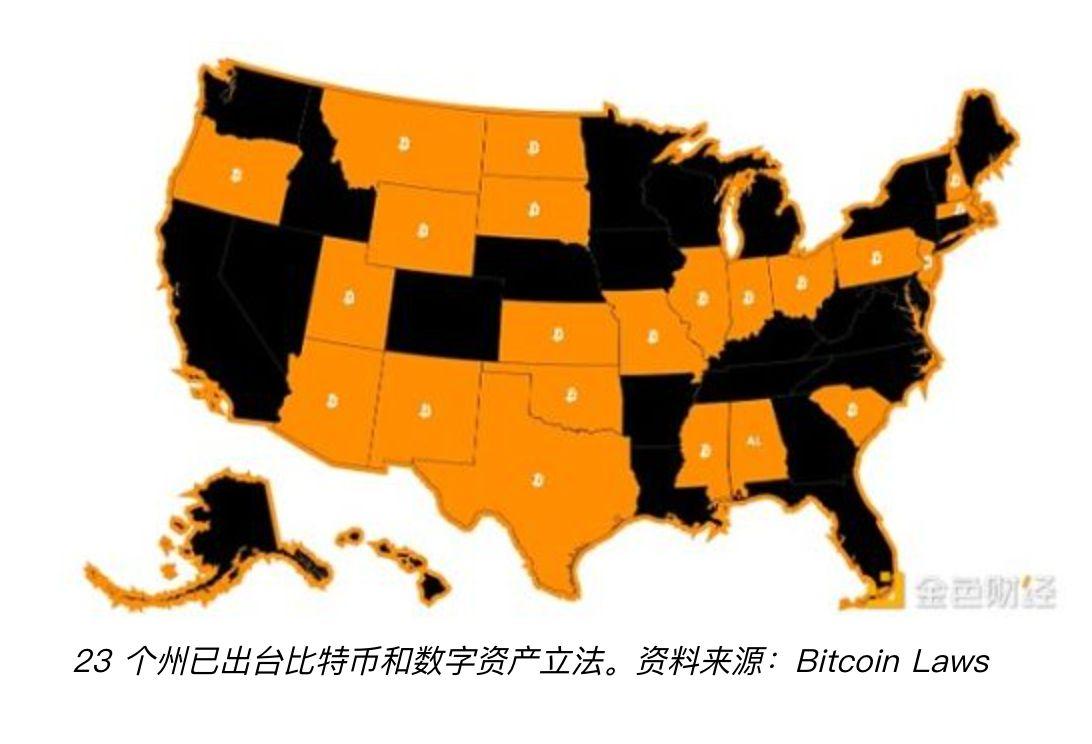
This means that up to 23 states have some form of such investment vehicles. However, their authorizations and structures may differ from the "classic" sovereign wealth fund model.
On the positive side, 15 states have at least introduced legislation on bitcoin and digital assets. Among these, Arizona and Utah are currently leading in terms of legislative activity.
Arizona's bill proposes to establish a Strategic Bitcoin Reserve Fund, capped at 10% of public funds, but contingent on the U.S. government establishing its own SBR. It aligns with Senator Lummis' Bitcoin bill, which aims to enable states to participate in a federally-managed program.
Utah's bill will allow up to 10% of several major state funds to be invested in digital assets, protect self-custody rights, and ensure nodes are not classified as money transmitters. Utah's bill takes a broad approach to integrating cryptocurrencies into the state's investment strategy, with a wide definition of "digital assets" that does not directly mention bitcoin.
Bills in North Dakota (HB1184) and Wyoming (HB201) have not passed their respective state processes.
It's a Matter of When, Not If
The rapid emergence of bitcoin and digital asset reserve legislation at the state level signals a fundamental shift in the government's view of cryptocurrencies as speculative assets and potential strategic reserves.
Whether these efforts will translate into actual bitcoin holdings or remain symbolic gestures will depend on political will, regulatory transparency, and market conditions. However, it is certain that these attempts have gone beyond the theoretical.
As states experiment with digital asset reserves and the federal government develops its own sovereign wealth strategy, the role of bitcoin in public finance is no longer a question of "if" but "when" and "how."