The "Big Beautiful Bill" could become a major positive for tech giants' free cash flow (FCF).
According to BlockTempo's trading platform information, Morgan Stanley analyst Brian Nowak released a research report on the 22nd, stating that the bill will significantly boost the financial performance of Amazon, Meta, and Google. Amazon is the long-term winner, Meta shows significant mid-term revenue, and Google gains the most in the short term.
These companies are expected to use the additional cash flow to enhance AI capabilities and core business investments, consolidate competitive advantages, and provide shareholder returns. Specifically:
- Amazon: Free cash flow is expected to increase by about 30% in 2026, amounting to $15 billion, making it the bill's largest long-term beneficiary.
- Meta: FCF is expected to increase by about 22% in 2026, around $10 billion, providing a strong tailwind for mid-term development.
- Google: FCF will receive a massive short-term boost of $25 billion in 2025, with stable long-term annual gains of $4 billion to $6 billion.
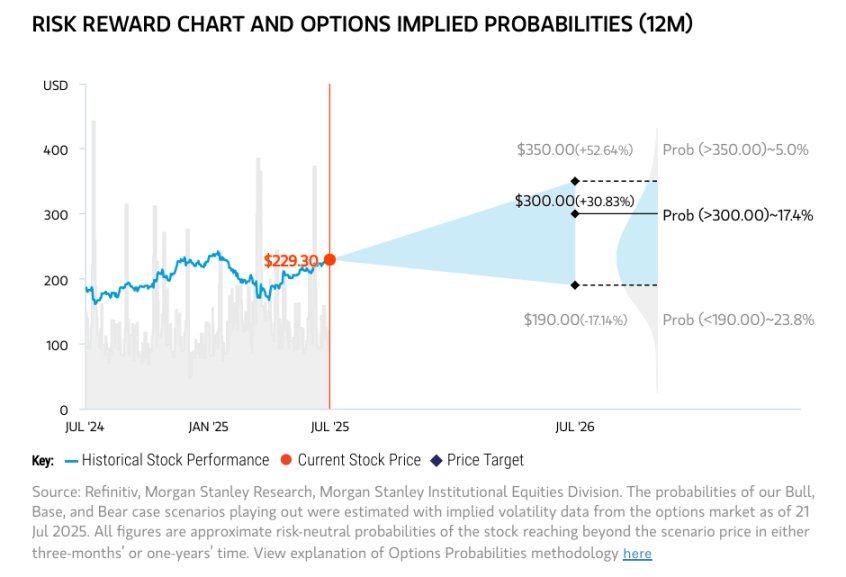
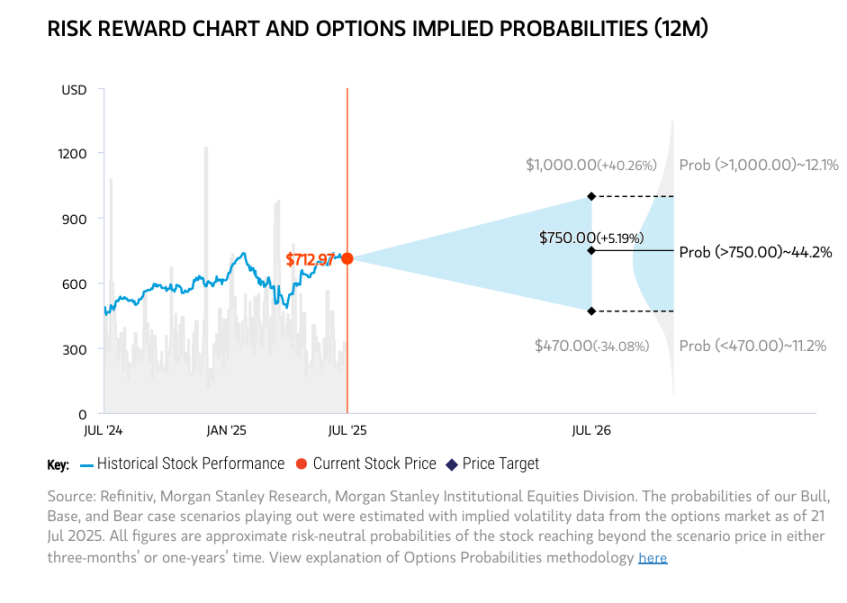
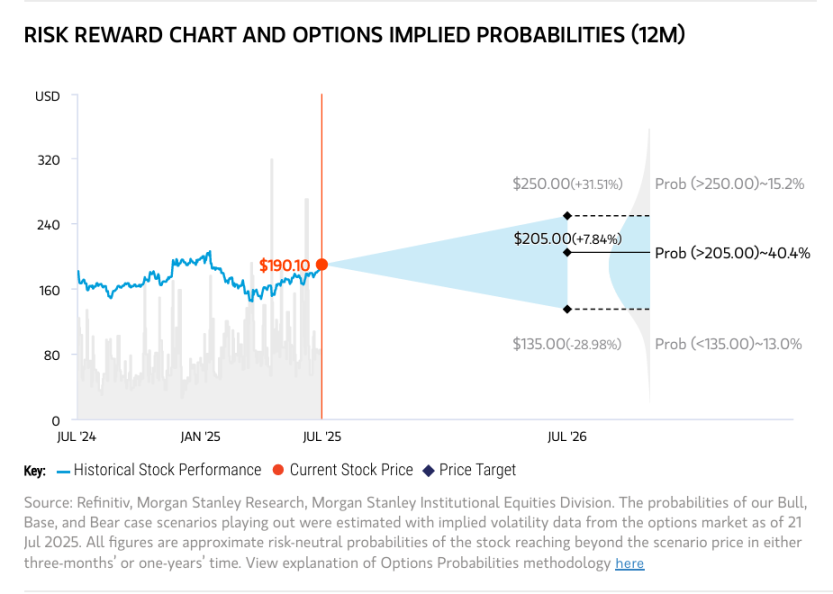
Morgan Stanley maintains an "overweight" rating for these three companies, with target prices of $300 for Amazon, $750 for Meta, and $205 for Google.
Amazon: The Biggest Long-Term Winner of the Bill
Morgan Stanley's analysis clearly points out that Amazon is the largest free cash flow beneficiary under the "Big Beautiful Bill". By 2026, the bill is expected to bring about $15 billion in annual revenue, representing an impressive 30% boost to its free cash flow that year.
This significant advantage mainly stems from two core factors:
Continuous high capital expenditure: Amazon not only invests heavily in data center construction but also requires continuous capital investment in updating equipment in its vast warehousing and logistics network (fulfillment and logistics operations).
Leading R&D investment: To support its leading cloud business (AWS) and internal innovation projects, Amazon has a higher level of qualified R&D expenses compared to its peers.
The report specifically notes that due to Amazon's massive tax credit scale, its cash tax base is insufficient to support a one-time accelerated write-off, so these earnings will continue to be released over the next few years. By 2028, the bill's annual revenue is still expected to reach around $11 billion, demonstrating the sustainability of its benefits.
For investors, more important is the use of these funds. Morgan Stanley expects Amazon will not use all $15 billion as profit, but will use this "windfall" to gain greater investment flexibility, continuing to deepen its competitive moat and generative AI capabilities in retail (robots, fresh produce, logistics, same-day delivery) and AWS (GPUs and other chips, power, infrastructure), while also providing investors with more ample near-term FCF returns. This also enables more flexible investments in next-generation technologies like Anthropic.
Meta: A Strong 'Tailwind' for Mid-Term Cash Flow
For Meta, the "Big Beautiful Bill" is equally beneficial, expected to provide $8 billion to $10 billion in cash flow tailwind by 2028. Specifically, in 2025 and 2026, the annual FCF increment is expected to reach $10 billion, which will increase its pre-bill FCF level by 22%.
Similar to Amazon, due to Meta's insufficient cash tax base to fully accelerate write-offs of its deferred tax assets, these earnings will be more evenly reflected in the coming years. This change directly impacts valuation: the report calculates that the bill will compress Meta's 2026 FCF P/E ratio from the current around 39x to about 32x, though still higher than its long-term average of about 27x, undoubtedly enhancing its valuation attractiveness.
In terms of fund usage, the report believes Meta will not let all cash flow directly flow into the profit and loss statement. This incremental cash will be partially used to support the company's massive infrastructure needs, such as the multi-GW data center clusters previously emphasized, with each cluster requiring tens of thousands of NVIDIA GPUs. Additionally, funds will support expansion kits for its advertising recommendation system, business information, Meta AI, and other businesses' inference needs, ultimately aiming to consolidate its AI capabilities while creating more near-term returns for shareholders.
Google: Maximizing Short-Term Profits, Stable Long-Term Growth
Google is seen as the biggest "near-term beneficiary" of this bill. The report predicts that the bill will bring a stunning boost of $25 billion to Google's FCF in 2025, an increase of 31%.
Google's ability to gain the most in the short term is mainly due to two conditions:
It has the largest R&D deferred tax asset among peers, around $26 billion.
Its massive cash tax base can support the accelerated release of this impact.
However, this explosive growth is mainly concentrated in the first year. After 2025, as R&D deferred tax assets are gradually digested, Google's long-term annual revenue will stabilize at a level of $4 billion to $6 billion, with an FCF boost of approximately 5% to 6%, primarily derived from future R&D and accelerated depreciation benefits.
Similar to the previous two companies, Morgan Stanley expects Google to view this incremental cash flow as an opportunity to enhance investment flexibility, rather than simply increasing profits. Funds will be used to continue deepening its competitive moat and generative AI capabilities across its full product line (Gemini, AI Mode, AI Overviews, Veo, etc.), and while investing in the future, provide more substantial near-term cash returns to shareholders.
Morgan Stanley maintains a positive rating for these three companies: Amazon target price of $300 (overweight), Meta target price of $750 (overweight), Google target price of $205 (overweight). Analysts believe that although these companies will experience significant cash flow improvements, investors should expect that most revenues will be reinvested in AI infrastructure and technological innovation, rather than simply increasing short-term shareholder returns.