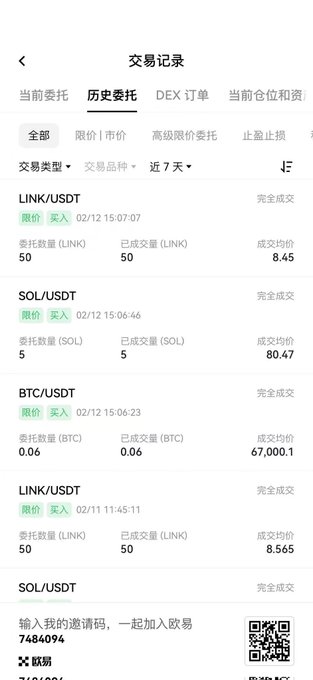
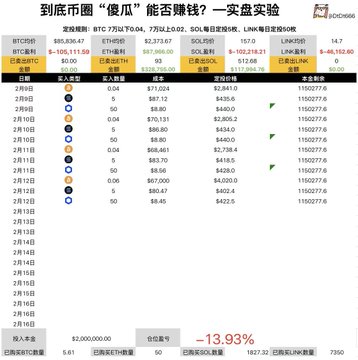
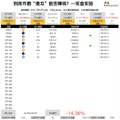
"Investment Advice for You" Brothers, investing is a form of self-cultivation. Many people search for investment methods, get-rich-quick schemes, candlestick chart techniques, or insider information, often neglecting the fact that ultimately, investment decisions are made by "people." The market is essentially an arena that amplifies human weaknesses. Impatientness in life becomes chasing highs and selling lows in the market; Hesitation in life becomes missing opportunities and then buying at the top; Arrogance in life becomes over-leveraging; Greed in life becomes failing to exit when necessary. These character flaws usually have small consequences—perhaps just missing a meal or offending someone. But in the market, every weakness has a price tag, and losses become tuition fees. Therefore, saying that investing is a form of self-cultivation isn't just being pretentious; it's because the market forces you to confront your true self with real money. Why are these shortcomings so hard to change? A key reason is that market feedback is delayed, noisy, and random. If a bad habit happens to make money, it can be solidified in the brain as a "correct method." Therefore, investing isn't just about correcting weaknesses, but also about identifying "bad habits fueled by luck." The most dangerous thing isn't having weaknesses, but not knowing them. True self-cultivation isn't about eliminating weaknesses—that's unrealistic—but about establishing a mechanism that prevents weaknesses from flaring up. Use a system to combat human nature, not willpower. Willpower is a consumable resource; a system is sustainable. That's why I often say: discussing buying and selling without a strategy is meaningless. If you don't explain your strategy and only ask me whether you should buy or sell, I can't answer. Successful investors aren't necessarily emotionally stable or perfectly rational, but they often share one thing in common: they allow themselves to make occasional mistakes, but they don't allow a single mistake to cripple them. There are many schools of thought in the market: value investing, trend trading, quantitative trading, macro hedging… Each has its winners and losers. The question is never which school of thought is better, but rather: Which one suits your personality, cognitive structure, financial resources, time, and energy? "Suitable" isn't a comfort zone, but a system you can consistently implement and that isn't easily swayed by emotions. A person who can endure loneliness might be suited to deep value investing; a person who reacts quickly but can't sit still might be better suited to trend following or short-term trading; a person who is too busy with work and lacks the energy to track stocks might be better suited to asset allocation and rebalancing, rather than frequent stock market timing. Any method, as long as it's logical and reasonable, is worth learning. Many people reject other schools of thought once they join one; value investors look down on technical analysts, and technical analysts ridicule fundamental analysts. In fact, listening to all sides leads to clarity. Learning someone else's framework isn't about copying it exactly, but about understanding what the opposing side is thinking. Finally, another suggestion is to have a hobby unrelated to investing. For example, running, playing an instrument, or painting—these don't produce immediate results; you have to endure long periods of monotony to see progress. This is the same as the ability to "hold and wait" in investing. The anxiety, regret, and excitement brought on by market fluctuations, if left unexpressed, can interfere with future decision-making. A person with stable hobbies is less likely to be swayed by market sentiment. Many people break down after losses not only because of the money itself, but also because they've tied their entire sense of self-worth to their account balance. When you have something you consistently invest in and continuously improve at, your self-esteem won't be entirely dependent on market ups and downs. More importantly, the biggest enemy of investing is "constantly staring at the screen." Having a deep hobby allows you to detach yourself from the noise of the market. For example, when you're immersed in sports or art, your emotions reset, and anxiety dissipates. A degree of detachment from the market often leads to clearer vision. —————— Day 407 of Safe and Secure Dollar-Cost Averaging (Noise Rejected) Currently holding 50 ETH at a cost of $2373.67 Currently holding 5.61 BTC at a cost of $85835 Currently holding 1827.32 SOL at a cost of $157 Currently holding 7350 LINK at a cost of $14.7 Today's actions: Continued to blindly buy 0.06 BTC, 5 SOL, and 50 LINK Current overall account profit: -13.93%
This article is machine translated
Show original

看不懂的SOL
@DtDt666
段永平:想获得10倍回报?看财报应该看哪些信息??
01我看财报主要用于排除公司,也就是说如果看完财报就不喜欢或看不懂的话,就不看了。
我觉得看财报最重要的就是剔除不想投的公司。
02关心什么看什么或者担心什么看什么。 x.com/DtDt666/status…

From Twitter
Disclaimer: The content above is only the author's opinion which does not represent any position of Followin, and is not intended as, and shall not be understood or construed as, investment advice from Followin.
Like
Add to Favorites
Comments
Share
Relevant content