Bitcoin is holding above the $80,000 mark, but pressure from short-term investors and signals from realized Capital suggest the market is not yet fully stable.
The $80,200 level is currently a threshold that the price has yet to successfully break through, while indicators of unrealized losses and profit-taking by short-term holders still reflect the risk of short-term volatility.
- Bitcoin is fluctuating near the $81,000 resistance level and has yet to turn $80,200 into support.
- The selling pressure on short-term holders has eased, but will return if BTC falls below the $78,000-$79,000 range.
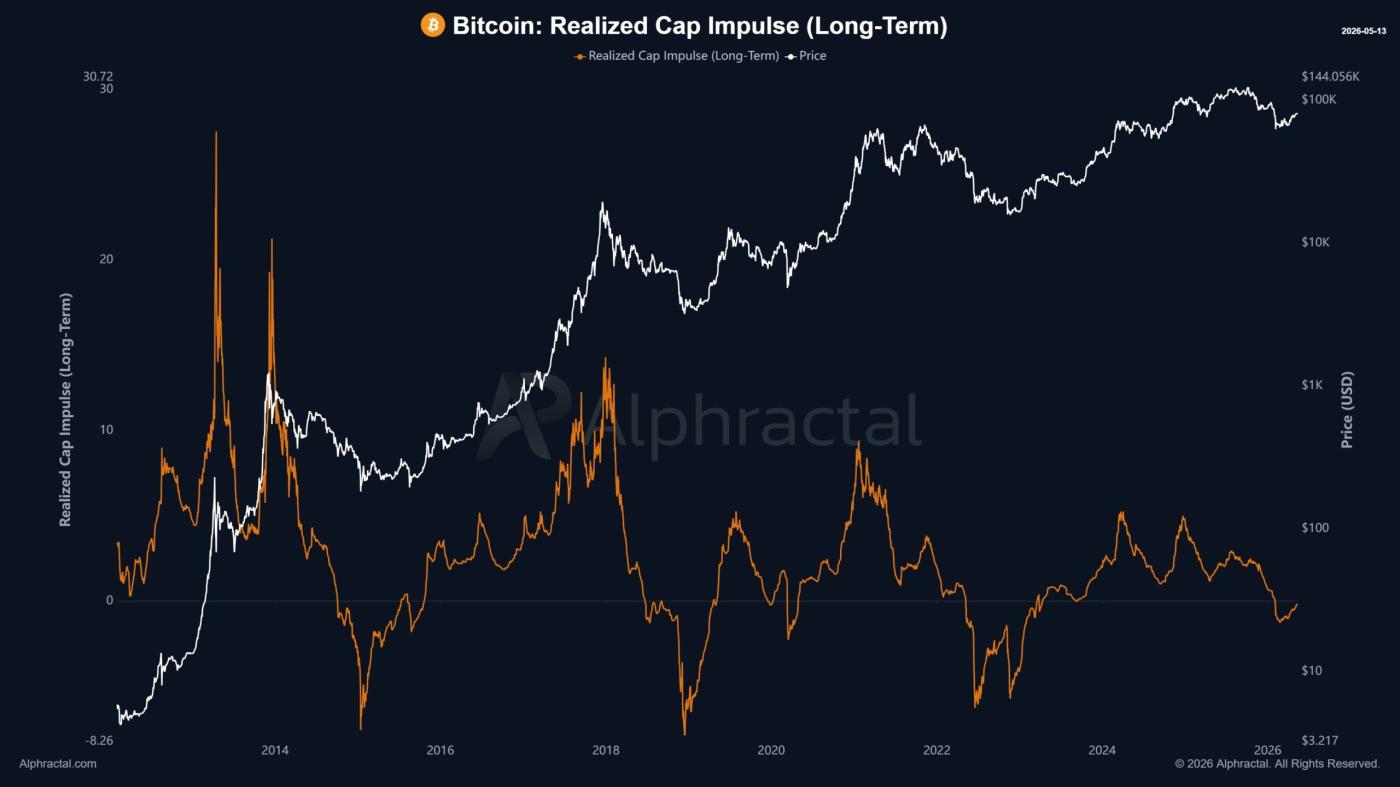
- The realized cap impulse indicator has not yet risen above 0, so it cannot be confirmed that the uptrend has resumed.
The $80,000 level is currently Vai as a psychological benchmark.
Bitcoin has approached the $81,000 resistance level in recent days, but spot buying remains relatively cautious. The price is also testing the $80,200 level, which is the realized Capital point for short-term holders.
This is why the area around $80,000 is XEM a crucial short-term milestone. If BTC fails to turn this area into support, the upward momentum could still be hampered by profit-taking and leveraged volatility.
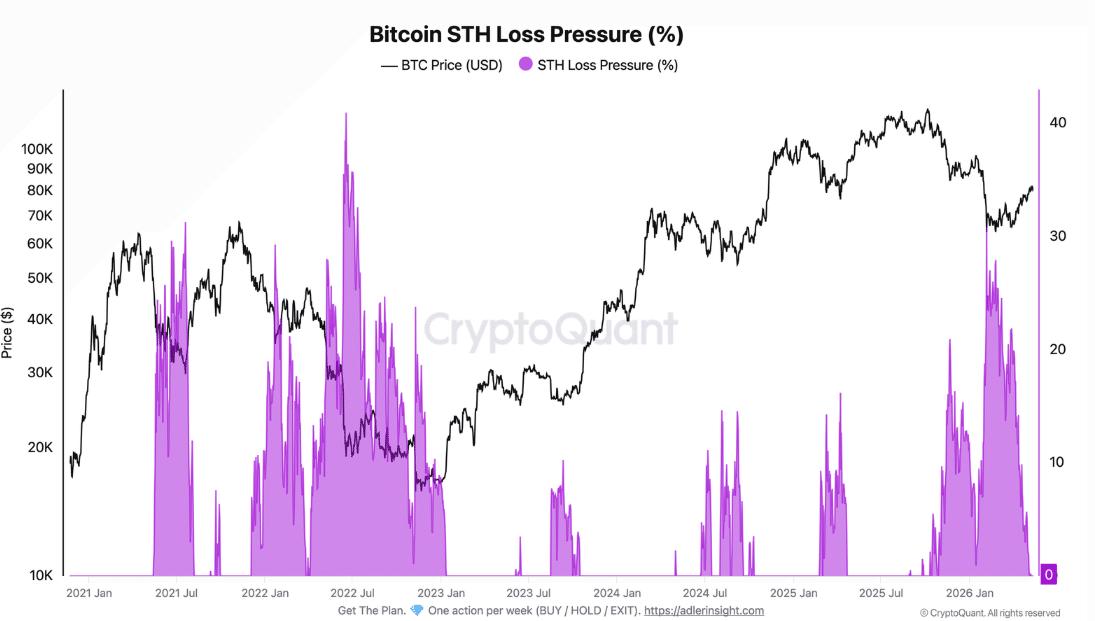
The selling pressure on short-term holders has eased.
The index reflects the loss pressure of short-term holders, showing the extent of unrealized losses for this group. The higher the index, the greater the number of coins currently trading below Capital basis.
This index peaked during the sell-off in early February and remained at a high level throughout April. However, the recent rebound has helped reduce the pressure of losses, even reaching 0% for five consecutive days.
That development could reduce selling pressure from investors who have recently bought in. However, if Bitcoin falls below the $78,000-$79,000 range, the selling pressure for this group is likely to return.
The decrease in the proportion of supply held by short-term holders also indicates that the amount of "young" coins in the supply is shrinking, thereby reducing the risk of recent sell-offs from buyers.
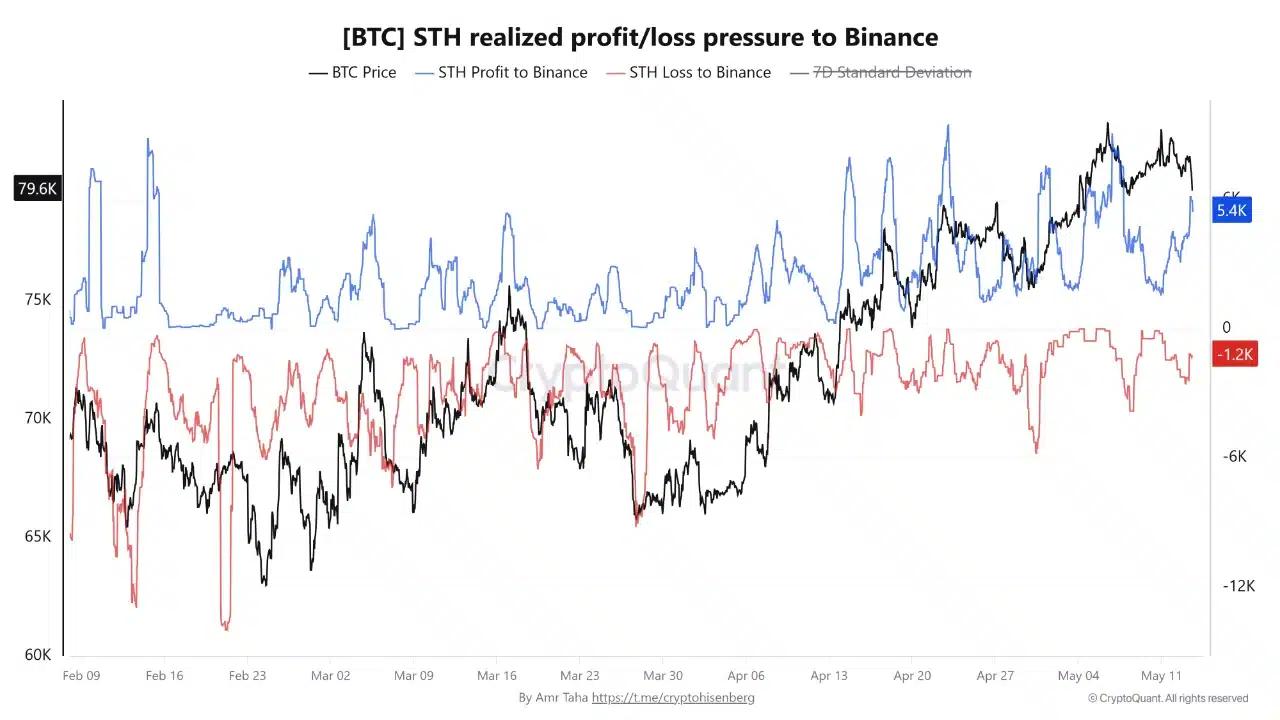
Profit-taking hasn't yet caused BTC to lose the $80,000 mark.
One analyst noted that the realized profits of short-term holders have exceeded 7,000 BTC by five times since mid-April. Despite profit-taking, Bitcoin has not yet experienced a sharp decline from the psychological 80,000 USD level.
This suggests the market is still absorbing some of the short-term selling pressure. However, this stability is not enough to conclude that the uptrend has been confirmed again.
The real market Capital signals remain cautious.
Joao Wedson, CEO of Alphractal, believes it's too early to conclude that the bull market has returned. The reason is that the realized cap impulse has not yet risen above 0.
Because this indicator uses Capital flows in its calculations, the fact that it hasn't yet turned positive despite price rebounds in recent months is a point to note. This suggests that the current recovery momentum is not strong enough to confirm a sustainable trend.
Summary
Bitcoin is holding above $80,000 but still faces pressure from short-term holders, and the Capital inflow signals are not yet strong. The $78,000-$79,000 range and the realized cap impulse indicator are two points to watch for further monitoring.