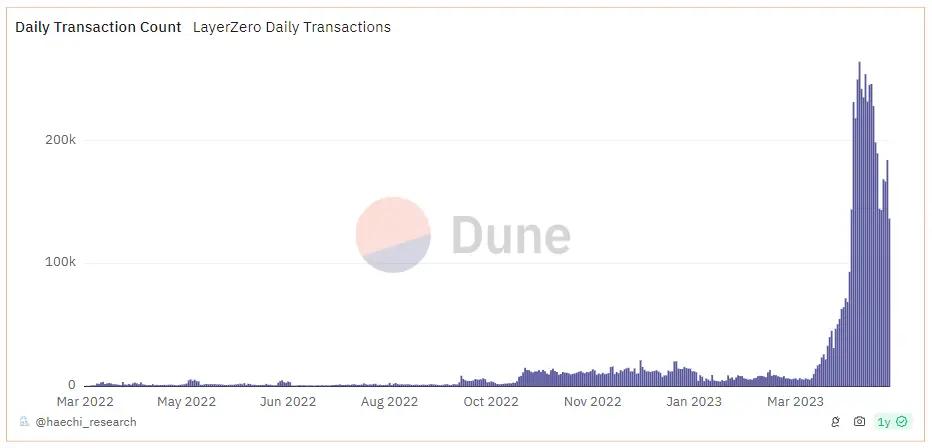
Against the backdrop of the rapid development of cryptocurrency and blockchain technology, LayerZero has highlighted its importance in the industry with its significant growth in transaction volume and user interaction. Data shows that LayerZero's daily transaction volume exceeded 200,000 in March 2023, indicating its widespread adoption and practicality in the blockchain community.
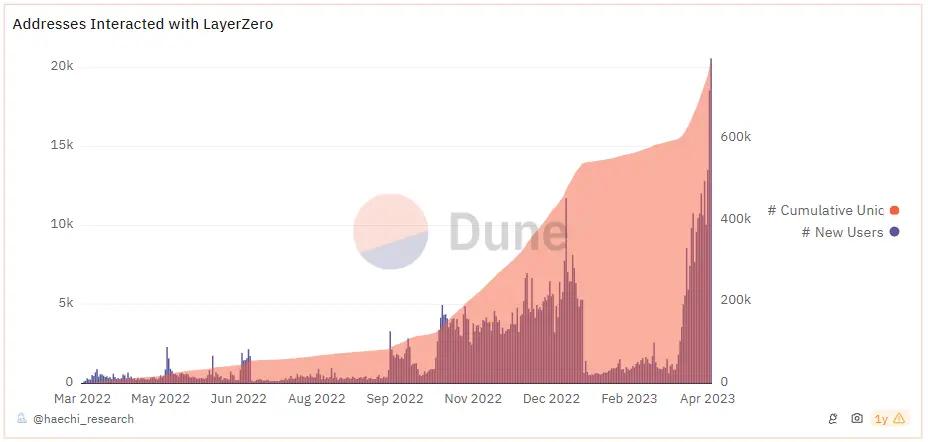
In addition, the number of independent addresses interacting with LayerZero has also increased significantly, with the cumulative number of users approaching 600,000 by April 2023. This reflects the high level of engagement with LayerZero and the trust of its users.
With LayerZero planning to issue its native token in the first half of 2024 and recently announcing the completion of the first snapshot, the community has responded enthusiastically to the upcoming airdrop. These developments lay the foundation for a deeper look at LayerZero’s strategy and its potential in the fiercely competitive blockchain space. Next, we will analyze LayerZero’s strategy and future prospects in detail.
On the eve of coin issuance, LayerZero 2024Q1 data surged
In the first quarter of 2024, LayerZero's full-chain transaction volume achieved significant growth, totaling nearly $6.7 billion, an increase of 91% from the previous quarter. This growth reflects LayerZero's strong performance in the field of blockchain cross-chain communication and the rapid growth of market demand. During the same period, the number of messages sent through LayerZero also reached 29.6 million, a month-on-month increase of 60%, showing a significant increase in user activity and network utilization.
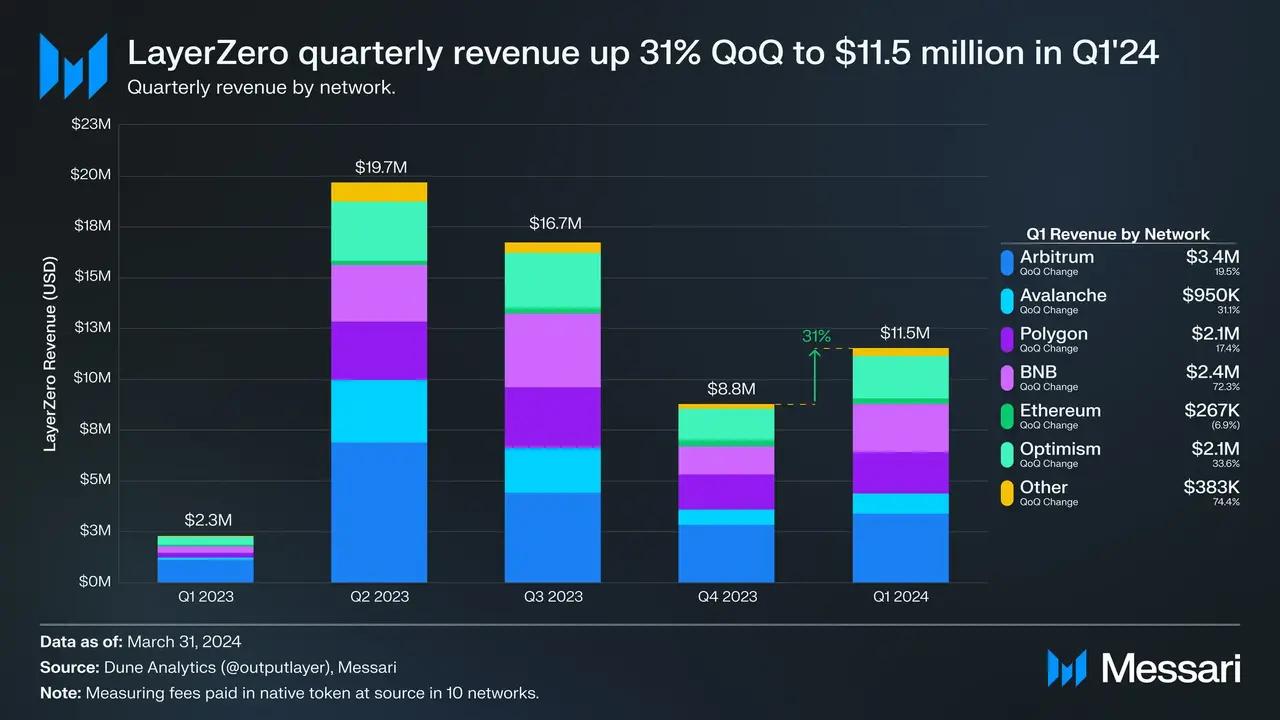
Application deployments grew 93% in Q1, a figure that highlights LayerZero’s solid position as the platform of choice for developers and the continued growth of its ecosystem. This trend was also reflected in Decentralized Validation Network (DVN) and validator revenues, which totaled more than $11 million, an increase of 31%.
Although LayerZero launched V2, which aims to further optimize services by supporting more networks and standardized communications, the highlight of this quarter is undoubtedly the reduction in transaction fees. The average transaction fee for users has dropped significantly, from $0.62 in the previous quarter to $0.48, a decrease of 22.6%, which not only reduces the cost burden of users, but also promotes wider market acceptance.
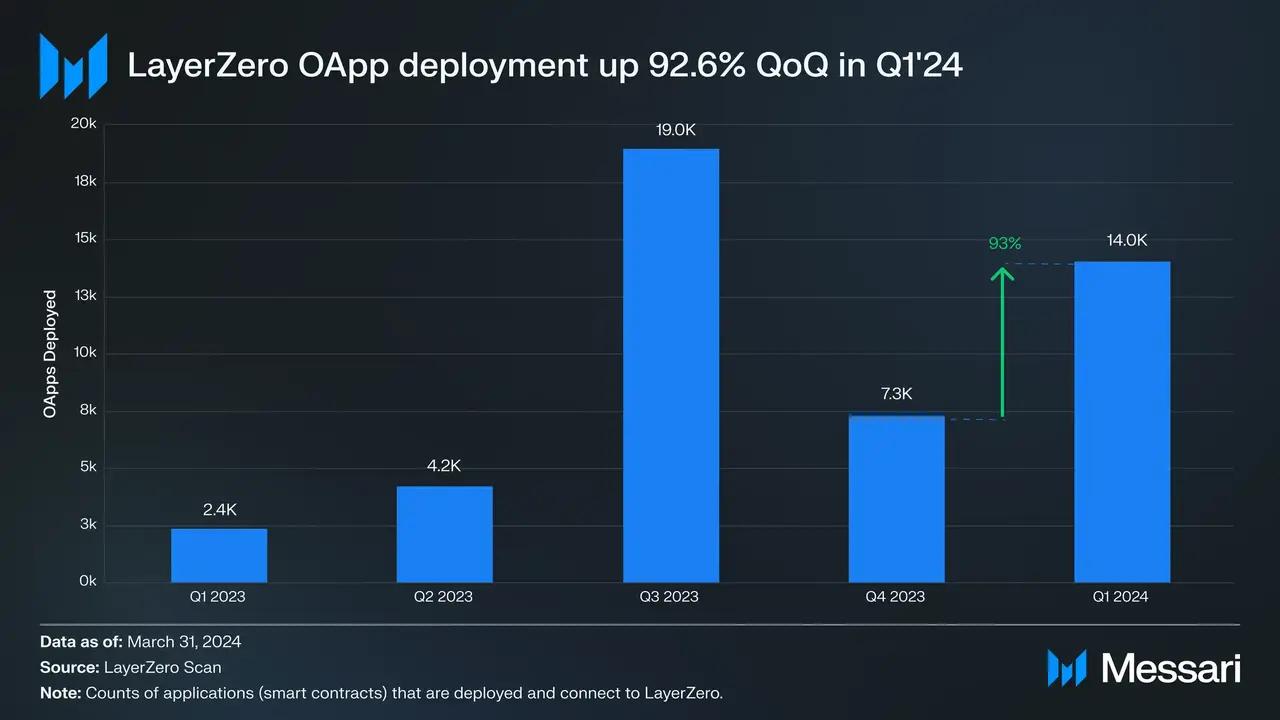
In addition, the number of application deployments also increased significantly this quarter, from 7,300 applications in the previous quarter to 14,000, a month-on-month increase of 92.6%. This growth not only shows the scalability of LayerZero, but also reflects that more and more developers and enterprises are beginning to adopt LayerZero to build and deploy cross-chain applications. The diversification and increase in the number of applications further confirm the attractiveness and practicality of LayerZero as the preferred platform for developers.
The rapid increase in DVN, the surge in applications and smart contract deployments show that the developer community's reliance and trust in LayerZero is deepening. These indicators together not only demonstrate the maturity of LayerZero technology, but also indicate that its position in the global blockchain ecosystem is becoming more solid.
These achievements mark LayerZero’s position as a leading cross-chain solution, and we expect that with further expansion and continued innovation in the technology, LayerZero will continue to play a key role in the blockchain interoperability space.
Adhering to the concepts of security, openness and autonomy, LayerZero's technical prospects and market potential
LayerZero is an advanced full-chain interoperability protocol designed to deliver lightweight messages between different blockchains. This protocol allows smart contracts to communicate seamlessly across blockchain platforms, thereby promoting the widespread dissemination and development of decentralized applications (DApps).
LayerZero's Core Principles
LayerZero is designed around three core principles: immutability, permissionlessness, and censorship resistance. These principles ensure that the API is stable, its properties cannot be changed, and interactions are secure and predictable.
LayerZero V2 Technical Innovation
LayerZero V2 is a technological upgrade over its predecessor, strengthening the overall architecture of the system, including:
Architectural improvements: V2 strengthens the immutability of the API and standardizes message processing functions. It simplifies the construction and deployment process of cross-chain applications through unified contract standards and message formats.
Security enhancements: With DVN, V2 provides more security configuration options, allowing developers to customize the verification process based on their security, cost, and speed requirements.
Separation of execution and verification: V2 clearly distinguishes the verification and execution processes of messages, increases the flexibility of the system, and optimizes the management of the entire message life cycle.
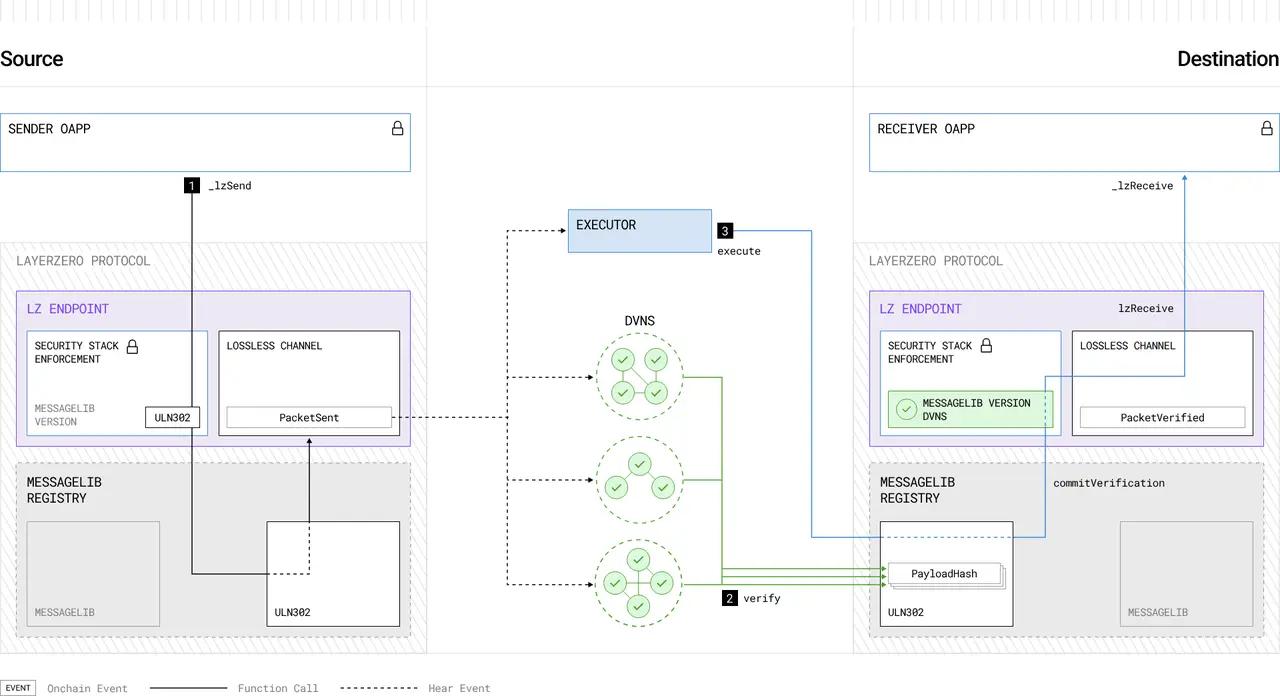
LayerZero V2 and the Market
These improvements of V2 not only make it far ahead in technology, but also directly respond to the needs of the bridge industry, providing a more efficient solution to handle cross-chain messaging. At the same time, through contract standards such as OApp and OFT, V2 provides developers with an ideal platform to create and manage cross-chain applications and tokens more easily and securely.
In general, the launch of LayerZero V2 marks an important advancement in cross-chain communication technology, which not only enhances the interoperability of blockchain technology, but also opens up new possibilities for the future development of blockchain.
LayerZero pre-coin issuance strategy: from Sybil address management to airdrop qualification review, ensuring fair and transparent implementation details
Recently, the cross-chain interoperability protocol LayerZero announced new progress. On May 2, the company announced the completion of the key Snapshot #1 snapshot, heralding the imminent release of its native token. In addition, according to the data update on May 3, the total number of LayerZero users has reached 5.8 million, an increase from the previously reported 4.826 million, reflecting the scalability of its network and the growth of its user base.
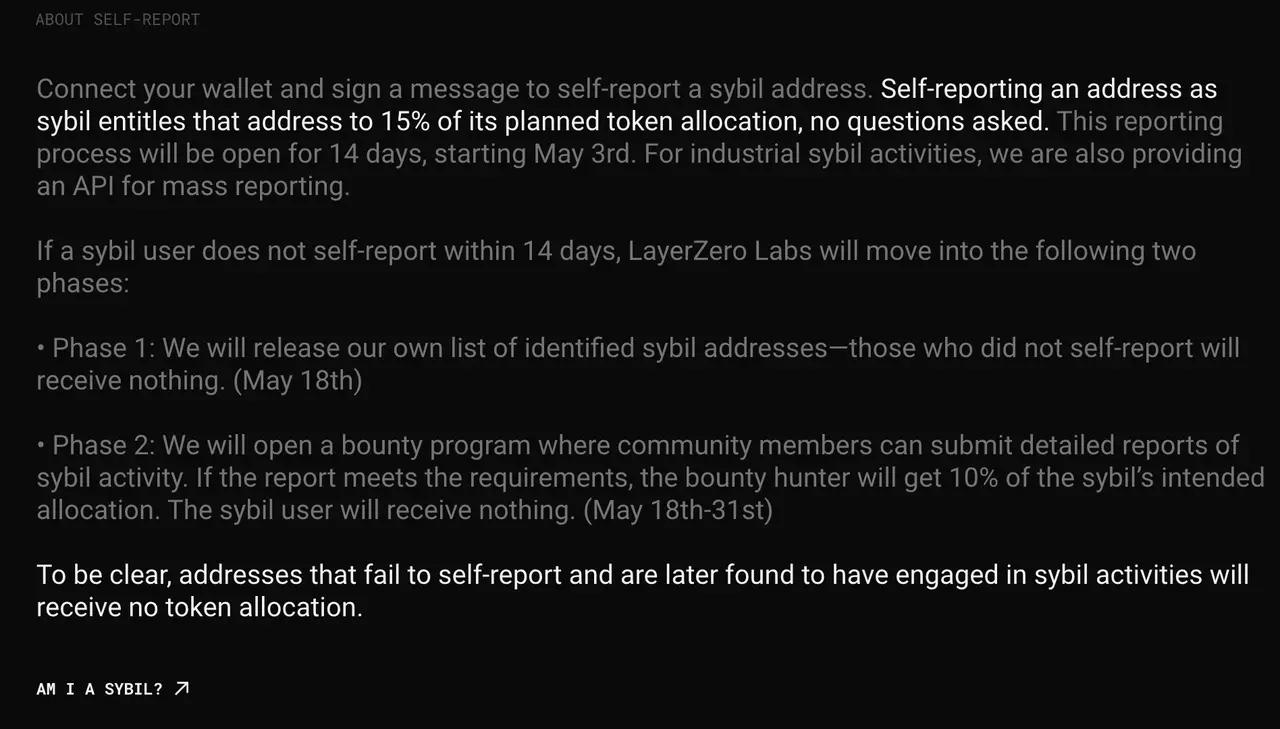
LayerZero has not only made progress in technical updates, but also made innovations in token generation and internal governance. For example, the company has adopted a policy of token airdrops to persistent users rather than "Symph users" to ensure that those users who truly contribute to the network are rewarded. The company has also set up a self-reporting mechanism that allows "Symph users" to "surrender" within a certain period of time to reduce improper influence.
LayerZero has also taken strict measures for internal governance. CEO Bryan Pellegrino made it clear that any LayerZero Labs employee who violates the airdrop rules will face dismissal. This practice demonstrates the company's commitment to fairness and transparency.
Despite so many new developments, LayerZero is still facing challenges. For example, although there are a large number of registered users, according to Pellegrino's estimate, only 6.67%-13.33% of users are eligible for the upcoming airdrop, which shows that a large number of one-time transactions and low-activity users have affected the network's active user base. This situation has triggered a deep reflection on user quality and engagement in the crypto industry.
While continuing to advance its technology, LayerZero must deal with these complex issues to ensure the long-term sustainability of its cross-chain protocol. Faced with these uncertainties and challenges, we can't help but ask, can LayerZero truly realize its vision and become the world's leading cross-chain solution provider?