#Is a bear coming?#
Latest
avatar
Murphy
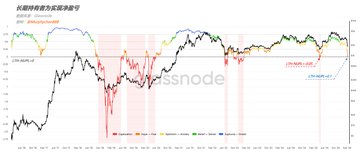
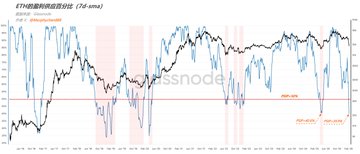
Yili Hua has fully liquidated his positions. As one of the biggest Ethereum bulls this cycle, he exits the stage with a staggering loss of around -$734 million. Honestly, it’s pretty heartbreaking… I originally thought he was just de-risking and reducing leverage, but it turns out he sold off his spot holdings too. I remember on December 30, 2025, I analyzed “when ETH is worth bottom-fishing” from four angles: sentiment, structure, cost, and overall score. Basically, when LTH-NUPL < 0, PSIP < 50%, price is below whale average cost, and market composite score < 1 — at least 2 out of these 4 conditions need to be met to start building a position; 3 or more, and you can consider scaling up. Back then, none of these conditions were met, so IMO, $2,950 ETH wasn’t worth buying. But Boss Yi’s fund, Trend Research, went all-in, completely opposite to my view. Hard to imagine institutions taking on that much risk. Fast forward to now, looking at these 4 charts: (Chart 1) 1. LTH-NUPL = 0.1; not met, but just one step away from dropping below zero. (Chart 2) 2. PSIP = 39.9%; met. The current percent of profitable supply is even lower than the lowest points in April 2025 and June 2022. (Chart 3) 3. Price is below the average cost of the 3 main whale cohorts ($2,051, $2,198, $2,392); met. (Chart 4) 4. Market composite score = 1; not <1, but already in the bottom range. So, if I had to rate ETH right now, I’d say “buy in batches (spot),” not “full liquidation”—once again, my view is the exact opposite of Boss Yi’s trade. Whether I’m right or wrong, only time will tell. Boss Yi nailed the ETH bottom in April 2025, and the timing matched all four criteria perfectly. But this time, with almost the same composite score, he chose to exit. Maybe the massive losses messed with his head, or maybe it’s just financial pressure. Either way, the outcome is really regrettable… ---------------------------------------------- For educational purposes only, not investment advice! twitter.com/Murphychen888/stat...
avatar
Gary Playa
After accumulating a certain amount of cryptocurrency, the large downward trend is really painful. These past two days, I've been thinking about how to make the large fluctuations in the value of BTC/USDT more controllable, so I can feel better. Otherwise, the sudden large value fluctuations are unbearable for me. My initial idea was to use a 1x coin-based short grid trade, which is equivalent to a certain degree of hedging, reducing USDT losses and automatically closing the position during the decline to obtain some BTC. Using a proportional grid, the actual BTC in the order book decreases as the same number of contracts rises, thus mitigating the BTC losses from shorting during the rise. At first glance, this seems like a good idea. However, after actual calculation, I found that the risks of going up and down are completely unequal. Going up to 89K only yields a profit of 50K, which is equivalent to a loss of 250K. Going down to 43K results in a loss of 280K, which only reduces the loss by 110K. In fact, this is a subjective short operation based on the assumption that the direction will be downward. Currently, the most objective approach, based solely on my own risk tolerance, is probably collars. Combining BTC spot trading with options to lock in future profits and losses over a certain period—that is, a combination of Long BTC + Long Put (locking in the floor price) + Short Call (locking in the ceiling price)—might be the most suitable solution for me. Assuming the market recovers from a bear market in 120 to 180 days, and looking at the BN market, the premiums for a 55,000 put and an 85,000 call, settled at the end of June, are similar. This means locking in profits and losses at a very low cost is more within my current six-month income tolerance range.
BTC
2.33%
avatar
实话频道
After accumulating a certain amount of cryptocurrency, the large downward trend is really painful. These past two days, I've been thinking about how to make the large fluctuations in the value of BTC/USDT more controllable, so I can feel better. Otherwise, the sudden large value fluctuations are unbearable for me. My initial idea was to use a 1x coin-based short grid trade, which is equivalent to a certain degree of hedging, reducing USDT losses and automatically closing the position during the decline to obtain some BTC. Using a proportional grid, the actual BTC in the order book decreases as the same number of contracts rises, thus mitigating the BTC losses from shorting during the rise. At first glance, this seems like a good idea. However, after actual calculation, I found that the risks of going up and down are completely unequal. Going up to 89K only yields a profit of 50K, which is equivalent to a loss of 250K. Going down to 43K results in a loss of 280K, which only reduces the loss by 110K. In fact, this is a subjective short operation based on the assumption that the direction will be downward. Currently, the most objective approach, based solely on my own risk tolerance, is probably collars. Combining BTC spot trading with options to lock in future profits and losses over a certain period—that is, a combination of Long BTC + Long Put (locking in the floor price) + Short Call (locking in the ceiling price)—might be the most suitable solution for me. Assuming the market recovers from a bear market in 120 to 180 days, and looking at the BN market, the premiums for a 55,000 put and an 85,000 call, settled at the end of June, are similar. This means locking in profits and losses at a very low cost is more within my current six-month income tolerance range.
BTC
2.33%
loading indicator
Loading..