After GMX , the Arbitrum ecology ushered in another hot DEX protocol, Camelot. Different from GMX , Camelot focuses more on guiding liquidity for new projects, showing more room for imagination, and also builds a fast track for the vigorous development of Arbitrum ecology. With the rising popularity of the Arbitrum ecology, Camelot's native Token has also been on the rise, and will launch a number of new projects and protocols in the near future. What mechanism innovations does Camelot have? What are the recent projects worthy of attention in the ecosystem? BlockBeats made a brief summary of this.
Camelot, Arbitrum's DEX dark horse
Camelot is an ecosystem-centric and community-driven DEX that allows liquidity pool builders and users to leverage its bespoke infrastructure to achieve deep, sustainable and adaptable custom liquidity. Camelot supports the launch of new protocols on Arbitrum and provides them with the tools to launch, bootstrap and maintain growing liquidity.
Mechanism Introduction
Through Camelot's permissionless "Nitro Pools", projects have full control over their incentives and have relatively flexible options to build the exact type of liquidity they need to grow. In addition, Camelot's custom Launchpad is also permissionless, allowing projects to issue Tokens and guide them to more liquidity.
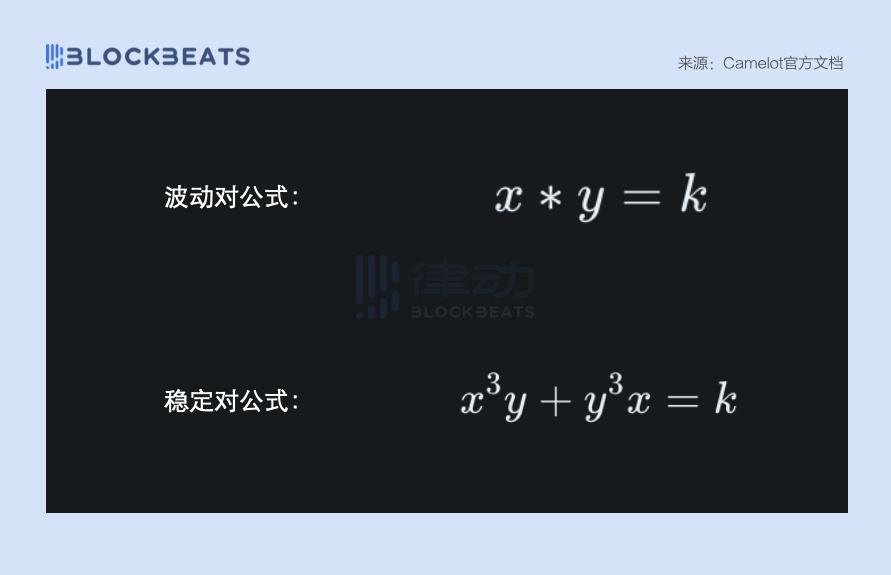
Camelot adopts a dual AMM model and supports both volatility and stability Token pair transactions. Volatile trading pairs are composed of uncorrelated assets, based on the usual UNI V2 model, using the standard constant product formula, while stable trading pairs are composed of linked or related assets, and the exchange is mostly maintained at a ratio of 1: 1, using the Solidly curve. In addition, the trading pairs on the protocol adopt dynamic directional fees to set different fees for each fund pool, and can define fees according to the different directions of transactions. This new AMM mechanism enables Camelot to provide more customized and tailored mining pool configurations for specific trading pairs.
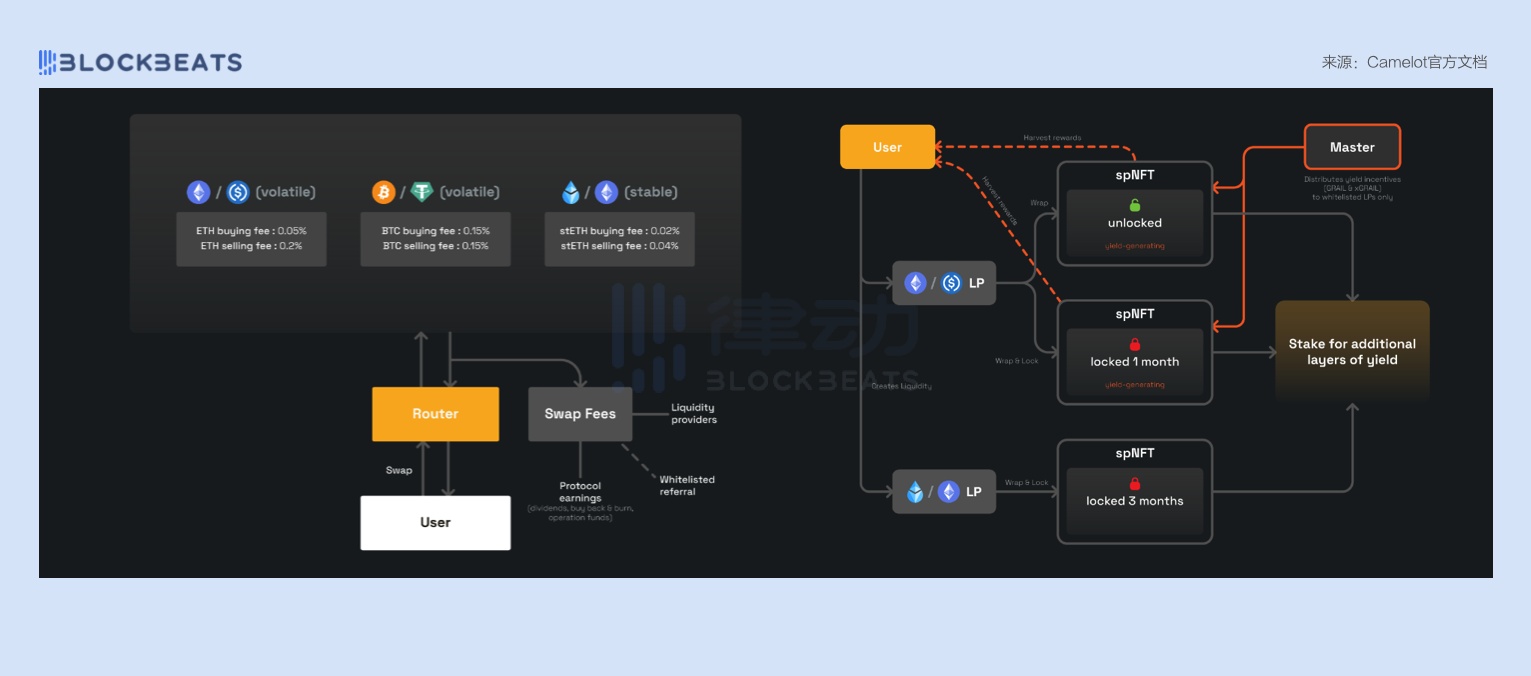
Each project launching on or partnering with the Camelot AMM can configure its LPs with a specific transaction rate to suit its own strategy. The team also plans to provide cooperation agreements with services that directly control the fees of their own Token transaction pairs. Each Camelot LP can choose its own service type according to the expected price level of its own Token transaction pairs.
Another innovation of Camelot is the introduction of a liquidity method based on NFT staking positions. Each Camelot LP can mint staking positions spNFT by packaging its own LP Token. This part of the interest-earning position is a value-added layer on top of the ordinary LP Token, which provides more new application scenarios for LP Token holders in other DeFi protocols besides Camelot, such as lock-up to increase returns, and the introduction of custom pledges Strategies to improve capital efficiency, etc.
Tokenomics
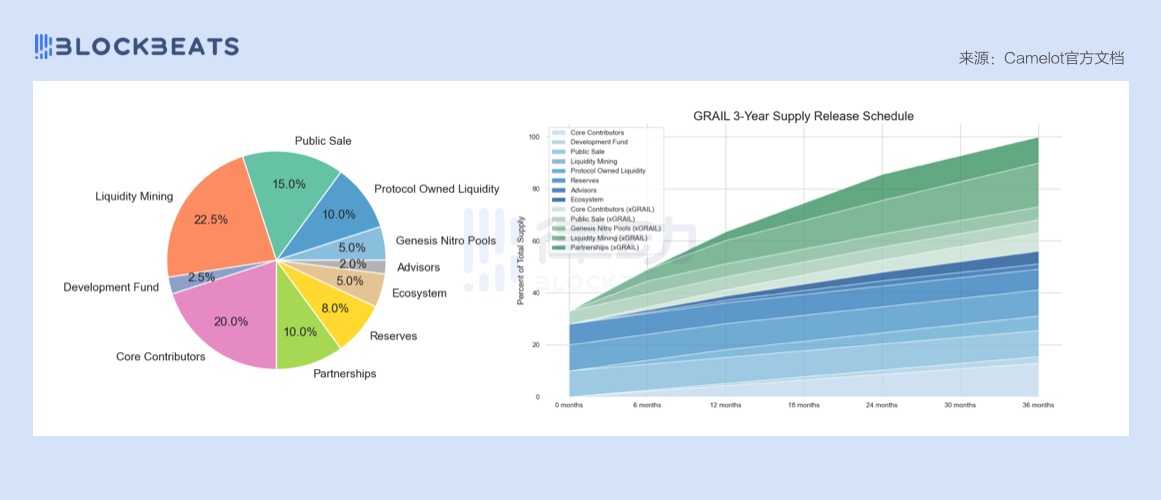
Camelot is based on the dual currency system of GRAIL and xGRAIL. GRAIL has a total supply of 100,000 pieces, while xGRAIL is a non-transferable governance token, both of which can be used for DeFi farming. The majority of GRAIL's supply is emitted as xGRAIL, allowing a high degree of control over the supply on the market. The income of the agreement mainly comes from transaction fees, and part of it will be redistributed to xGRAIL holders in the form of actual income.
Camelot's upcoming Fair Launch projects
Nitro Cartel (February 17-20)
Nitro is a community governance protocol on Arbitrum, dedicated to guiding TVL growth throughout the Arbitrum ecosystem, and efficiently and transparently allocating member capital in the Arbitrum-native revenue strategy Utilizing Cartel's new governance mechanism to effectively improve public goods, always with Arbitrum's fractional DeFi protocols are compatible. Earn rewards / share any token AirDrop from partners and possibly ARBI token AirDrop proportionally based on value-added contributions to the Arbitrum ecosystem with core values: decentralization, privacy, and permissionless innovation.
Factor DAO (February 20)
Factor is an asset management protocol that will be launched on Arbitrum soon. Users can customize and create a treasury with access to various tokens and markets through FactorDAO to manage their assets on Factor, allowing users to add a variety of supported tokens to In the treasury, the user's market participation ability and asset flexibility are enhanced, and it is better adapted to trading strategies and risk conditions. It may be a good asset management tool for traders.
JustBet (TBC)
JustBet is a decentralized gaming platform on Arbitrum. The platform has a "perfect" token economy, and its games rely on blockchain technology. The results are transparent and cannot be tampered with. Supra Oracles generate randomness in the game, which also ensures Payouts are immutable. The agreement motivates players and promotes the development of the ecology by providing the necessary infrastructure such as allowing liquidity providers to earn income from betting and platform fees, issuing vWINR tokens. BlockBeats had a detailed introduction to JustBest before. For more information, please read "Arbitrum Ecological Spinach JustBet Confirms AirDrop, How to Interact?" "
Perpy (TBC)
Perpy is a protocol on Arbitrum that allows users to copy trades on a decentralized perpetual trading platform, connecting traders and investors 24/7, with the aim of revolutionizing the accessibility of perpetual trading for Web 3 investors. Perpy allows users to earn income by sharing their trading strategies. Users who subscribe to your strategy need to pay commissions to the subscribers in the process of following your trading operations.