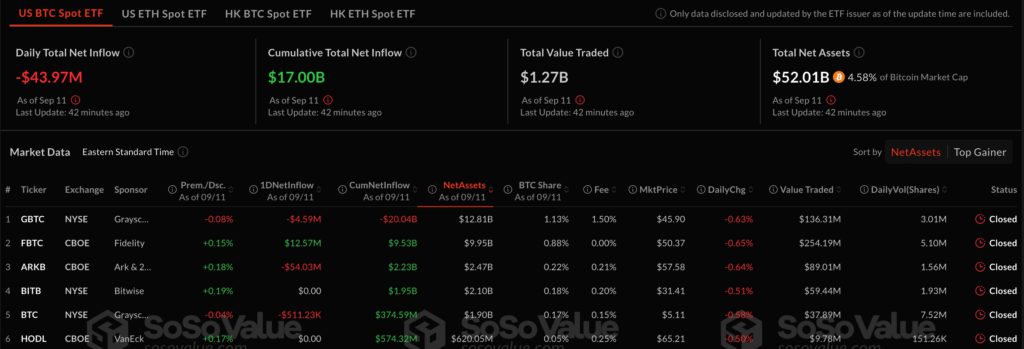
According to Sosovalue data, as of September 11, the U.S. Bitcoin spot ETF has received a cumulative net inflow of US$17 billion since it was approved by the SEC in early January this year. Its current scale has reached US$52 billion, accounting for the total number of Bitcoins. 4.58% of market capitalization.
Security Experts: North Korean Hackers May Target Bitcoin ETFs
But just recently, Michael Pearl, vice president of GTM strategy at on-chain security company Cyvers, said that in the face of such a huge amount of funds, the Bitcoin spot ETF is likely to be used by the notorious North Korean hacker team Lazarus Group (Lazarus Group). Targeted, and the criminal organization has begun to take action:
Only recently did the FBI warn that North Korean hackers would try to infiltrate ETFs and steal funds.
The Bitcoin behind all of these ETFs is being stored somewhere, and it's a safe bet that someone is already planning and thinking about how to steal it.
In addition, Pearl also emphasized that not only ETF issuers may be targeted, but all related companies may also be targeted by Lazarus:
Not just the ETF issuers, but all the companies that work with them. Potential vulnerabilities are something we need to address quickly because if not, we will see massive hacking attacks.
Extended reading: Opinion》Two major cancers in the crypto: North Korean hackers and the chairman of the U.S. SEC
Bitcoin spot ETF may lead to centralization risks
We know that the birth of Bitcoin spot ETF has opened the door for institutional investors to legally invest in Bitcoin. However, as institutions enter the market, people are increasingly worried that Bitcoin’s centralization risks will intensify, such as:
- Concentration of power: As institutions purchase large amounts of Bitcoin, these institutions may concentrate a large amount of Bitcoin assets in their hands, thus forming a significant influence on the market. Such centralization could result in a few institutions having control over Bitcoin’s price and market liquidity, thereby weakening the decentralized nature of Bitcoin.
- Market manipulation risk: Institutions holding large amounts of Bitcoin may influence market prices and manipulate the market through large-scale buying or selling. They can use their capital advantages to conduct price manipulation, adversely affecting ordinary investors, which is contrary to the original intention of Bitcoin's decentralization.
- Reserve security risk: If large institutions become major holders of Bitcoin, the financial health of these institutions will have a significant impact on the Bitcoin market. If an institution encounters a financial crisis or even has its assets stolen, it may trigger a large-scale sell-off and cause violent fluctuations in the Bitcoin market.