Ethereum price action is showing growing downside risk as weakening liquidity and fragile rebounds increase the probability of a deeper rotation toward the $900 range low.
- Short-term bounces lack conviction, suggesting rallies may be corrective rather than trend-changing
- Liquidity dynamics favor a downside sweep, with clean lows still attracting price
- Volatility likely to expand, if balance breaks and price seeks deeper acceptance levels
Ethereum ($ETH) price continues to trade in a vulnerable position, hovering around a critical support zone known as the point of control (POC). While short-term relief bounces have emerged on lower timeframes, these moves have lacked meaningful bullish follow-through. As a result, Ethereum remains exposed to further downside pressure, particularly as untested liquidity continues to build beneath current price levels.
From a broader market-structure perspective, the ongoing consolidation appears less like accumulation and more like a pause before a continuation. Unless buyers can decisively reclaim control, the risk of a deeper corrective move below $1,000 remains firmly in play.
Ethereum price key technical points
- Ethereum is trading at the point of control, a critical balance level
- Low-volume bounces signal weak demand, raising bull trap risk
- Untapped liquidity sits below range lows, increasing downside probability
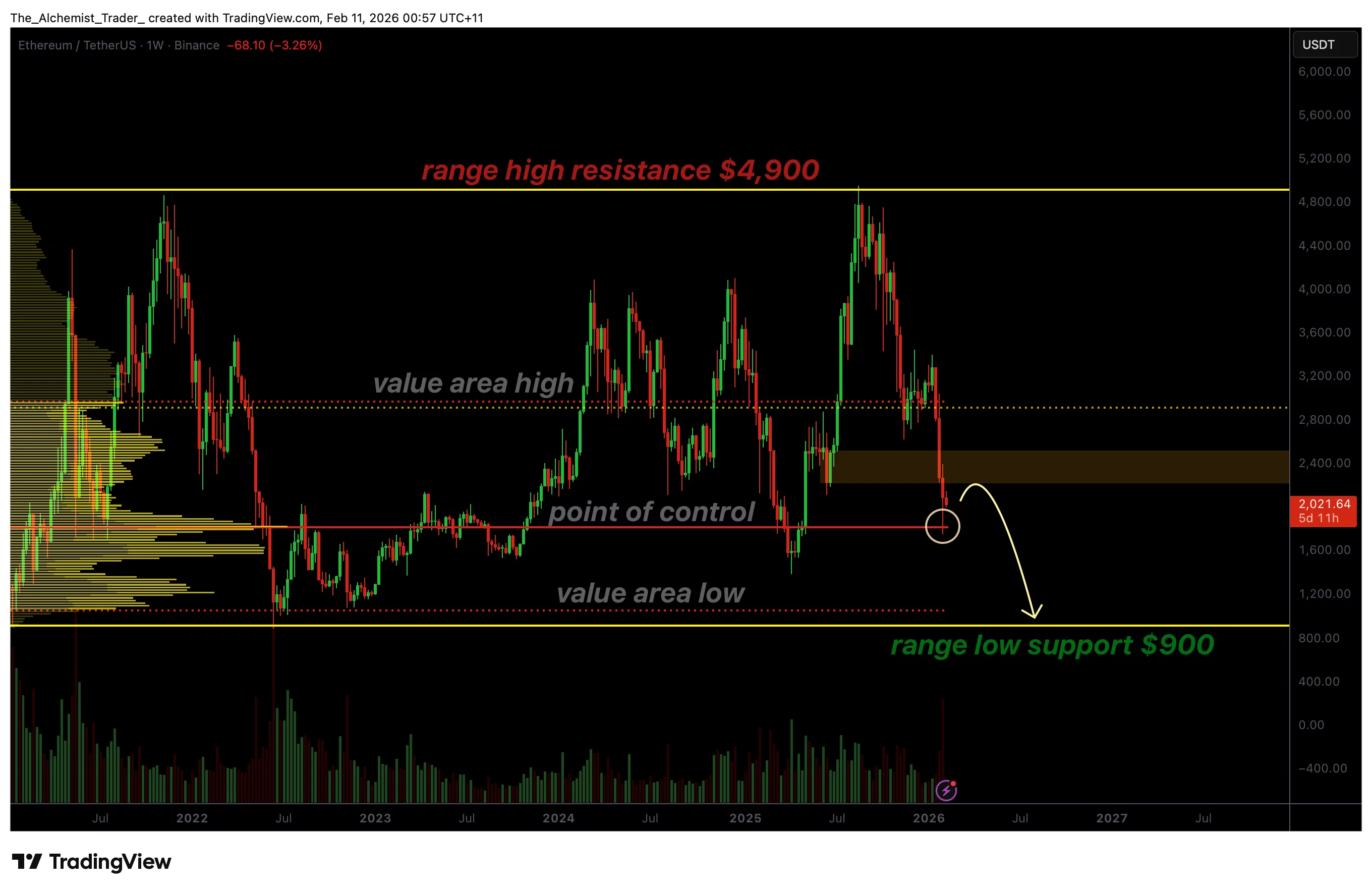
Ethereum’s recent bounce from the point of control has been shallow and short-lived. On the lower timeframes, price has shown temporary stabilization, but these moves have not been supported by strong bullish volume. In trending markets, sustainable reversals typically require expanding participation and aggressive buying, neither of which is currently present.
This type of weak rebound often signals a potential bull trap, in which the price briefly moves higher before rolling over and resuming the dominant trend. As long as Ethereum fails to reclaim higher resistance levels with conviction, short-term rallies remain vulnerable to rejection.
Liquidity below price remains unresolved
One of the most important factors influencing Ethereum’s downside risk is the presence of untouched liquidity beneath current price levels. Clean lows remain intact below the market, suggesting that stop-loss orders and resting sell-side liquidity are concentrated beneath support.
Markets naturally gravitate toward areas of liquidity, particularly during corrective or range-bound conditions. Until this liquidity is addressed, Ethereum remains susceptible to a rotation lower, designed to flush out weak positioning and rebalance the market structure.
Loss of point of control signals expansion risk
The point of control represents the price level at which the most trading activity occurs and often acts as a stabilizing force during consolidation phases. However, once the price loses the POC on a closing basis, it typically signals a shift from balance to imbalance.
If Ethereum decisively loses this level, the probability of an accelerated move increases. In this context, that would likely mean a capitulation-style rotation lower as price seeks the next major area of acceptance. Historically, such moves tend to be swift and volatile, particularly when liquidity below price remains untested.
$900 range low comes into focus
From a high-timeframe perspective, the next major downside target sits near the $900 level. This zone aligns with the value area low and the lower boundary of Ethereum’s broader trading range. Previous interactions with this region have resulted in strong reactions, making it a critical area for potential stabilization or reversal.
A move toward $900 would likely coincide with heightened volatility and emotional selling, characteristics often associated with capitulation events. While such a move may appear bearish in the short term, it could ultimately serve as a necessary reset before a more sustainable base can form.
What to expect in the coming price action
From a technical, price-action, and market-structure perspective, Ethereum remains at risk of trading below $1,000 if current support fails.
The combination of weak bounce attempts, unresolved liquidity, and the potential loss of the point of control favors downside continuation toward the $900 range low.
For this outlook to improve, Ethereum would need to regain control with strong volume confirmation and demonstrate acceptance above higher value areas.