He Yi shared topics such as Binance's current situation and market investment.
Organized by: MarsBit
On January 10th, the "POW'ER Hong Kong Web3 Innovators Summit" hosted by MarsBit and co-organized by Hong Kong Innovation Industrial Park Cyberport, G-Rocket Global Accelerator, and element was held in Hong Kong.

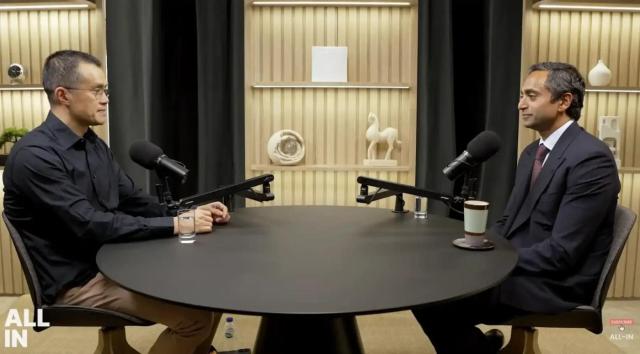
At the meeting, Wang Feng, the founder of MarsBit and a member of the core founding team of Element, had a video connection with He Yi, the co-founder & CMO of Binance and the head of Binance Labs, and discussed topics such as Binance's current situation and market investment.
Fred Wang : Binance has always been the most watched company in the encryption industry. In the past 2022, Binance also has two things that have attracted widespread attention in the industry.
One is that He Yi, the founder of Binance, started to take charge of Binance Labs and directly managed a venture capital fund of US$7.5 billion. This is the news I saw last summer. Previously, there were constant rumors about the exchange of high-level personnel within Binance. For a period of time, the outside world could not understand the staff adjustment of Binance.
The second is the battle between Binance and FTX at the end of the year. FTX was completely defeated, and the market was full of blood. It ended with the founder SBF being criminally investigated. However, the market immediately raised the question of whether digital currency exchanges need stricter supervision and transparency. This question debated so far.
Therefore, our conversation today is half about Binance and half about investment. Thank you He Yi for participating in the POWER Web3 Innovators Hong Kong Summit and joining me in the online conversation.
In a word, what is your busiest thing now?
He Yi : At present, the Binance management team is most concerned about how to build a "built-to-finish" system. In this process, two problems are being solved: business health and organizational health. If the business is healthy, even if there is a war of words, the platform will not go bankrupt; second, the organization is healthy. Currently, the Binance team includes 8,000 people. We need to coordinate to ensure that everyone understands the corporate culture and has unified behaviors and goals. No matter who the CEO or COO is, Binance can operate well.
Fred Wang : On the one hand, you are in charge of the marketing of the world's largest digital currency exchange, in which you occupy at least 2/3 of the market share, and on the other hand, you are in charge of a venture capital fund worth billions of dollars. These two aspects are managing money, people and affairs. If you want to do well, it is actually not easy to do either.
From my point of view, the former attaches great importance to fighting at the forefront. The external environment of the digital currency trading platform and the market are full of variables and risks and challenges. It is necessary to study both users and market opponents (enemies); the latter often goes far Take a look, VC people are holding a telescope, looking at trends and opportunities, and researching entrepreneurs. Moreover, the investment opportunities in the encryption market are mainly in the field of underlying technology architecture and the next application field, and it takes more time to study technology trends. So how do you balance your time?
He Yi: It is quite common to hold 16 or 17 meetings a day. I care more about spending more time dealing with problems and understanding user needs in the community. When the responsibility is greater, not everything has to be done by yourself. We hope to follow the principle of "professional people do professional things".
The Binance team has been expanding. There are two main directions. One is to recruit top talents around the world and find suitable candidates for the management team; the other is to find young people who have potential and meet the values of Binance. Integrity, followed by competence, enthusiasm and way of thinking. Only by establishing a complete management echelon can we ensure the healthy and long-term development of the organization.
Fred Wang: Is the working time of the market and Labs allocated half and half, or is it more important?
He Yi : These two parts only take up one-sixth of the time, because if the team is professional enough to make the right decision, they don't need to spend too much time. I will spend more time developing young people.
Wang Feng: The division of labor between you and Changpeng Zhao, what things do you not touch? What things does he not touch? Is there something very important that you and he don't touch?
He Yi : The things that CZ and I care about are essentially the same. Basically, it is the two general directions I just mentioned: the first is organizational health, and the second is business health. When the volume is larger, there will be more businesses, and when there are more businesses, the organization will have to coordinate. Because he is the CEO, he must have had more contact with things and people.
Fred Wang: For the Crypto market, 2022 will be very difficult. No matter from the perspective of market participants or individual investors, it is hard to imagine that so many exchanges/institutions will collapse. Did you anticipate the downturn in the market, or do you think it has been foreshadowed?
He Yi : Not really. Sometimes people feel that we are like a lone wolf. The main reason is that Binance regards itself more as an opponent and constantly competes with itself in the process. In fact, every industry has cycles. Just like the development of the Internet industry, it has to experience explosions, bubbles, troughs, and recovery. Binance mainly hopes to find the right direction in the industry and help more ordinary people.
Fred Wang: Before FTX completely collapsed, did you ever envision its ending?
He Yi : I didn't expect FTX to be so crazy. At first, we saw the Coindesk article, which presented information that, while highly detrimental to FTX, really did not expect to misappropriate user assets. At that time, I also recalled that my friend said that a nice CEO of FTX US left suddenly, and I thought it was not a good signal. Because of the transparency of the chain, we just started to organize assets, and people started to ask "What is Binance doing?" on Twitter. At that time, CZ thought there was a need for an early warning, so he posted that tweet without thinking too much.
Fred Wang: I think Binance is a conservative company.
He Yi : Binance is a company with a strong awareness of risk control. Although the regulation varies from region to region, we have been self-regulating. For example, Binance team members cannot speculate in coins. After buying assets, they must HOLD for 90 days before selling them.
Binance's internal audit is very strict, from top to bottom, and regardless of their rank, the requirements for employees are the same.
Wang Feng: "Too big to fail" doesn't seem to exist in the Crypto market. Do you have any good advice for those who come from the Internet and want to start a Web3 business?
He Yi : Back to the origin, I think we must know what is the essence of business. In fact, the success of any enterprise/project is inseparable from three reasons: improving efficiency, reducing costs, or finding new application scenarios.
For example, the market performance of Uniswap is really impressive. Its success is due to the invention of the automatic market maker model, which greatly improves efficiency and reduces costs. Therefore, as long as you have enough innovation, improve efficiency, and reduce costs, you have a chance of success, which requires you to truly solve problems from the essence of business.
Many people think that making money on Web3 is easy. In fact, whether it is public financing or attracting users to buy coins, the essence is to overdraw personal reputation and exchange credit for money.
Some people only see the present, but not the stars and sea in the future. Using the money-burning model of the Web2 market will not work, and retirement such as financing will not work either. In this industry, we must have long-term beliefs, make good products, innovate, and solve problems. The more solid we are, the more successful we will be in the traditional sense.
Fred Wang : There was a hot word in the market last year: Rug, which translates to "Rug Pull". I have observed that this usually refers to small companies. At present, "FUD" appears again in the market, mainly referring to large enterprises. I have observed that "Binance FUD" appeared in the market some time ago, and users are also worried about the safety of their assets. I would like to ask, does Binance have a mirror in its own world? How do you see yourself?
He Yi : There is a word in Binance’s corporate culture: Humble. Looking back at the development of the commercial market in the past, those global companies that can be called "big Macs" suddenly fell one day. This may be due to poor management, wrong strategy, or too much pride. Our team is mainly focused on self-improvement, maintaining humility, maintaining awe of the market, accommodating new things, and insisting on self-reflection.
Another word in Binance's corporate culture is "User-focused", which truly understands user feedback and voices. In fact, through this FTX incident, we also reflect on the voice of the market. At present, there are three types of people in the market who have objections to Binance. One is from the traditional financial sector. They think that Sam’s personality is a "good boy". Since such a good kid has fallen, Binance is a "bad guy"; The second is from the anarchist crowd, who oppose any agreement/project related to centralization. Binance, as the leading platform in CEX, naturally becomes the object of their "criticism"; the last is the supporter of SBF.
Generally speaking, Binance insists on learning and growing from the incident, and I believe that time will tell everything. Binance has never misappropriated user assets. I made a suggestion jokingly before, saying that "all exchanges can accept market tests in turn, and users are welcome to withdraw coins", and a fixed withdrawal date can also be set. This way, users can see who exactly is the unruly player in the marketplace.
Fred Wang: The outside world believes that Binance has gone too smoothly and has become the largest exchange in the market in five years. BNB Chain ecology is also good. You have won battle after battle and won two large territories. I read before in The Innovator's Dilemma that there are big companies that win every war, only to fall in the end. Do you think this could happen to Binance?
He Yi : The example you raised is similar to Kodak's situation. In fact, Kodak was the leader in the film market back then. They invented the digital camera, but they just didn't promote it. As a result, they lost the entire market in the process of development. So from two perspectives: the problem of continuous innovation (it can also be said to be small and micro innovation) and destructive innovation.
For Binance, whether it is in the CEX, DEX field, or non-custodial wallets, Binance has actually raised its stake, because our logic is to be optimistic about the industry. Since we are optimistic about the industry, we must participate in the main track of the industry, whether it is investment, acquisition, or doing it ourselves, we are going hand in hand. For example, when Binance launches new businesses in the past, it will require teams to compete with each other through an internal horse racing mechanism to innovate and challenge themselves. Through such an approach, continuous innovation can be guaranteed.
Disruptive innovation needs to go back to investment. Take FTX as an example. Although the outside world thinks it is also our competitor, we also invested. It must be taken into account that only when the entire industry can "rise", can we "lift the boat". This is our big decision logic.
Fred Wang: Binance's ability to embrace innovation is obvious to all in the industry. I also want to talk about regulation. Do you think regulation will be a “deadly” threat to Binance? After all, you don't have a headquarters, distributed management.
He Yi : If you look at Binance’s public statements and attitudes, you will find that we have been embracing regulation in recent years. We believe that regulation can help the industry develop. We need to discuss with law enforcement agencies in various countries to ensure that they understand what virtual currencies and exchanges are. It does not mean that all exchanges are "bad guys." Of course, Binance has now changed the online collaborative office model like "digital nomads" in the past, and has set up offices in many regions, mainly because it meets the regulatory needs of various countries.
If you really look at Binance’s public information, we are the platform that has obtained the most licenses. We are currently in 14 countries including Abu Dhabi, Dubai, South Africa, France, Italy, Spain, Poland, Lithuania, Cyprus, Kazakhstan, Australia and New Zealand. Country to obtain a license. We have gone farther than other platforms on this road. However, the license is not the ultimate goal. We hope to conduct business in accordance with regulatory requirements. Currently, the Binance compliance team has 750 people. They will respond to and handle the anti-money laundering requirements of various countries and cooperate with the law enforcement needs of various countries and regions. Currently, they have responded to and handled law enforcement needs for 47,000 times, and conducted more than 70 law enforcement training courses .
Fred Wang: When it comes to regulation and compliance, what I want to know is, to what extent can Binance’s ideal transparency plan be opened up?
He Yi : Binance actually hopes to make users' funds highly transparent. At present, users can check whether your assets are in the wallet address corresponding to Binance. We have disclosed the proofs of reserves on the chain of nine currencies. Strive to make most of the addresses on the asset chain public within two or three months in the future.
Fred Wang : We all know that the disclosure of audit reports is the best way to be transparent and accept market supervision like a listed company. When Binance faced audit issues, it used to say that we are not a listed company, and we understand it very well. But this time and that time. For example, can Binance be audited by the Big Four? I saw that CZ responded on CNBC, but it seems like a lot of people disagree.
He Yi : In fact, in the interview with CZ, the host confused two concepts, one is the verification of reserve assets on the chain, and the other is the financial audit of listing. Coinbase does financial audits because it is a public company. Binance is willing to accept auditing companies for asset verification, but it is not a question of whether Binance is willing to accept it, but a question of whether auditing companies can do asset verification on the exchange chain. Another advertisement: If there are four major audit companies interested in asset verification on the Binance chain, you can contact us.
Fred Wang: After the collapse of FTX, the market sentiment was very panic, and Binance set up an "industry recovery plan". What concrete actions are being taken now?
He Yi: It is not an investment or a charity fund, but a recovery plan. At present, Binance is looking at the deals of two exchanges and two major projects. In addition to Binance, the total investment scale of other third-party participants has reached about 130 million US dollars. This part of the funds is not sent to the Binance account, but placed in the public address. If there is project submission information that requires revolving funds, we will share the information with other institutions participating in the program.
I don't really like the old saying "whoever stands up is the savior". In fact, Binance still looks at the deal to really understand why it is paying, whether it is the team, market share, or license.
Fred Wang: Will Binance's investment strategy become conservative?
He Yi : In fact, Binance has always been quite conservative. It mainly depends on several aspects: the first is the team, the second is innovation, and the third is the long-term ceiling price. Sometimes the project is good, but the valuation is too high, we are not very good at investing. If the team is not good and the project is good, we will not invest. However, Binance is not affected by the amount of funds and focuses on the logic of the industry-wide layout.
Wang Feng: Are you being too conservative?
He Yi: Binance Labs has related incubation plans. If you are a relatively early entrepreneur, you can apply for related projects. If you have a good foundation, you will also look at your own pricing, because we all have our own judgments on the market.
Wang Feng: How do you look at the cycle?
He Yi: Any industry has cycles. For example, the phased cycle of the stock market is usually four years, and the currency circle is similar. The reason: When the stock market is volatile, virtual assets are known as "safe haven assets." With the entry of traditional financial institutions, the two markets are approaching the same frequency, but when the global financial market goes down, virtual assets are the first to be sold.
Wang Feng: Many people intend to enter the Web3 market, but everyone has different opinions on Web3. Who do you think will play Web3?
He Yi : According to the data, 43 of the world's top 100 giant companies have entered Web3.
Web3 is a small circle, but many large companies have begun to join Web3. In fact, this scene is like who would play the Internet in 2000, but now everyone is an Internet user. Web3 will become an infrastructure, the only question is what the shape of Web3 will be. In 2000, it was difficult for everyone to imagine that you can join a meeting with a mobile phone today. So how to realize Web3 in the future is built by everyone's efforts at this moment.